Biotechnology Research Institute, National Research Council of Canada, Montréal, Québec, Canada.
PLoS Pathog. 2010 Feb 5;6(2):e1000753. doi: 10.1371/journal.ppat.1000753.
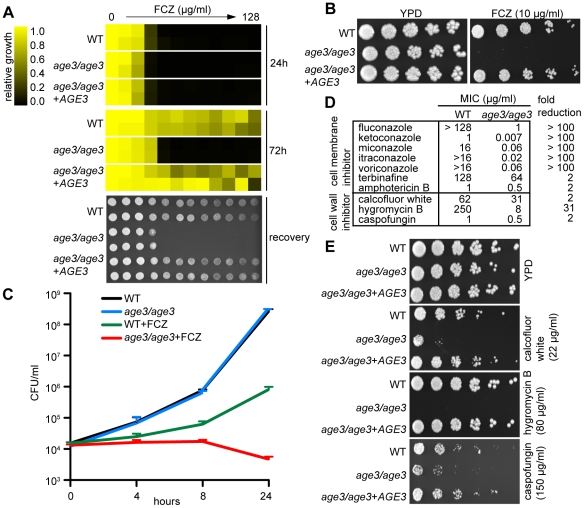
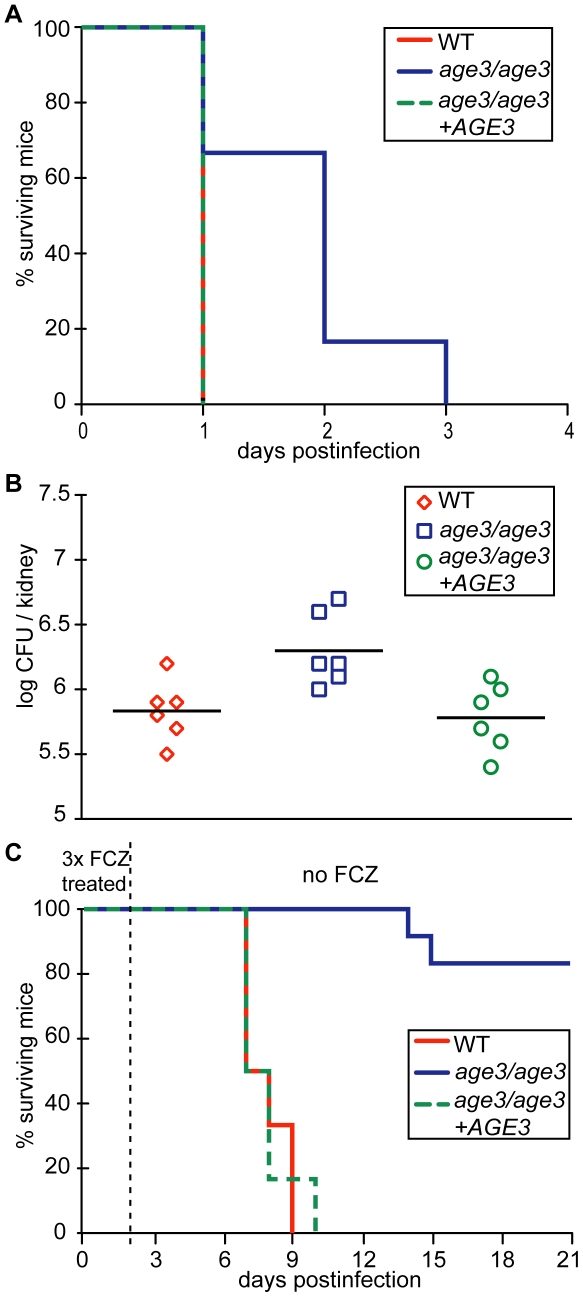
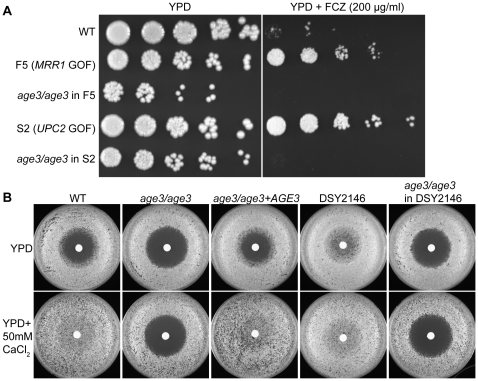
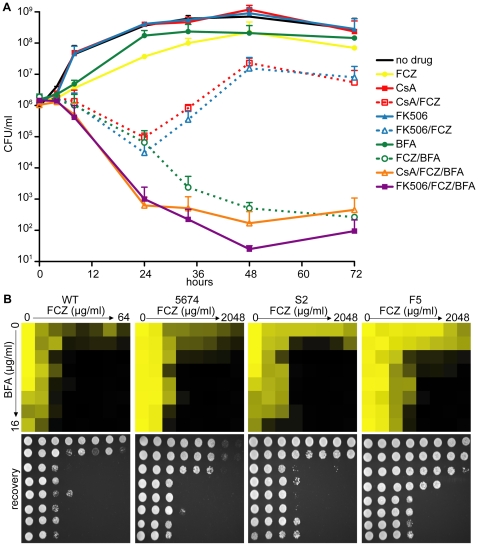
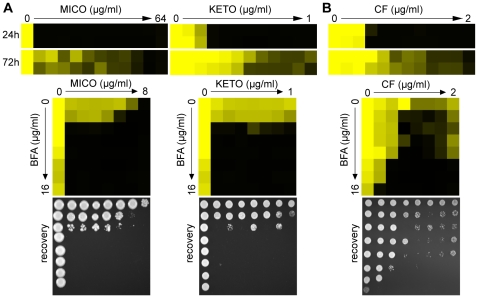
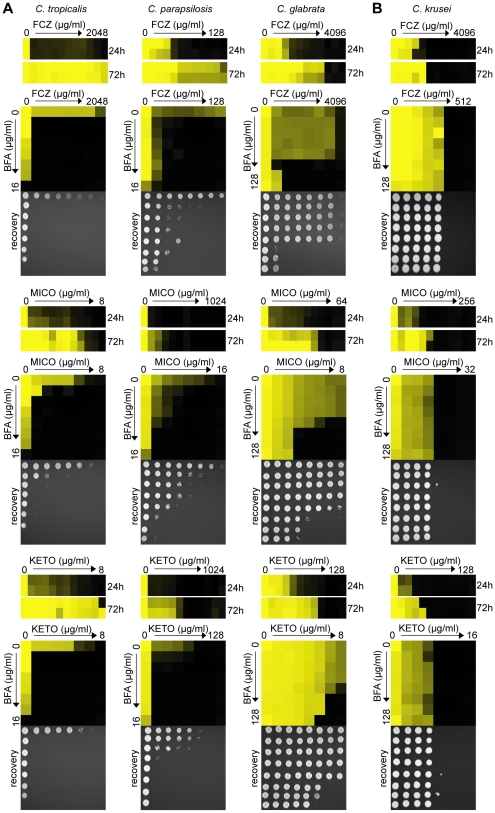
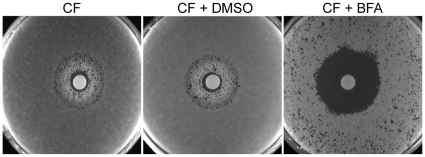
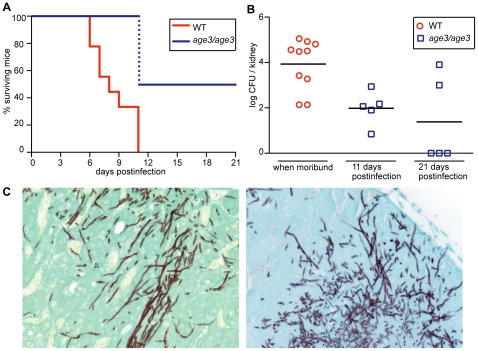
Candida albicans, the major fungal pathogen of humans, causes life-threatening infections in immunocompromised individuals. Due to limited available therapy options, this can frequently lead to therapy failure and emergence of drug resistance. To improve current treatment strategies, we have combined comprehensive chemical-genomic screening in Saccharomyces cerevisiae and validation in C. albicans with the goal of identifying compounds that can couple with the fungistatic drug fluconazole to make it fungicidal. Among the genes identified in the yeast screen, we found that only AGE3, which codes for an ADP-ribosylation factor GTPase activating effector protein, abrogates fluconazole tolerance in C. albicans. The age3 mutant was more sensitive to other sterols and cell wall inhibitors, including caspofungin. The deletion of AGE3 in drug resistant clinical isolates and in constitutively active calcineurin signaling mutants restored fluconazole sensitivity. We confirmed chemically the AGE3-dependent drug sensitivity by showing a potent fungicidal synergy between fluconazole and brefeldin A (an inhibitor of the guanine nucleotide exchange factor for ADP ribosylation factors) in wild type C. albicans as well as in drug resistant clinical isolates. Addition of calcineurin inhibitors to the fluconazole/brefeldin A combination only initially improved pathogen killing. Brefeldin A synergized with different drugs in non-albicans Candida species as well as Aspergillus fumigatus. Microarray studies showed that core transcriptional responses to two different drug classes are not significantly altered in age3 mutants. The therapeutic potential of inhibiting ARF activities was demonstrated by in vivo studies that showed age3 mutants are avirulent in wild type mice, attenuated in virulence in immunocompromised mice and that fluconazole treatment was significantly more efficacious when ARF signaling was genetically compromised. This work describes a new, widely conserved, broad-spectrum mechanism involved in fungal drug resistance and virulence and offers a potential route for single or improved combination therapies.
白色念珠菌是人类主要的真菌病原体,会导致免疫功能低下的个体发生危及生命的感染。由于可供选择的治疗方法有限,这常常导致治疗失败和耐药性的出现。为了改进现有的治疗策略,我们结合了酿酒酵母的全面化学基因组筛选和白色念珠菌的验证,旨在鉴定能够与抑菌药物氟康唑结合并使其具有杀菌作用的化合物。在酵母筛选中鉴定的基因中,我们发现只有编码 ADP-核糖基化因子 GTP 酶激活效应蛋白的 AGE3 基因能够消除白色念珠菌对氟康唑的耐受性。age3 突变体对其他固醇和细胞壁抑制剂(包括卡泊芬净)更为敏感。在耐药临床分离株和组成型激活钙调神经磷酸酶信号突变体中删除 AGE3 恢复了氟康唑敏感性。我们通过显示氟康唑和布雷菲德菌素 A(ADP 核糖基化因子鸟嘌呤核苷酸交换因子的抑制剂)之间在野生型白色念珠菌以及耐药临床分离株中的强效杀菌协同作用,从化学上证实了依赖 AGE3 的药物敏感性。在氟康唑/布雷菲德菌素 A 联合用药中加入钙调神经磷酸酶抑制剂仅能初步提高病原体杀伤作用。布雷菲德菌素 A 在非白色念珠菌属念珠菌和烟曲霉中与不同药物协同作用。微阵列研究表明,age3 突变体中两种不同药物类别核心转录反应没有明显改变。抑制 ARF 活性的治疗潜力通过体内研究得到证实,研究表明 age3 突变体在野生型小鼠中无毒性,在免疫功能低下的小鼠中减弱了毒性,并且当 ARF 信号遗传受损时,氟康唑治疗的效果显著提高。这项工作描述了一种新的、广泛保守的、广谱的与真菌耐药性和毒力相关的机制,并为单一或改进的联合治疗提供了潜在途径。