Institute of Genomics and Integrative Biology (Council of Scientific and Industrial Research), Delhi, India.
PLoS One. 2010 Feb 4;5(2):e9063. doi: 10.1371/journal.pone.0009063.
The proinflammatory cytokine, TNFalpha, is a crucial mediator of the pathogenesis of several diseases, more so in cases involving the liver wherein it is critical in maintaining liver homeostasis since it is a major determiner of hepatocyte life and death. Gene expression profiling serves as an appropriate strategy to unravel the underlying signatures to envisage such varied responses and considering this, gene transcription profiling was examined in control and TNFalpha treated HepG2 cells.
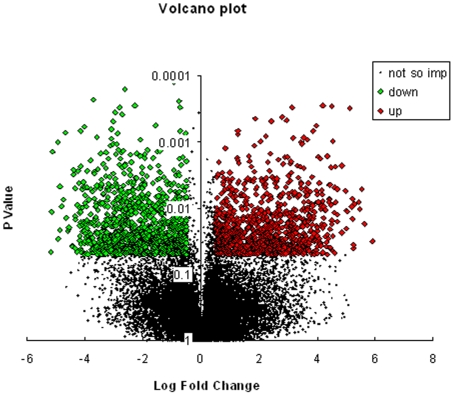
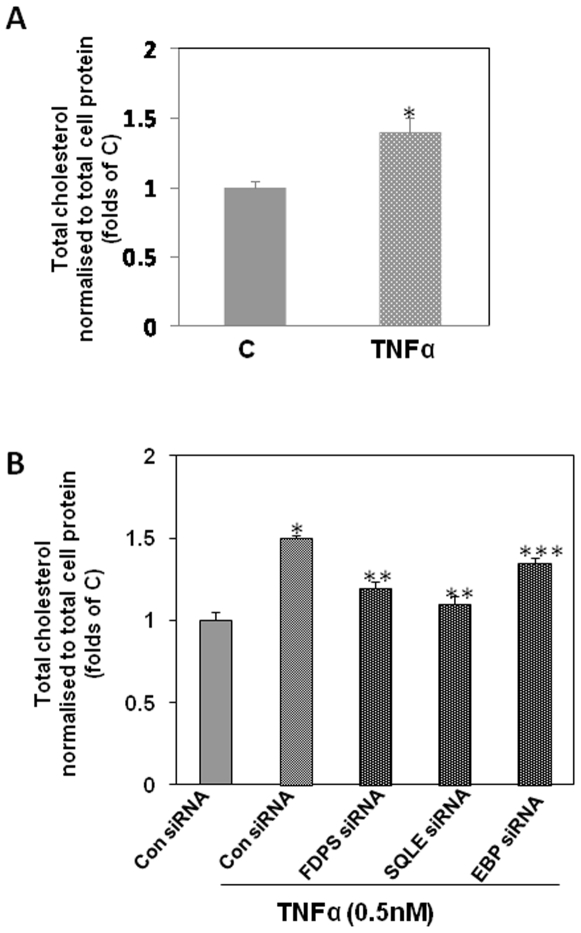
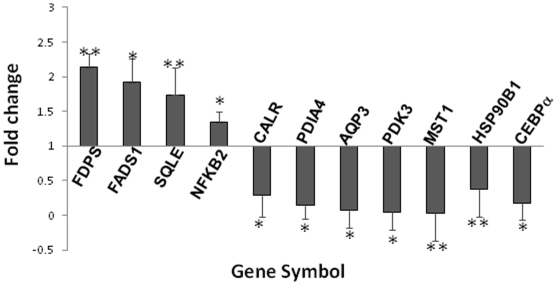
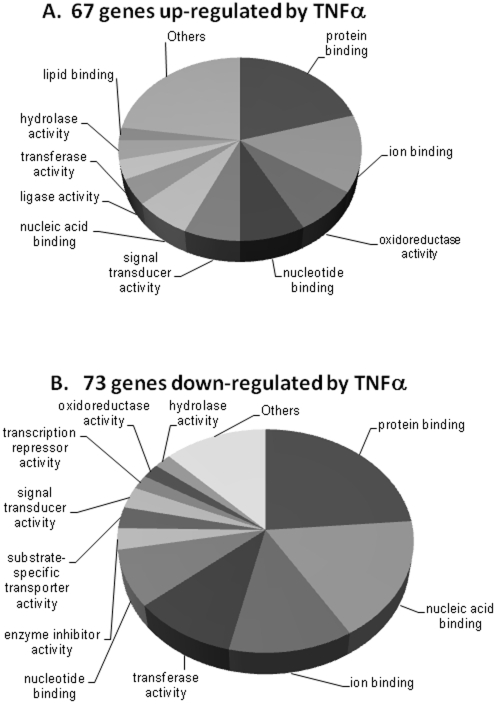
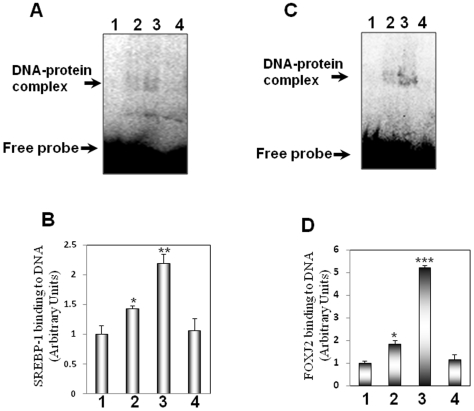
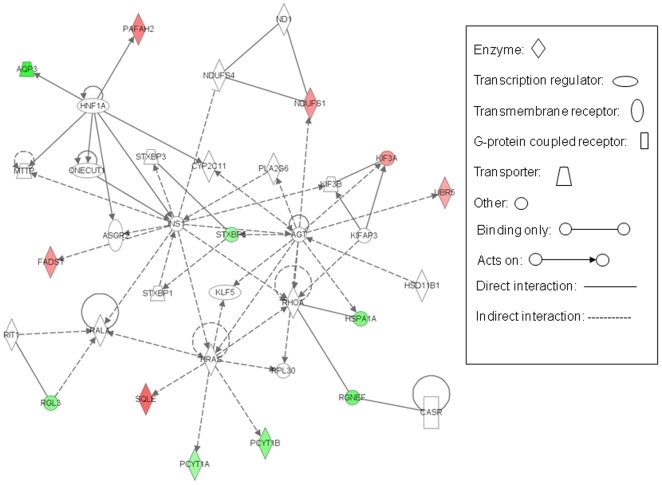
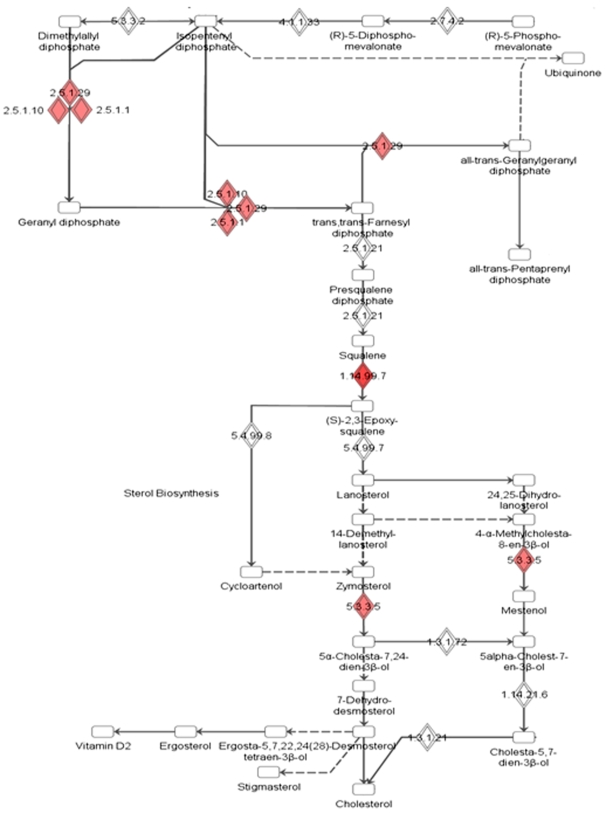
Microarray experiments between control and TNFalpha treated HepG2 cells indicated that TNFalpha could significantly alter the expression profiling of 140 genes; among those up-regulated, several GO (Gene Ontology) terms related to lipid and fat metabolism were significantly (p<0.01) overrepresented indicating a global preference of fat metabolism within the hepatocyte and those within the down-regulated dataset included genes involved in several aspects of the immune response like immunoglobulin receptor activity and IgE binding thereby indicating a compromise in the immune defense mechanism(s). Conserved transcription factor binding sites were identified in identically clustered genes within a common GO term and SREBP-1 and FOXJ2 depicted increased occupation of their respective binding elements in the presence of TNFalpha. The interacting network of "lipid metabolism, small molecule biochemistry" was derived to be significantly overrepresented that correlated well with the top canonical pathway of "biosynthesis of steroids".
TNFalpha alters the transcriptome profiling within HepG2 cells with an interesting catalog of genes being affected and those involved in lipid and steroid metabolism to be the most favored. This study represents a composite analysis of the effects of TNFalpha in HepG2 cells that encompasses the altered transcriptome profiling, the functional analysis of the up- and down- regulated genes and the identification of conserved transcription factor binding sites. These could possibly determine TNFalpha mediated alterations mainly the phenotypes of hepatic steatosis and fatty liver associated with several hepatic pathological states.
促炎细胞因子 TNFalpha 是多种疾病发病机制的关键介质,在涉及肝脏的疾病中更为重要,因为它是决定肝细胞生死的主要因素,所以在肝脏中维持着内环境稳定。基因表达谱分析是揭示潜在特征的一种合适策略,可以预测这种多样化的反应,考虑到这一点,我们检查了对照和 TNFalpha 处理的 HepG2 细胞中的基因转录谱。
对照和 TNFalpha 处理的 HepG2 细胞之间的微阵列实验表明,TNFalpha 可以显著改变 140 个基因的表达谱;在上调的基因中,几个与脂质和脂肪代谢相关的 GO(基因本体论)术语显著(p<0.01)过度表达,表明肝细胞内脂肪代谢的整体偏好,下调数据集包括参与免疫反应多个方面的基因,如免疫球蛋白受体活性和 IgE 结合,从而表明免疫防御机制受到了损害。在共同的 GO 术语中,相同聚类的基因中识别出保守的转录因子结合位点,并且在 TNFalpha 存在下 SREBP-1 和 FOXJ2 描绘了它们各自结合元件的增加占据。“脂质代谢、小分子生物化学”的相互作用网络被证明是显著过表达的,与“类固醇生物合成”的顶级经典途径很好地相关。
TNFalpha 改变了 HepG2 细胞中的转录组谱,有趣的是,受影响的基因目录以及涉及脂质和类固醇代谢的基因是最受欢迎的。这项研究代表了 TNFalpha 在 HepG2 细胞中的影响的综合分析,包括改变的转录组谱、上调和下调基因的功能分析以及保守转录因子结合位点的鉴定。这些可能主要决定了 TNFalpha 介导的改变,主要是与几种肝脏病理状态相关的肝脂肪变性和脂肪肝的表型。