Institut National de la Recherche Scientifique - Eau, Terre et Environnement, 490 de la Couronne, Québec, QC G1K 9A9, Canada.
Int J Health Geogr. 2010 Feb 8;9:5. doi: 10.1186/1476-072X-9-5.
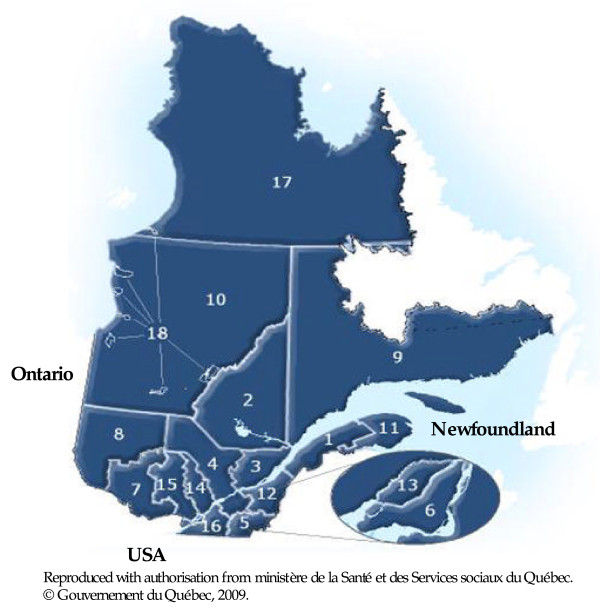
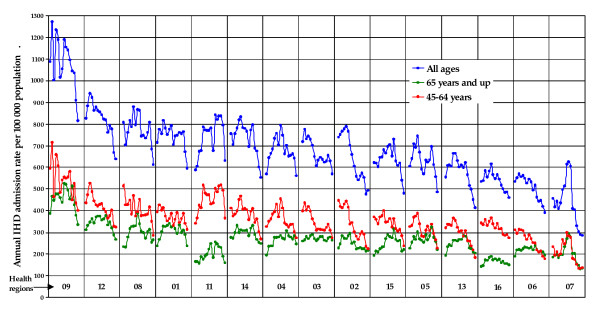
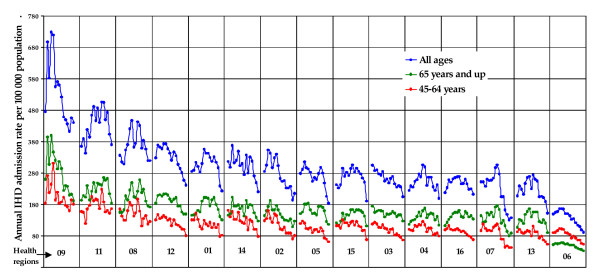
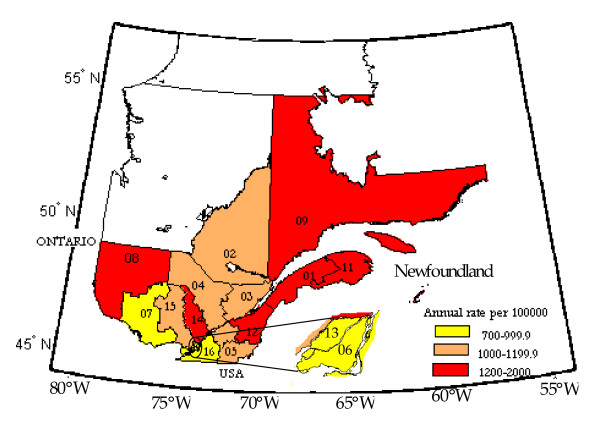
Studies have suggested an association between climate variables and circulatory diseases. The short-term effect of climate conditions on the incidence of ischemic heart disease (IHD) over the 1989-2006 period was examined for Quebec's 18 health regions.
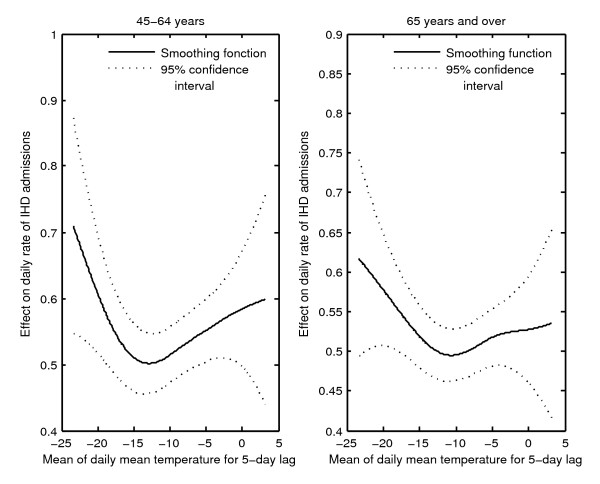
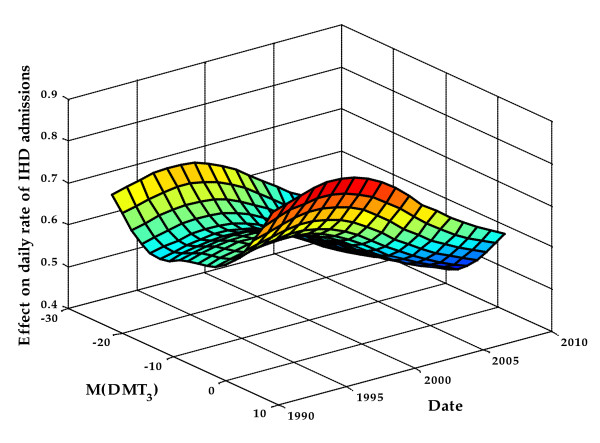
Analyses were carried out for two age groups. A GAM statistical model, that blends the properties of generalized linear models with additive models, was used to fit the standardized daily hospitalization rates for IHD and their relationship with climatic conditions up to two weeks prior to the day of admission, controlling for time trends, day of the season and gender.
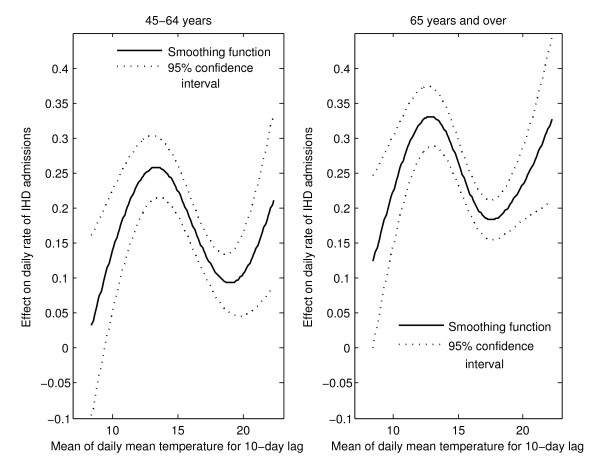
Results show that, in most of Quebec's regions, cold temperatures during winter months and hot episodes during the summer months are associated with an increase of up to 12% in the daily hospital admission rate for IHD but also show decreased risks in some areas. The risk of hospitalization is higher for men and women of 45-64 years and varies spatially. In most regions, exposure to a continuous period of cold or hot temperature was more harmful than just one isolated day of extreme weather. Men aged 45-64 years showed higher risk levels of IHD than women of the same age group. In most regions, the annual maximum of daily IHD admissions for 65 years old was reached earlier in the season for both genders and both seasons compared to younger age groups. The effects of meteorological variables on the daily IHD admissions rate were more pronounced in regions with high smoking prevalence and high deprivation index.
This study highlights the differential effects of cold and hot periods on IHD in Quebec health regions depending on age, sex, and other factors such as smoking, behaviour and deprivation levels.
研究表明气候变量与循环系统疾病之间存在关联。本研究旨在检验 1989 年至 2006 年期间气候条件对魁北克 18 个卫生区缺血性心脏病(IHD)发病率的短期影响。
本研究对两个年龄组进行了分析。使用广义相加模型(GAM)统计模型,该模型融合了广义线性模型和加法模型的特性,拟合了 IHD 的标准化日住院率及其与气候条件的关系,这些气候条件在入院前两周内进行了控制,包括时间趋势、季节和性别。
结果表明,在魁北克的大多数地区,冬季的低温和夏季的高温与 IHD 每日住院率增加 12%有关,但也显示出在一些地区风险降低。45-64 岁的男性和女性的住院风险更高,且存在空间差异。在大多数地区,暴露于连续的寒冷或炎热温度比仅仅一天的极端天气更为有害。45-64 岁的男性比同年龄组的女性具有更高的 IHD 风险水平。在大多数地区,65 岁的男性和女性的 IHD 每日住院人数的年最大值在本季和两季中均比年轻年龄组更早达到。气象变量对每日 IHD 入院率的影响在吸烟率和贫困指数较高的地区更为明显。
本研究强调了寒冷和炎热时期对魁北克卫生区 IHD 的影响因年龄、性别以及吸烟、行为和贫困水平等其他因素而异。