MRC Human Nutrition Research, Cambridge, UK.
BMC Public Health. 2010 Feb 10;10:62. doi: 10.1186/1471-2458-10-62.
Public health strategies place increasing emphasis on opportunities to promote healthy behaviours within the workplace setting. Previous research has suggested worksite health promotion programmes have positive effects on physical activity and weight loss, yet little is known regarding their effects on dietary behaviour. The aim of this review was to assess the effects of worksite interventions on employee diets.
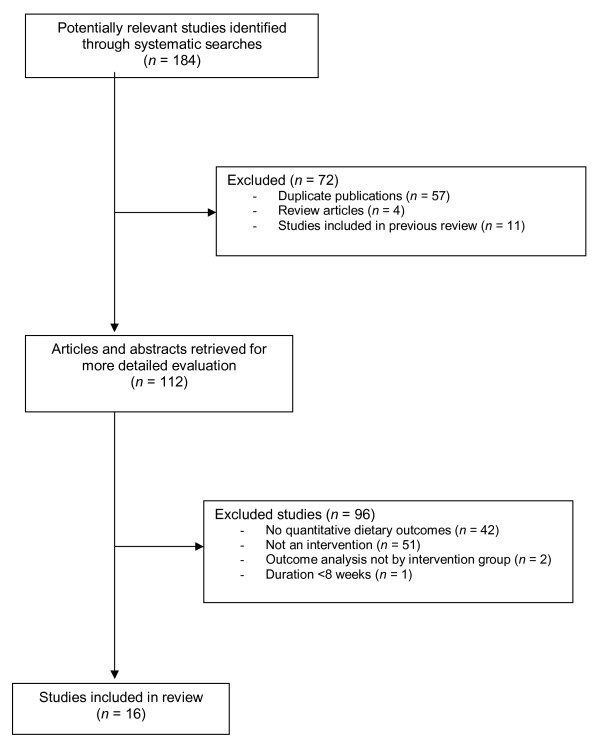
Electronic databases (MEDLINE, The Cochrane Library, PsycINFO, EMBASE, LexisNexis) were searched for relevant articles published between 1995 and April 2009. Studies were eligible for inclusion if they were peer-reviewed English language publications describing a worksite-based health promotion intervention with minimum study duration of eight weeks. All study designs were eligible. Studies had to report one or more diet-related outcome (energy, fat, fruit, or vegetable intakes). Methodological quality was assessed using a checklist that included randomisation methods, use of a control group, and study attrition rates.
Sixteen studies were included in the review. Eight programmes focussed on employee education, and the remainder targeted change to the worksite environment, either alone or in combination with education. Study methodological quality was moderate. In general, worksite interventions led to positive changes in fruit, vegetable and total fat intake. However, reliance on self-reported methods of dietary assessment means there is a significant risk of bias. No study measured more robust outcomes such as absenteeism, productivity, or healthcare utilisation.
The findings of this review suggest that worksite health promotion programmes are associated with moderate improvement in dietary intake. The quality of studies to date has been frequently sub-optimal and further, well designed studies are needed in order to reliably determine effectiveness and cost-effectiveness. Future programmes to improve employee dietary habits should move beyond individual education and aim to intervene at multiple levels of the worksite environment.
公共卫生策略越来越重视在工作场所环境中促进健康行为的机会。先前的研究表明,工作场所健康促进计划对身体活动和减肥有积极影响,但对于它们对饮食行为的影响知之甚少。本综述的目的是评估工作场所干预对员工饮食的影响。
电子数据库(MEDLINE、Cochrane 图书馆、PsycINFO、EMBASE、LexisNexis)搜索了 1995 年至 2009 年 4 月期间发表的相关文章。符合条件的研究为同行评议的英文出版物,描述了一项基于工作场所的健康促进干预措施,研究时间至少为八周。所有研究设计都符合条件。研究必须报告一个或多个与饮食相关的结果(能量、脂肪、水果或蔬菜摄入量)。使用包括随机化方法、使用对照组和研究流失率在内的检查表评估方法学质量。
综述共纳入了 16 项研究。八项计划侧重于员工教育,其余计划则针对工作场所环境的改变,单独或结合教育进行。研究方法学质量中等。总的来说,工作场所干预措施导致水果、蔬菜和总脂肪摄入量的积极变化。然而,依赖自我报告的饮食评估方法意味着存在很大的偏倚风险。没有研究测量更可靠的结果,如缺勤率、生产力或医疗保健利用。
本综述的结果表明,工作场所健康促进计划与饮食摄入的适度改善相关。迄今为止,研究的质量经常不尽如人意,需要进一步设计良好的研究,以可靠地确定有效性和成本效益。未来改善员工饮食习惯的计划应超越个人教育,旨在干预工作场所环境的多个层面。