Department of Education and Research in Health Sciences, Faculty of Health Science, Medical University of Warsaw, 00-581 Warsaw, Poland.
Nutrients. 2023 Dec 12;15(24):5072. doi: 10.3390/nu15245072.
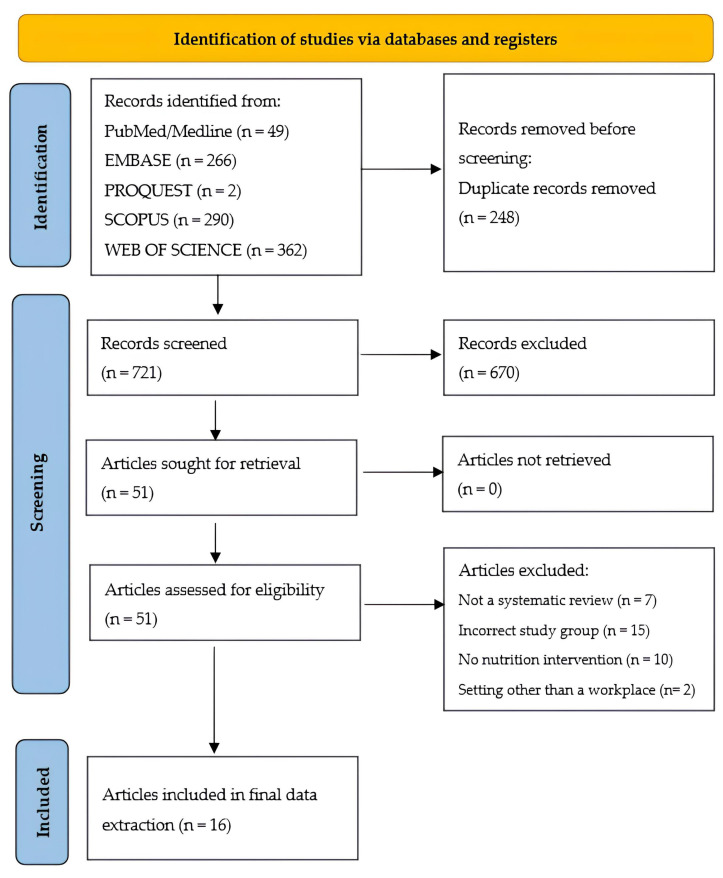
(1) Workplace nutrition interventions have garnered attention as a pivotal component of employee well-being and organisational productivity. However, the effectiveness of various intervention types remains inconclusive. This review aims to systematically evaluate the efficacy of cognitive, behavioural, and mixed nutrition interventions in the workplace, considering the nuances of intervention design, setting, and target demographics. (2) A comprehensive umbrella review was conducted, categorising the existing literature into person-oriented and environmental strategies. This review was prepared in line with the Joanna Briggs Institute methodology for umbrella reviews and the preferred reporting items for systematic reviews and meta-analyses reporting standard. (3) The analysis revealed a lack of definitive evidence supporting the universal effectiveness of any single intervention type. Nonetheless, behavioural and mixed interventions demonstrated more favourable outcomes as compared to purely cognitive strategies. Factors such as intervention design, workplace setting, and target group characteristics were identified as significant determinants of the intervention success. (4) The review emphasises the imperative for additional investigations that utilise evidence-based approaches to formulate sound guidelines for efficacious nutrition interventions in occupational settings. This review functions as a foundational framework for guiding both scholarly research and the pragmatic execution of nutrition programs in the workplace.
(1) 工作场所营养干预措施作为员工健康和组织生产力的关键组成部分引起了关注。然而,各种干预类型的有效性仍不确定。本综述旨在系统评估认知、行为和混合营养干预措施在工作场所的功效,同时考虑到干预设计、设置和目标人群的细微差别。(2) 进行了全面的伞式综述,将现有文献分为面向个人和环境的策略。本综述是根据乔安娜·布里格斯研究所的伞式综述方法和系统综述和荟萃分析报告标准的首选报告项目编制的。(3) 分析结果表明,没有确凿的证据支持任何单一干预类型的普遍有效性。然而,与纯认知策略相比,行为和混合干预措施显示出更好的结果。干预设计、工作场所设置和目标群体特征等因素被确定为干预成功的重要决定因素。(4) 该综述强调需要进行更多的研究,利用基于证据的方法制定有效的营养干预措施在职业环境中的合理指南。本综述为指导工作场所的学术研究和营养计划的实际执行提供了基础框架。