Department of Biomedical Engineering, Yale University, Malone Engineering Center, Room 414, 55 Prospect Street, New Haven, CT 06511, USA.
Biomaterials. 2010 May;31(13):3631-42. doi: 10.1016/j.biomaterials.2010.01.048. Epub 2010 Feb 10.
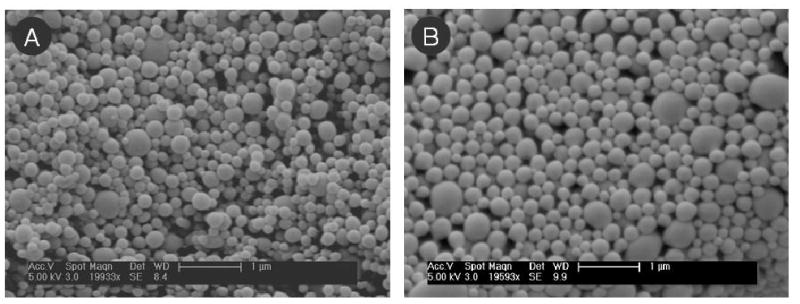
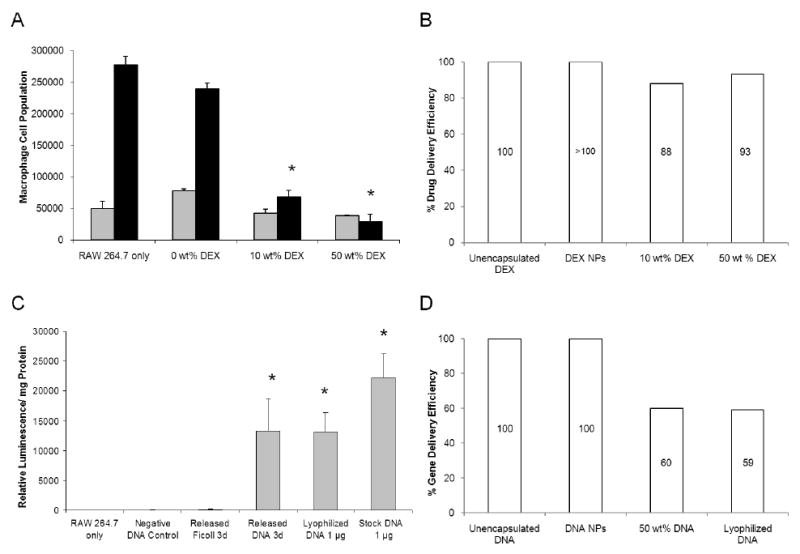
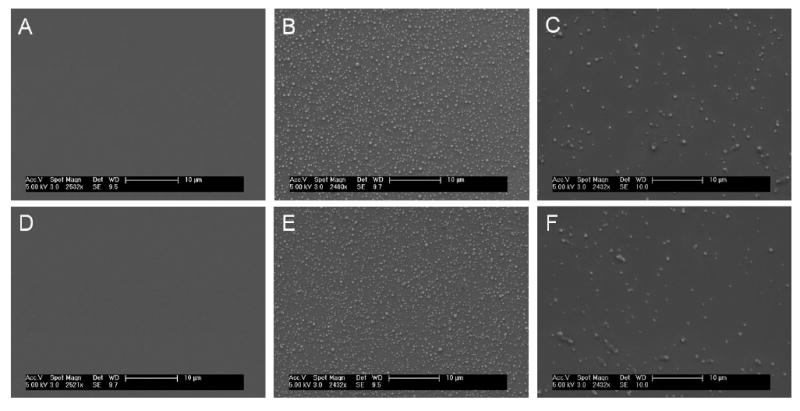
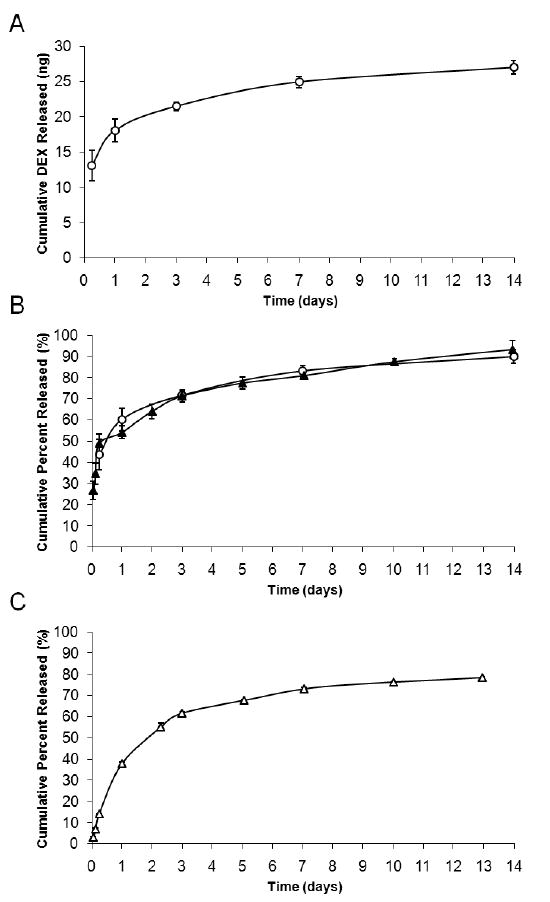
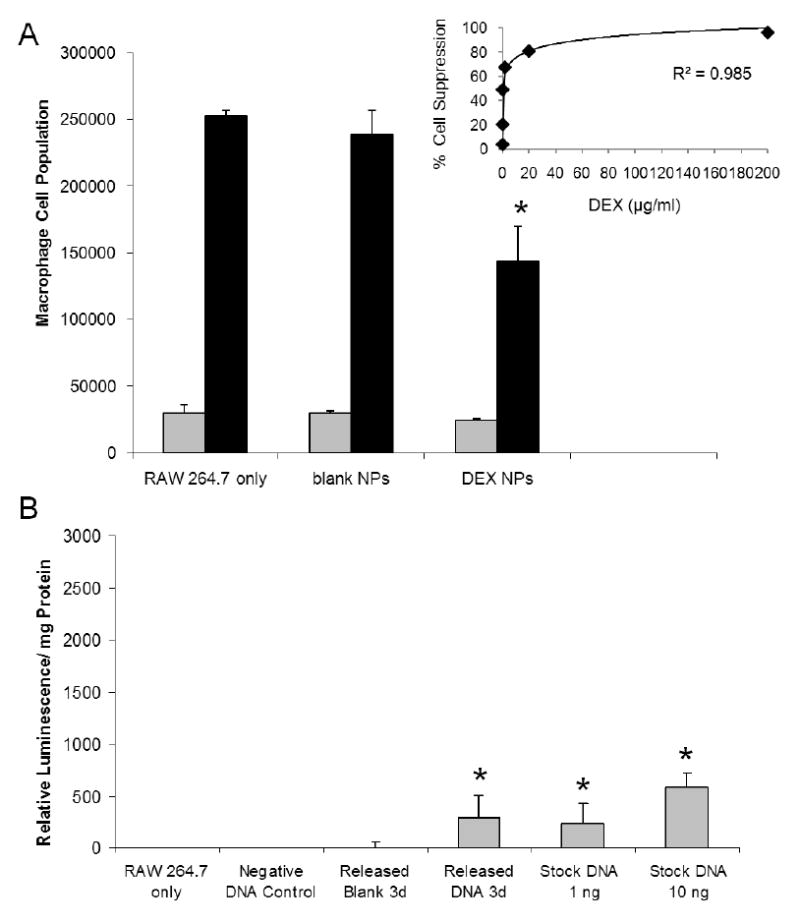
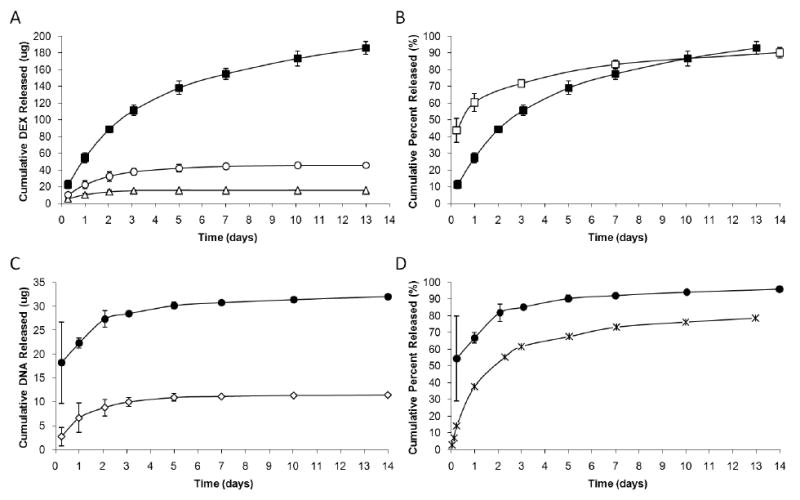
Controlled delivery of therapeutic agents from medical devices can improve their safety and effectiveness in vivo, by ameliorating the surrounding tissue responses and thus maintaining the functional integrity of the devices. Previously, we presented a new method for providing simultaneous controlled delivery from medical devices, by surface assembly of biodegradable polymer nanoparticles (NPs) encapsulating fluorescent dyes. Here, we continue our investigation with NPs loaded with therapeutic agents, dexamethasone (DEX) or plasmid DNA, and evaluated the bioactivity of the released molecules with macrophage cells associated with inflammation. Over a period of one week, NPs encapsulating DEX released 24.9+/-0.8ng from the probe surface and was successful at suppressing macrophage cell growth by 40+/-10%. This percentage of suppression corresponded to approximately 100% drug delivery efficiency, in comparison with the unencapsulated drug. DNA NP coatings, in contrast, released approximately 1ng of plasmid DNA and were effective at transfecting macrophage cells to express the luciferase gene at 300+/-200 relative luminescence/mg total protein. This amount of luciferase activity corresponded to 100% gene delivery efficiency. Thus, NP coatings were capable of providing continuous release of bioactive agents in sufficient quantities to induce relevant biological effects in cell culture studies. These coatings also remained intact, even after 14 days of incubation with phosphate buffered saline. Although the maximum loading for NP coatings is inherently lower than the more established matrix coating, our study suggests that the NP coatings are a more versatile and efficient approach toward drug delivery or gene delivery from a medical device surface and are perhaps best suited for continuous release of highly potent therapeutic agents.
从医疗器械中控制释放治疗剂可以通过改善周围组织的反应来提高其在体内的安全性和有效性,从而维持器械的功能完整性。此前,我们提出了一种从医疗器械表面组装包载荧光染料的可生物降解聚合物纳米颗粒(NPs)以实现同时控制释放的新方法。在这里,我们继续使用负载有治疗剂(地塞米松(DEX)或质粒 DNA)的 NPs 进行研究,并通过与炎症相关的巨噬细胞来评估释放分子的生物活性。在一周的时间内,从探针表面释放了 24.9+/-0.8ng 的 DEX 包封 NPs,成功地抑制了 40+/-10%的巨噬细胞生长。与未包封的药物相比,这种抑制百分比对应于大约 100%的药物递送效率。相比之下,DNA NP 涂层释放了约 1ng 的质粒 DNA,并有效地将巨噬细胞转染以表达荧光素酶基因,相对发光值/毫克总蛋白为 300+/-200。这个荧光素酶活性的量对应于 100%的基因传递效率。因此,NPs 涂层能够以足够的数量持续释放生物活性药物,从而在细胞培养研究中诱导相关的生物学效应。即使在与磷酸盐缓冲盐水孵育 14 天后,这些涂层仍然保持完整。尽管 NP 涂层的最大负载量本质上低于更成熟的基质涂层,但我们的研究表明,NP 涂层是一种更通用、更有效的方法,可从医疗器械表面实现药物输送或基因输送,并且可能最适合于高效能治疗药物的持续释放。