Department of Molecular Neuroscience, UCL Institute of Neurology, Queen Square, London, WC1N 3BG, UK.
Brain. 2010 Mar;133(Pt 3):797-807. doi: 10.1093/brain/awq015. Epub 2010 Feb 15.
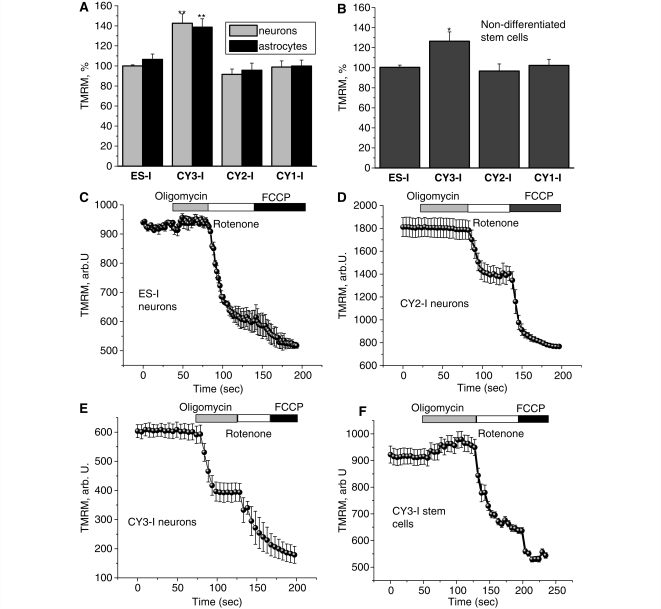
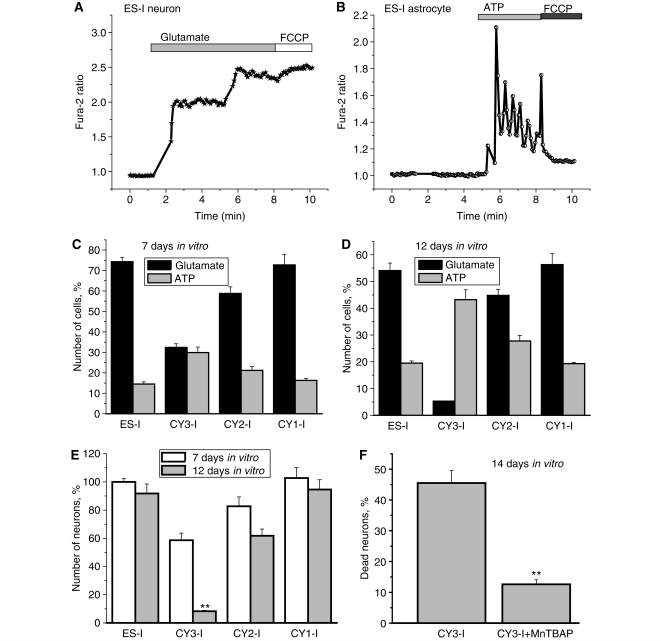
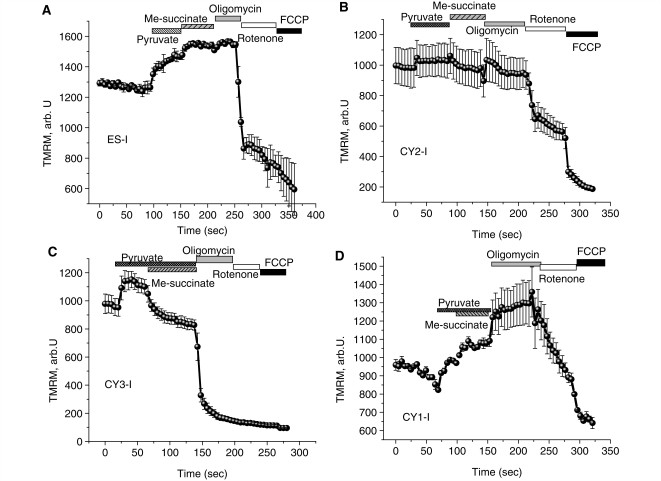
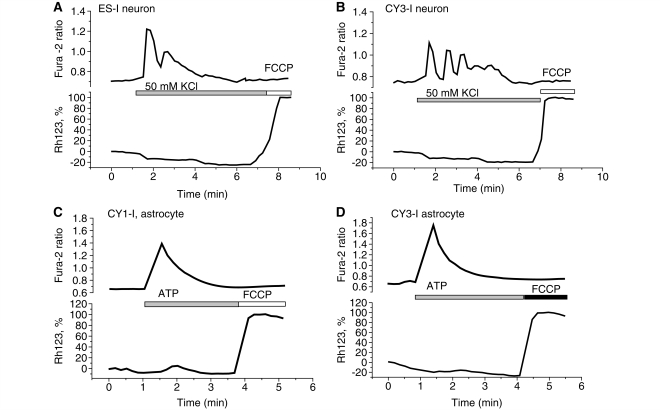
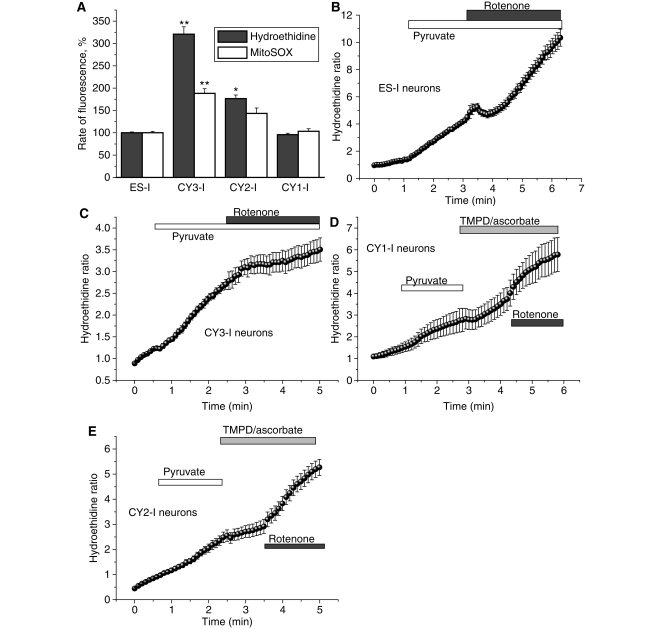
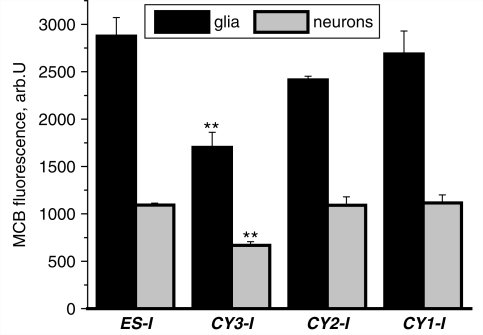
Mutations of mitochondrial DNA are associated with a wide spectrum of disorders, primarily affecting the central nervous system and muscle function. The specific consequences of mitochondrial DNA mutations for neuronal pathophysiology are not understood. In order to explore the impact of mitochondrial mutations on neuronal biochemistry and physiology, we have used fluorescence imaging techniques to examine changes in mitochondrial function in neurons differentiated from mouse embryonic stem-cell cybrids containing mitochondrial DNA polymorphic variants or mutations. Surprisingly, in neurons carrying a severe mutation in respiratory complex I (<10% residual complex I activity) the mitochondrial membrane potential was significantly increased, but collapsed in response to oligomycin, suggesting that the mitochondrial membrane potential was maintained by the F(1)F(o) ATPase operating in 'reverse' mode. In cells with a mutation in complex IV causing approximately 40% residual complex IV activity, the mitochondrial membrane potential was not significantly different from controls. The rate of generation of mitochondrial reactive oxygen species, measured using hydroethidium and signals from the mitochondrially targeted hydroethidine, was increased in neurons with both the complex I and complex IV mutations. Glutathione was depleted, suggesting significant oxidative stress in neurons with a complex I deficiency, but not in those with a complex IV defect. In the neurons with complex I deficiency but not the complex IV defect, neuronal death was increased and was attenuated by reactive oxygen species scavengers. Thus, in neurons with a severe mutation of complex I, the maintenance of a high potential by F(1)F(o) ATPase activity combined with an impaired respiratory chain causes oxidative stress which promotes cell death.
线粒体 DNA 的突变与广泛的疾病有关,主要影响中枢神经系统和肌肉功能。线粒体 DNA 突变对神经元病理生理学的具体影响尚不清楚。为了探讨线粒体突变对神经元生物化学和生理学的影响,我们使用荧光成像技术检查了来自含有线粒体 DNA 多态性或突变的小鼠胚胎干细胞杂种的神经元中线粒体功能的变化。令人惊讶的是,在携带呼吸复合物 I 严重突变(<10%残留复合物 I 活性)的神经元中,线粒体膜电位显著增加,但对寡霉素的反应性下降,表明线粒体膜电位由以“反向”模式运行的 F(1)F(o)ATP 酶维持。在复合物 IV 突变导致约 40%残留复合物 IV 活性的细胞中,线粒体膜电位与对照无显著差异。使用羟乙基二氢乙锭和靶向线粒体的羟乙基二氢乙锭的信号测量线粒体活性氧的产生速率,在具有复合物 I 和复合物 IV 突变的神经元中均增加。谷胱甘肽耗竭,表明复合物 I 缺乏的神经元中存在明显的氧化应激,但复合物 IV 缺陷的神经元中则没有。在具有复合物 I 缺陷但不具有复合物 IV 缺陷的神经元中,神经元死亡增加,并且通过活性氧清除剂减轻。因此,在具有严重复合物 I 突变的神经元中,F(1)F(o)ATP 酶活性维持高电位与呼吸链受损相结合导致氧化应激,从而促进细胞死亡。