Lymphocyte Development Group, MRC Clinical Sciences Centre, Imperial College School of Medicine, Hammersmith Campus, Du Cane Road, London W12 0NN, UK.
Epigenetics Chromatin. 2010 Jan 12;3:1. doi: 10.1186/1756-8935-3-1.
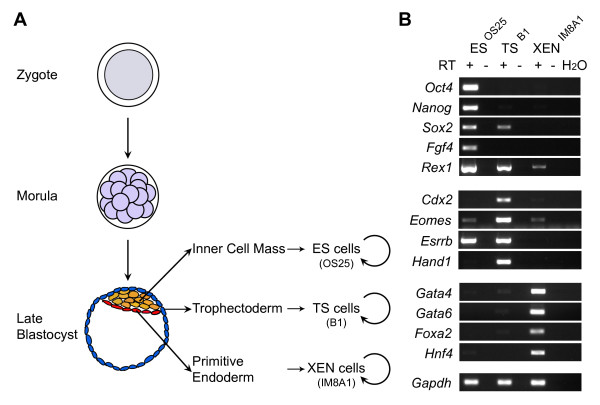
During early mouse development, two extra-embryonic lineages form alongside the future embryo: the trophectoderm (TE) and the primitive endoderm (PrE). Epigenetic changes known to take place during these early stages include changes in DNA methylation and modified histones, as well as dynamic changes in gene expression.
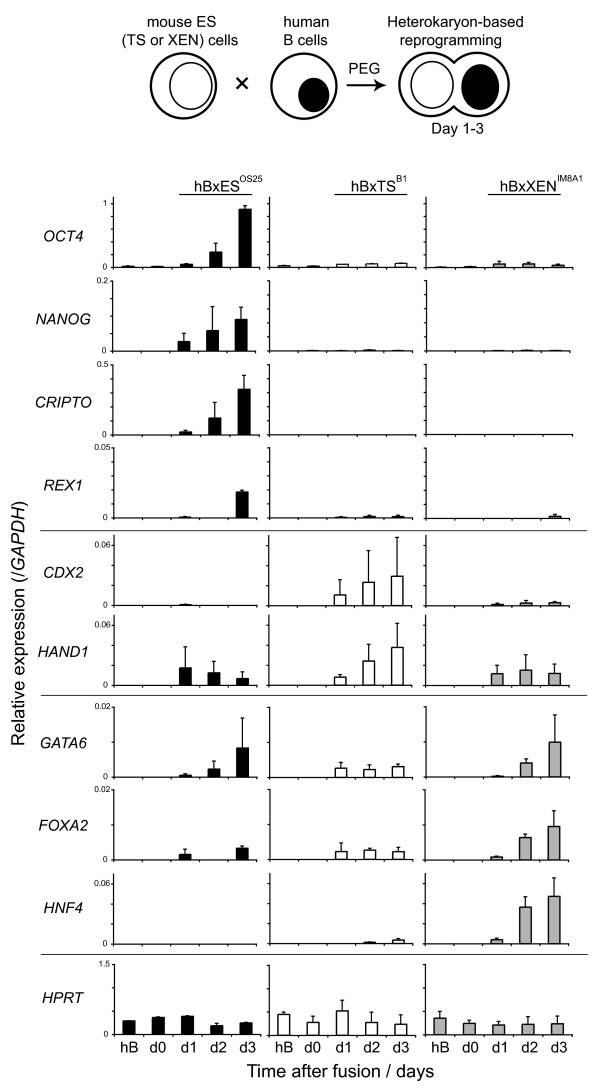
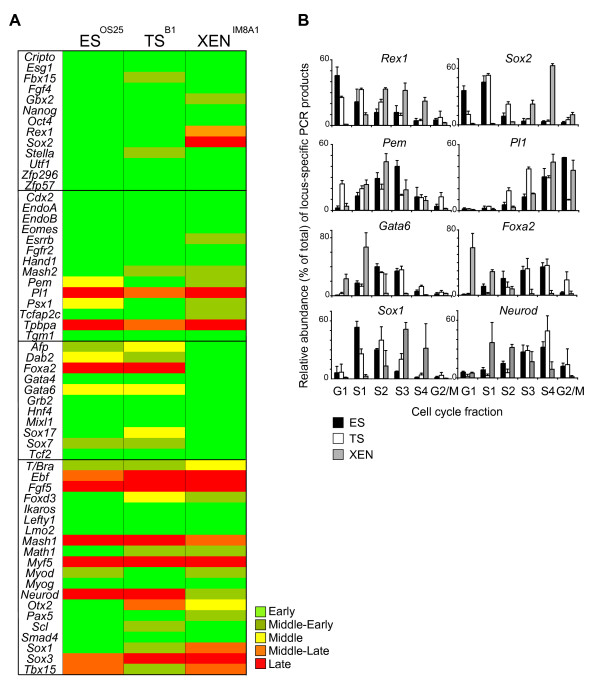
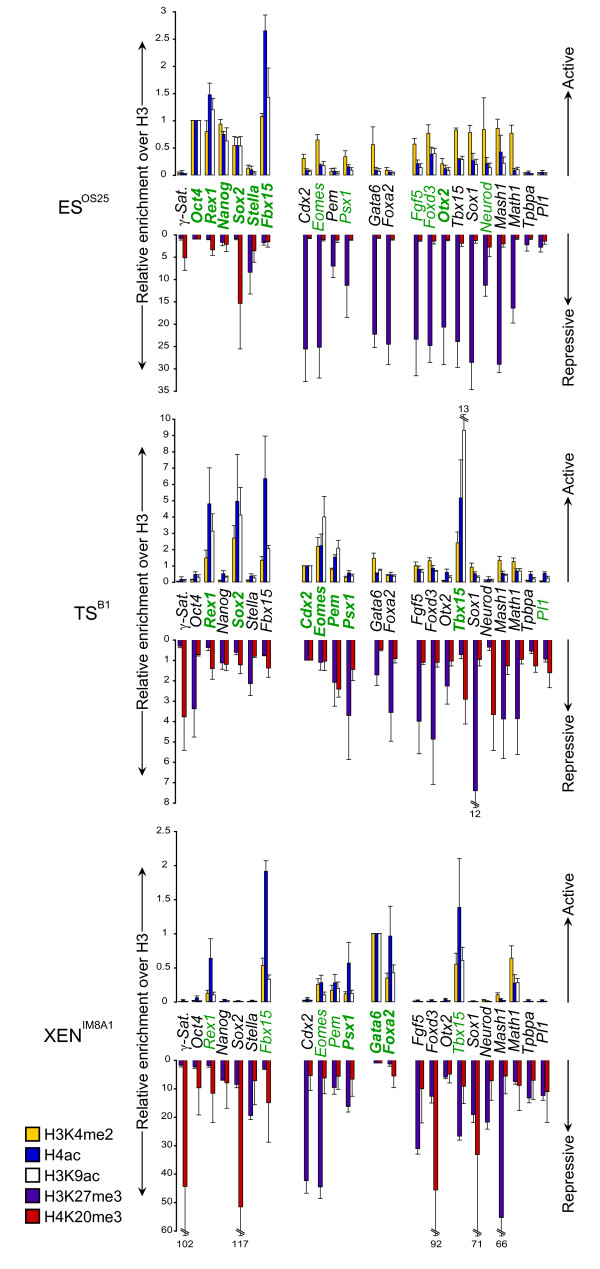
In order to understand the role and extent of chromatin-based changes for lineage commitment within the embryo, we examined the epigenetic profiles of mouse embryonic stem (ES), trophectoderm stem (TS) and extra-embryonic endoderm (XEN) stem cell lines that were derived from the inner cell mass (ICM), TE and PrE, respectively. As an initial indicator of the chromatin state, we assessed the replication timing of a cohort of genes in each cell type, based on data that expressed genes and acetylated chromatin domains, generally, replicate early in S-phase, whereas some silent genes, hypoacetylated or condensed chromatin tend to replicate later. We found that many lineage-specific genes replicate early in ES, TS and XEN cells, which was consistent with a broadly 'accessible' chromatin that was reported previously for multiple ES cell lines. Close inspection of these profiles revealed differences between ES, TS and XEN cells that were consistent with their differing lineage affiliations and developmental potential. A comparative analysis of modified histones at the promoters of individual genes showed that in TS and ES cells many lineage-specific regulator genes are co-marked with modifications associated with active (H4ac, H3K4me2, H3K9ac) and repressive (H3K27me3) chromatin. However, in XEN cells several of these genes were marked solely by repressive modifications (such as H3K27me3, H4K20me3). Consistent with TS and XEN having a restricted developmental potential, we show that these cells selectively reprogramme somatic cells to induce the de novo expression of genes associated with extraembryonic differentiation.
These data provide evidence that the diversification of defined embryonic and extra-embryonic lineages is accompanied by chromatin remodelling at specific loci. Stem cell lines from the ICM, TE and PrE can each dominantly reprogramme somatic cells but reset gene expression differently, reflecting their separate lineage identities and increasingly restricted developmental potentials.
在早期的小鼠胚胎发育过程中,除了未来的胚胎之外,还有两个胚外谱系形成:滋养外胚层(TE)和原始内胚层(PrE)。已知在这些早期阶段发生的表观遗传变化包括 DNA 甲基化和修饰组蛋白的变化,以及基因表达的动态变化。
为了了解胚胎中谱系决定的基于染色质的变化的作用和程度,我们检查了来自内细胞团(ICM)、TE 和 PrE 的小鼠胚胎干细胞(ES)、滋养外胚层干细胞(TS)和胚胎外内胚层干细胞(XEN)干细胞系的表观遗传谱。作为染色质状态的初始指标,我们根据数据评估了每个细胞类型中一组基因的复制时间,这些数据表示基因和乙酰化染色质结构域通常在 S 期早期复制,而一些沉默基因、低乙酰化或浓缩的染色质往往在后期复制。我们发现许多谱系特异性基因在 ES、TS 和 XEN 细胞中早期复制,这与先前报道的多种 ES 细胞系中广泛的“可及”染色质一致。对这些图谱的仔细检查揭示了 ES、TS 和 XEN 细胞之间的差异,这些差异与其不同的谱系归属和发育潜力一致。对个别基因启动子处修饰组蛋白的比较分析表明,在 TS 和 ES 细胞中,许多谱系特异性调节基因与与活跃(H4ac、H3K4me2、H3K9ac)和抑制(H3K27me3)染色质相关的修饰共同标记。然而,在 XEN 细胞中,其中一些基因仅被抑制修饰标记(如 H3K27me3、H4K20me3)。与 TS 和 XEN 具有有限的发育潜力一致,我们表明这些细胞选择性地重编程体细胞以诱导与胚胎外分化相关的新基因的表达。
这些数据提供了证据表明,定义明确的胚胎和胚外谱系的多样化伴随着特定基因座的染色质重塑。来自 ICM、TE 和 PrE 的干细胞系都可以主导地重编程体细胞,但以不同的方式重置基因表达,反映了它们各自的谱系身份和越来越受限制的发育潜力。