School of Chinese Medicine, Chinese University of Hong Kong, Shatin, NT, Hong Kong, China.
Mar Drugs. 2010 Jan 19;8(1):80-90. doi: 10.3390/md8010080.
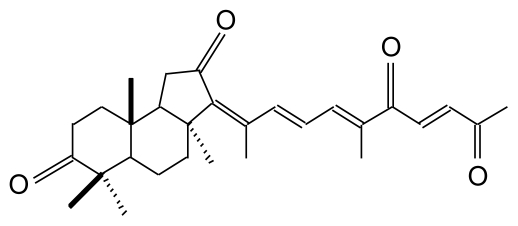
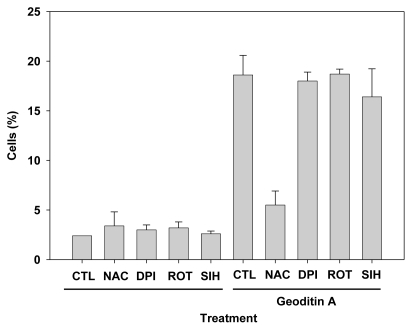
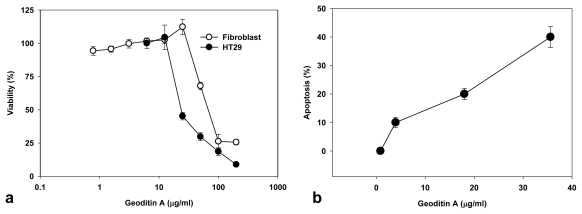
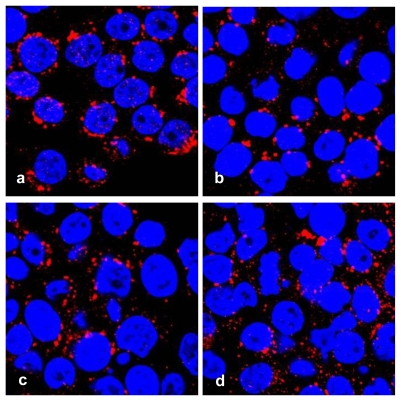
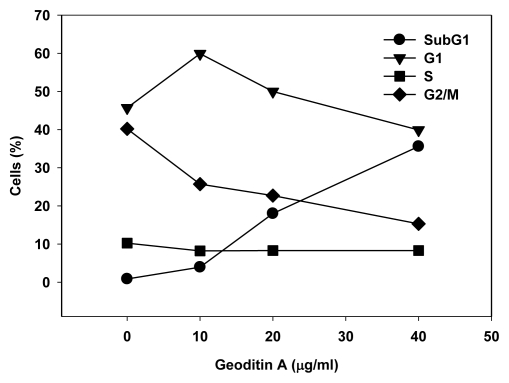
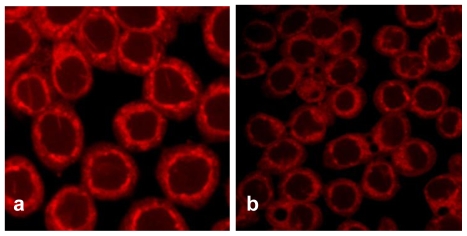
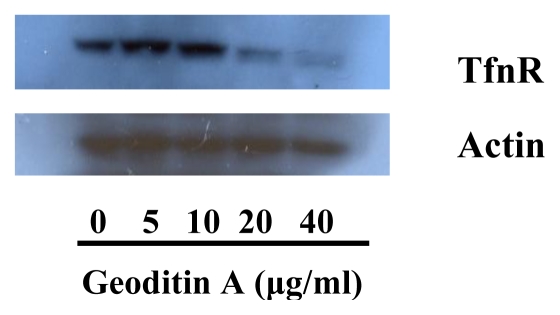
Geoditin A, an isomalabaricane triterpene isolated from the marine sponge Geodia japonica, has been demonstrated to dissipate mitochondrial membrane potential, activate caspase 3, decrease cytoplasmic proliferating cell nuclear antigen (PCNA), and induce apoptosis of leukemia cells, but the underlying mechanism remains unclear [1]. In this study, we found fragmentation of Golgi structure, suppression of transferrin receptor expression, production of oxidants, and DNA fragmentation in human colon cancer HT29 cells after treatment with geoditin A for 24 h. This apoptosis was not abrogated by chelation of intracellular iron with salicylaldehyde isonicotinoyl hydrazone (SIH), but suppressed by N-acetylcysteine (NAC), a thiol antioxidant and GSH precursor, indicating that the cytotoxic effect of geoditin A is likely mediated by a NAC-inhibitable oxidative stress. Our results provide a better understanding of the apoptotic properties and chemotherapeutical potential of this marine triterpene.
从海洋海绵 Geodia japonica 中分离得到的异马巴烷型三萜 Geoditin A 已被证明可以耗散线粒体膜电位,激活半胱天冬酶 3,减少细胞质增殖细胞核抗原(PCNA),并诱导白血病细胞凋亡,但潜在机制尚不清楚[1]。在这项研究中,我们发现经过 24 小时 Geoditin A 处理后,人结肠癌细胞 HT29 中的高尔基体结构碎片化,转铁蛋白受体表达受到抑制,产生氧化剂,以及 DNA 片段化。用水杨醛异烟酰腙(SIH)螯合细胞内铁并不能消除这种细胞凋亡,但 N-乙酰半胱氨酸(NAC),一种硫醇抗氧化剂和 GSH 前体,可以抑制这种凋亡,表明 Geoditin A 的细胞毒性作用可能是由 NAC 抑制的氧化应激介导的。我们的研究结果为更好地理解这种海洋三萜的凋亡特性和化疗潜力提供了依据。