Oregon Stem Cell Center, Oregon Health and Science University, Portland, OR 97203, USA.
Hepatology. 2010 Apr;51(4):1200-8. doi: 10.1002/hep.23481.
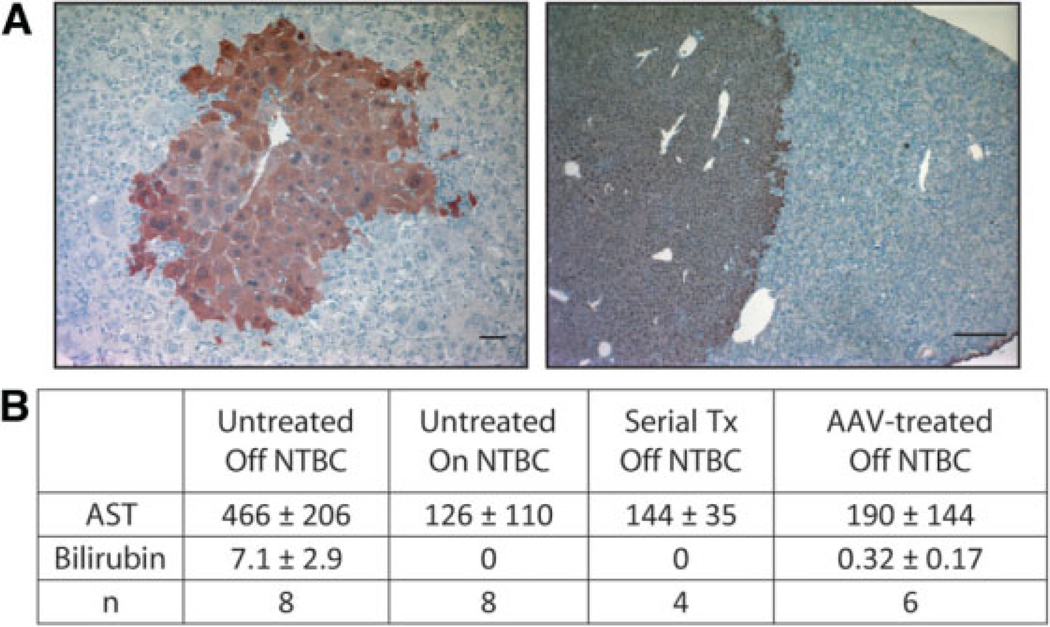
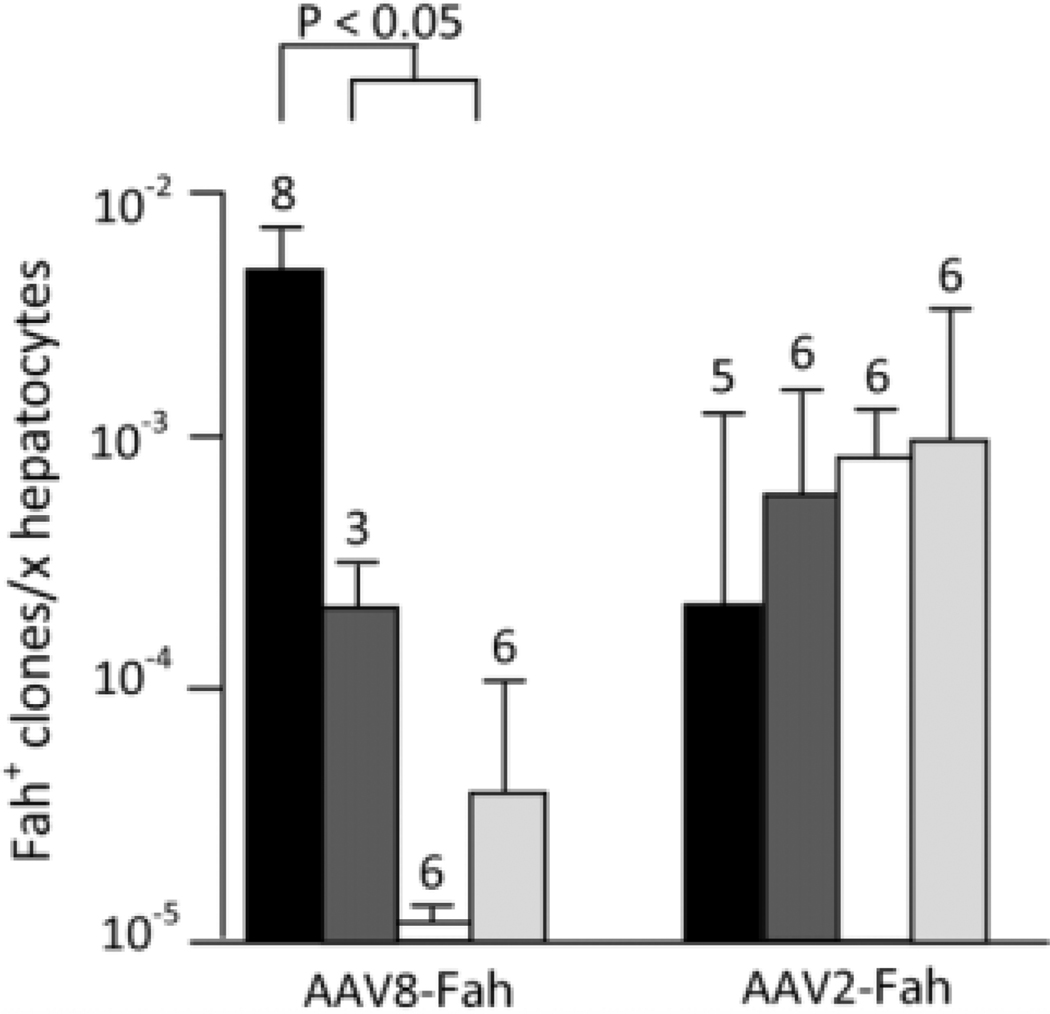
Adeno-associated virus (AAV) vectors are ideal for performing gene repair due to their ability to target multiple different genomic loci, low immunogenicity, capability to achieve targeted and stable expression through integration, and low mutagenic and oncogenic potential. However, many handicaps to gene repair therapy remain. Most notable is the low frequency of correction in vivo. To date, this frequency is too low to be of therapeutic value for any disease. To address this, a point-mutation-based mouse model of the metabolic disease hereditary tyrosinemia type I was used to test whether targeted AAV integration by homologous recombination could achieve high-level stable gene repair in vivo. Both neonatal and adult mice were treated with AAV serotypes 2 and 8 carrying a wild-type genomic sequence for repairing the mutated Fah (fumarylacetoacetate hydrolase) gene. Hepatic gene repair was quantified by immunohistochemistry and supported with reverse transcription polymerase chain reaction and serology for functional correction parameters. Successful gene repair was observed with both serotypes but was more efficient with AAV8. Correction frequencies of up to 10(-3) were achieved and highly reproducible within typical dose ranges. In this model, repaired hepatocytes have a selective growth advantage and are thus able to proliferate to efficiently repopulate mutant livers and cure the underlying metabolic disease.
AAV-mediated gene repair is feasible in vivo and can functionally correct an appropriate selection-based metabolic liver disease in both adults and neonates.
腺相关病毒 (AAV) 载体是进行基因修复的理想选择,因为它们能够靶向多个不同的基因组位点,免疫原性低,能够通过整合实现靶向和稳定表达,并且突变和致癌潜力低。然而,基因修复治疗仍存在许多障碍。最值得注意的是体内校正的频率低。迄今为止,这种频率太低,对于任何疾病都没有治疗价值。为了解决这个问题,使用基于点突变的代谢疾病遗传性酪氨酸血症 I 型的小鼠模型来测试同源重组靶向 AAV 整合是否可以在体内实现高水平的稳定基因修复。用携带修复突变 Fah(延胡索酰乙酰乙酸水解酶)基因的野生型基因组序列的 AAV 血清型 2 和 8 对新生和成年小鼠进行治疗。通过免疫组织化学定量肝基因修复,并通过逆转录聚合酶链反应和血清学支持功能校正参数。两种血清型都观察到了成功的基因修复,但 AAV8 更有效。高达 10(-3)的校正频率得以实现,并且在典型剂量范围内具有高度可重复性。在该模型中,修复的肝细胞具有选择性生长优势,因此能够有效地增殖以有效取代突变肝脏并治愈潜在的代谢疾病。
AAV 介导的基因修复在体内是可行的,可以在成年和新生儿中功能性地纠正适当的基于选择的代谢性肝脏疾病。