Graduate School of Information Science, Nara Institute of Science and Technology, Ikoma, Japan.
PLoS Comput Biol. 2010 Feb 12;6(2):e1000670. doi: 10.1371/journal.pcbi.1000670.
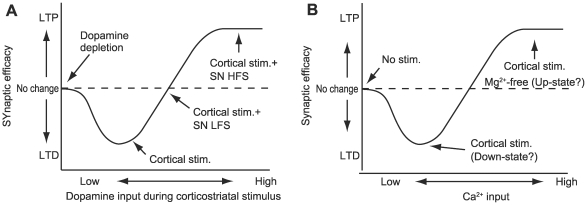
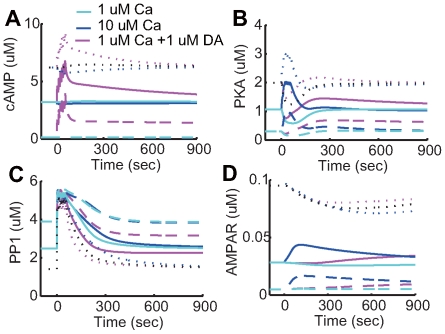
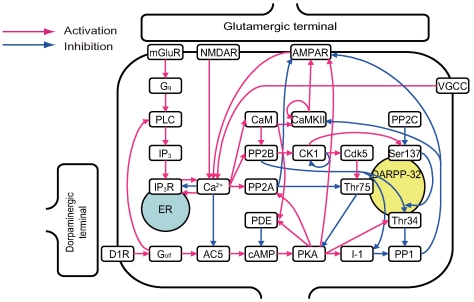
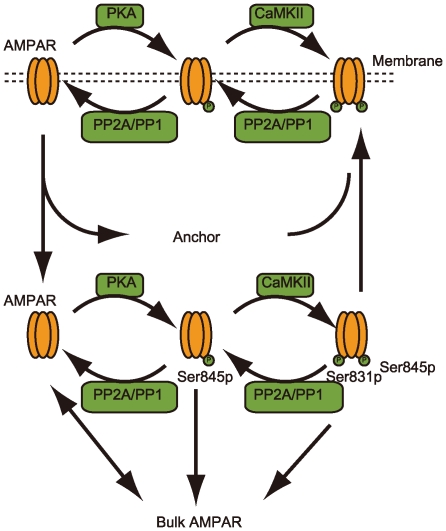
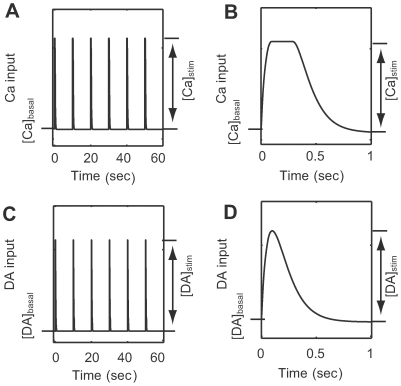
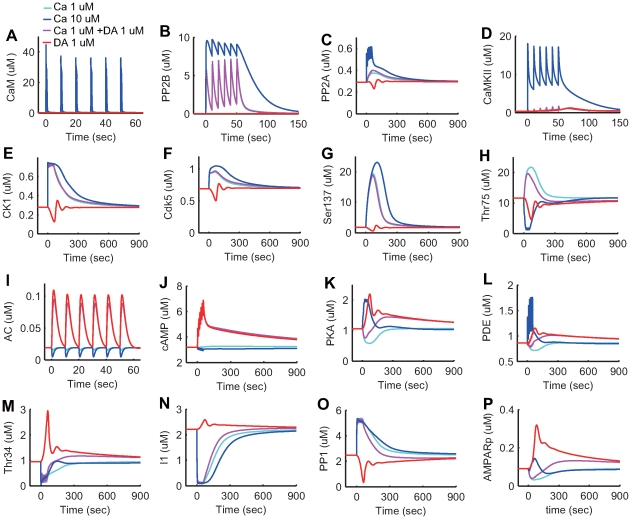
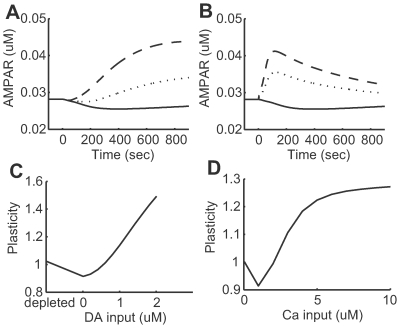
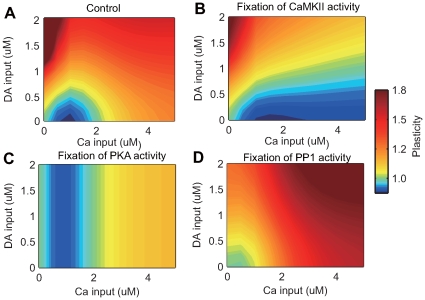
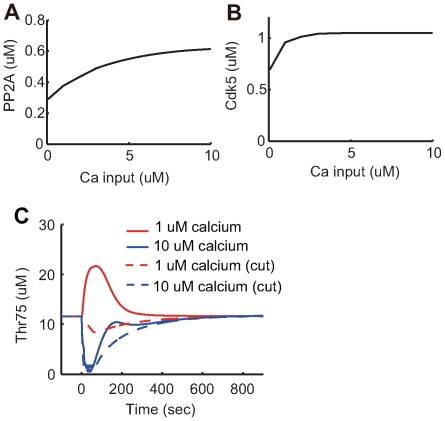
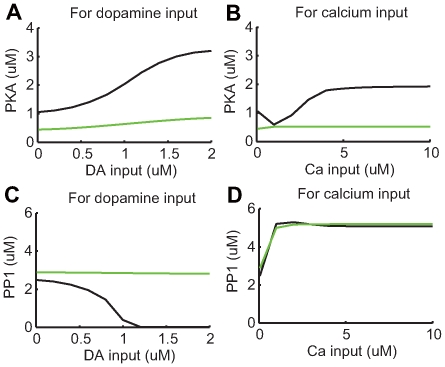
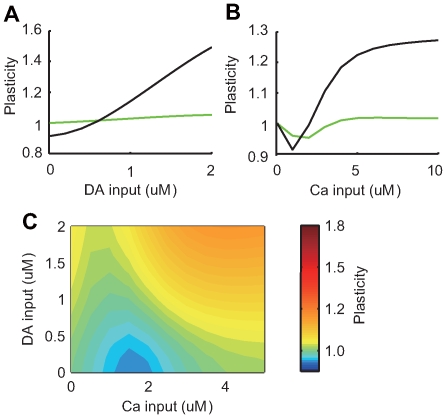
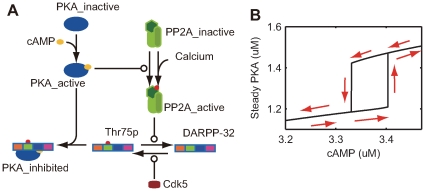
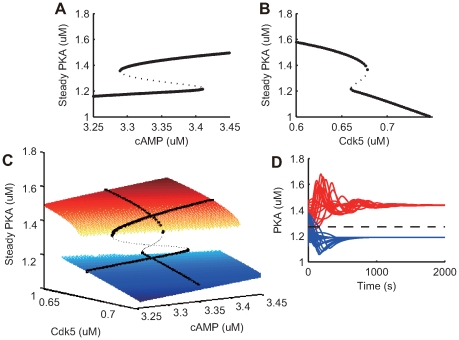
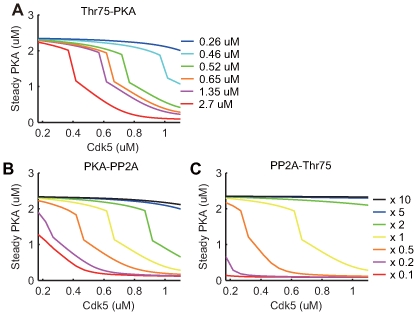
Corticostriatal synapse plasticity of medium spiny neurons is regulated by glutamate input from the cortex and dopamine input from the substantia nigra. While cortical stimulation alone results in long-term depression (LTD), the combination with dopamine switches LTD to long-term potentiation (LTP), which is known as dopamine-dependent plasticity. LTP is also induced by cortical stimulation in magnesium-free solution, which leads to massive calcium influx through NMDA-type receptors and is regarded as calcium-dependent plasticity. Signaling cascades in the corticostriatal spines are currently under investigation. However, because of the existence of multiple excitatory and inhibitory pathways with loops, the mechanisms regulating the two types of plasticity remain poorly understood. A signaling pathway model of spines that express D1-type dopamine receptors was constructed to analyze the dynamic mechanisms of dopamine- and calcium-dependent plasticity. The model incorporated all major signaling molecules, including dopamine- and cyclic AMP-regulated phosphoprotein with a molecular weight of 32 kDa (DARPP32), as well as AMPA receptor trafficking in the post-synaptic membrane. Simulations with dopamine and calcium inputs reproduced dopamine- and calcium-dependent plasticity. Further in silico experiments revealed that the positive feedback loop consisted of protein kinase A (PKA), protein phosphatase 2A (PP2A), and the phosphorylation site at threonine 75 of DARPP-32 (Thr75) served as the major switch for inducing LTD and LTP. Calcium input modulated this loop through the PP2B (phosphatase 2B)-CK1 (casein kinase 1)-Cdk5 (cyclin-dependent kinase 5)-Thr75 pathway and PP2A, whereas calcium and dopamine input activated the loop via PKA activation by cyclic AMP (cAMP). The positive feedback loop displayed robust bi-stable responses following changes in the reaction parameters. Increased basal dopamine levels disrupted this dopamine-dependent plasticity. The present model elucidated the mechanisms involved in bidirectional regulation of corticostriatal synapses and will allow for further exploration into causes and therapies for dysfunctions such as drug addiction.
纹状体中间神经元的皮质纹状体突触可塑性受来自皮质的谷氨酸输入和来自黑质的多巴胺输入的调节。虽然单独的皮质刺激会导致长时程抑郁(LTD),但与多巴胺的组合会将 LTD 转换为长时程增强(LTP),这被称为多巴胺依赖性可塑性。在无镁溶液中的皮质刺激也会诱导 LTP,这会导致大量钙离子通过 NMDA 型受体流入,并被视为钙依赖性可塑性。目前正在研究皮质纹状体棘突中的信号级联。然而,由于存在多个具有环路的兴奋性和抑制性途径,调节这两种类型可塑性的机制仍知之甚少。构建了表达 D1 型多巴胺受体的棘突信号通路模型,以分析多巴胺和钙依赖性可塑性的动态机制。该模型纳入了所有主要的信号分子,包括多巴胺和 32kDa 分子量的环 AMP 调节磷蛋白(DARPP32),以及突触后膜中的 AMPA 受体转运。多巴胺和钙输入的模拟再现了多巴胺和钙依赖性可塑性。进一步的计算机实验表明,由蛋白激酶 A(PKA)、蛋白磷酸酶 2A(PP2A)和 DARPP-32 的苏氨酸 75 位磷酸化(Thr75)组成的正反馈环是诱导 LTD 和 LTP 的主要开关。钙输入通过 PP2B(磷酸酶 2B)-CK1(酪蛋白激酶 1)-Cdk5(细胞周期蛋白依赖性激酶 5)-Thr75 途径和 PP2A 调节该环,而钙和多巴胺输入通过 cAMP(环 AMP)激活 PKA 来激活该环。正反馈环在反应参数变化后表现出稳健的双稳态响应。基础多巴胺水平升高会破坏这种多巴胺依赖性可塑性。该模型阐明了皮质纹状体突触双向调节的机制,并将有助于进一步探索成瘾等功能障碍的原因和治疗方法。