Unidad de Genética Bacteriana, Centro Nacional de Microbiología, Instituto de Salud Carlos III and CIBER Enfermedades Respiratorias, 28220 Majadahonda, Madrid, Spain.
Nucleic Acids Res. 2010 Jun;38(11):3570-81. doi: 10.1093/nar/gkq106. Epub 2010 Feb 21.
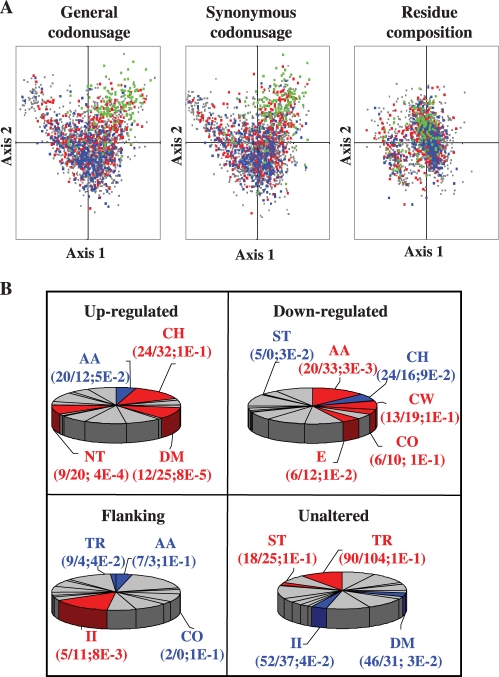
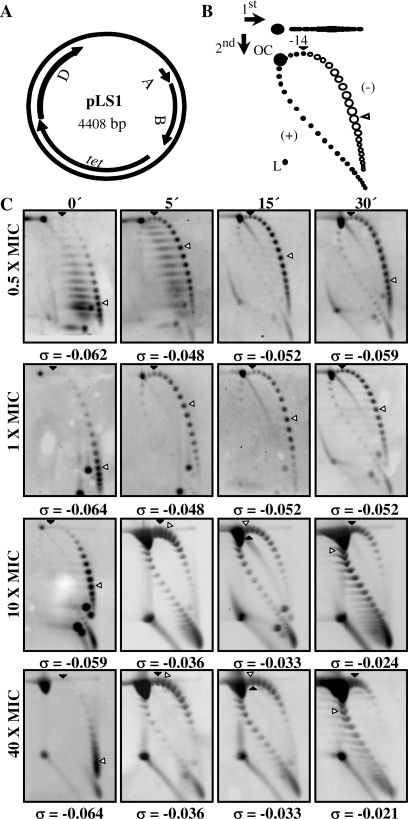
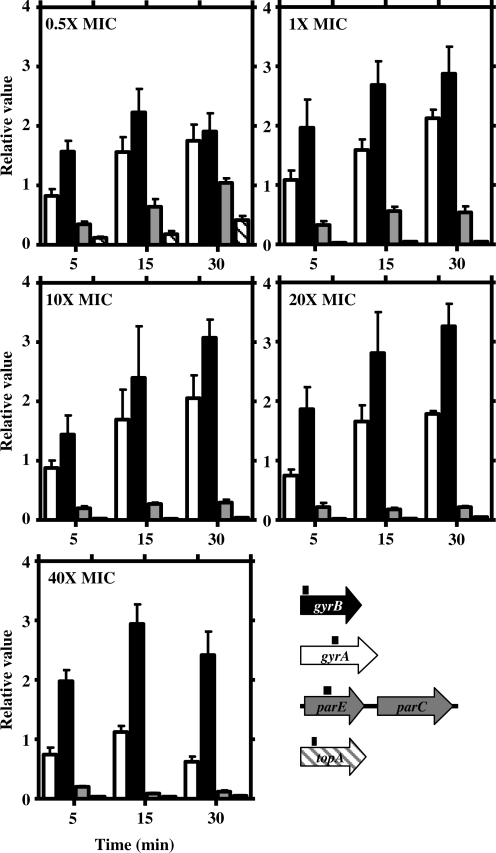
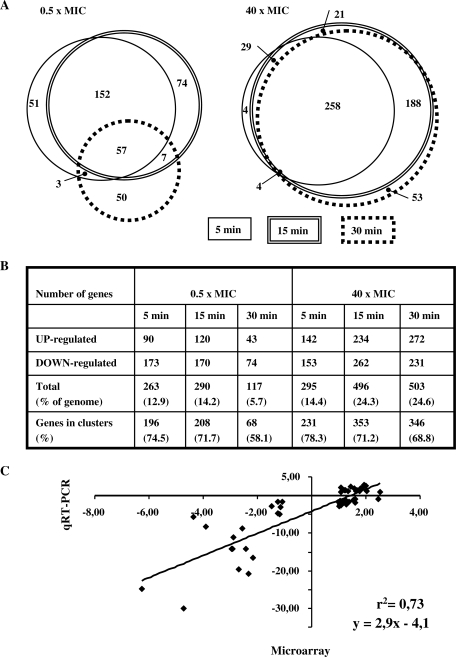
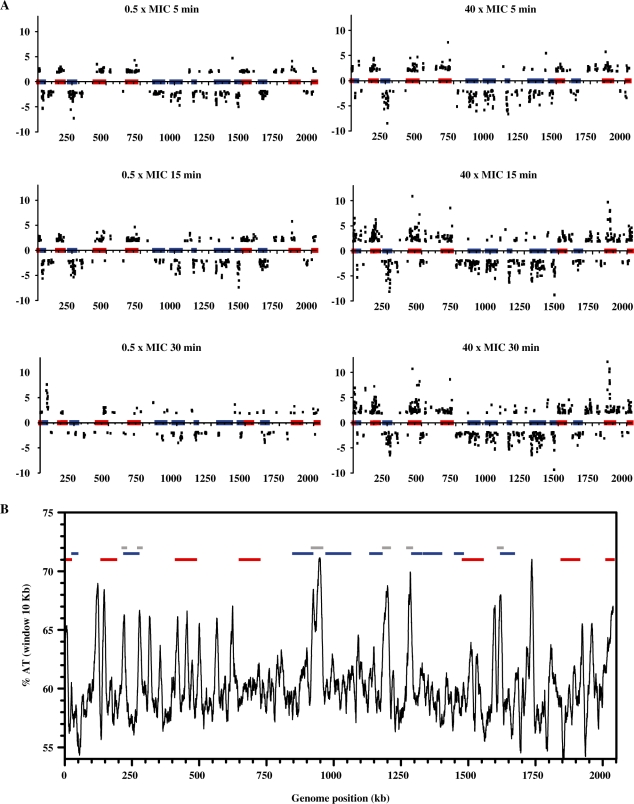
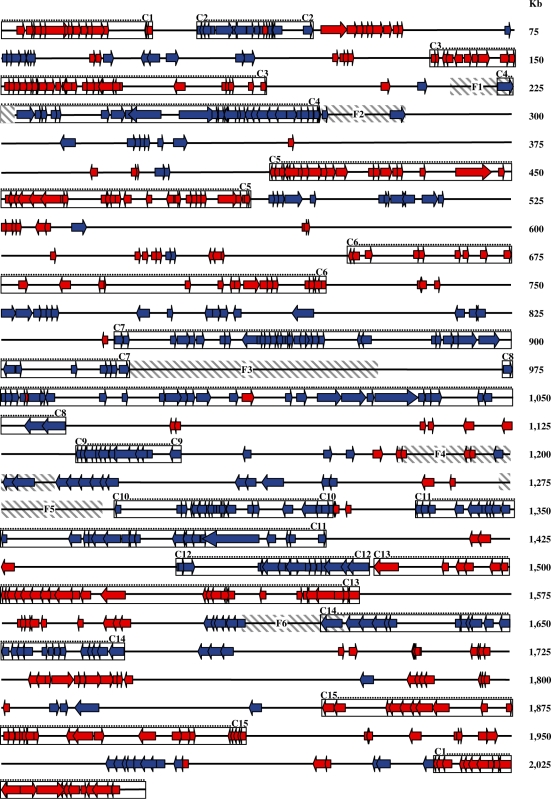
The transcriptional response of Streptococcus pneumoniae was examined after exposure to the GyrB-inhibitor novobiocin. Topoisomer distributions of an internal plasmid confirmed DNA relaxation and recovery of the native level of supercoiling at low novobiocin concentrations. This was due to the up-regulation of DNA gyrase and the down-regulation of topoisomerases I and IV. In addition, >13% of the genome exhibited relaxation-dependent transcription. The majority of the responsive genes (>68%) fell into 15 physical clusters (14.6-85.6 kb) that underwent coordinated regulation, independently of operon organization. These genomic clusters correlated with AT content and codon composition, showing the chromosome to be organized into topology-reacting gene clusters that respond to DNA supercoiling. In particular, down-regulated clusters were flanked by 11-40 kb AT-rich zones that might have a putative structural function. This is the first case where genes responding to changes in the level of supercoiling in a coordinated manner were found organized as functional clusters. Such an organization revealed DNA supercoiling as a general feature that controls gene expression superimposed on other kinds of more specific regulatory mechanisms.
肺炎链球菌的转录反应在暴露于 GyrB 抑制剂新生霉素后进行了检查。内部质粒的拓扑分布证实,在低新生霉素浓度下,DNA 松弛并恢复到天然的超螺旋水平。这是由于 DNA 拓扑异构酶 II 的上调和拓扑异构酶 I 和 IV 的下调。此外,>13%的基因组表现出松弛依赖性转录。大多数响应基因(>68%)分为 15 个物理簇(14.6-85.6 kb),这些簇独立于操纵子组织进行协调调节。这些基因组簇与 AT 含量和密码子组成相关,表明染色体组织成拓扑反应基因簇,以响应 DNA 超螺旋。特别是,下调的簇由 11-40 kb 的富含 AT 的区域包围,这些区域可能具有潜在的结构功能。这是第一个以协调方式响应超螺旋水平变化的基因被组织成功能簇的案例。这种组织方式揭示了 DNA 超螺旋作为一种普遍特征,叠加在其他更具体的调节机制上控制基因表达。