Nottingham University Medical School, Queen's Medical Centre, Nottingham NG7 2UH, UK.
BMC Med Ethics. 2010 Feb 23;11:2. doi: 10.1186/1472-6939-11-2.
The attitudes of patients' to consent have changed over the years, but there has been little systematic study of the attitudes of anaesthetists and surgeons in this process. We aimed to describe observations made on the attitudes of medical professionals working in the UK to issues surrounding informed consent.
A questionnaire made up of 35 statements addressing the process of consent for anaesthesia and surgery was distributed to randomly selected anaesthetists and surgeons in Queen's Medical Centre (Nottingham), Royal Sussex County Hospital (Brighton) and Eastbourne District General Hospital (Eastbourne) during 2007. Participants were asked to what extent they agreed with statements regarding consent.
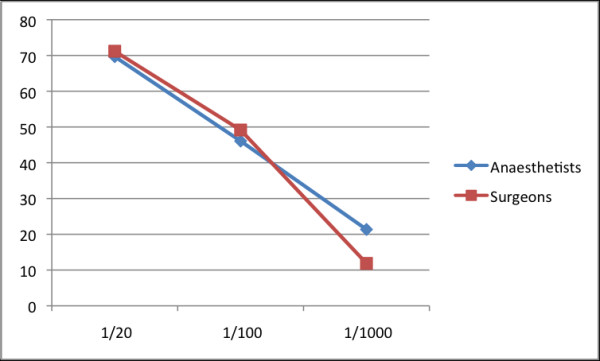
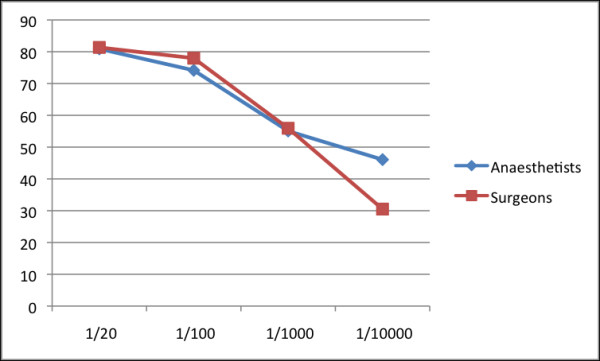
Of 234 questionnaires distributed, 63% were returned. Of the respondents 79% agreed that the main purpose of the consent process is to respect patient autonomy. While 55% of the examined cohort agreed that the consent process maybe inappropriate as patients do not usually remember all the information given to them. Furthermore, 84% of the participants agreed that what the procedure aims to achieve should be explained to the patient during the consent process. While of the participants, over 70% agreed that major risks of incidence greater than 1/100 should be disclosed to the patient as part of the consent process.
The majority of respondents appear to hold attitudes in standing with current guidelines on informed consent however there was still a significant minority who held more paternalistic views to the consent process bringing into question the need for further training in the area.
多年来,患者对同意的态度发生了变化,但对麻醉师和外科医生在此过程中的态度几乎没有进行系统研究。我们旨在描述英国医疗专业人员对知情同意相关问题的态度观察。
2007 年,我们向皇后医疗中心(诺丁汉)、皇家苏塞克斯郡医院(布莱顿)和伊斯特本区综合医院的随机抽取的麻醉师和外科医生分发了一份由 35 个陈述组成的问卷,这些陈述涉及麻醉和手术的同意过程。参与者被要求在多大程度上同意关于同意的陈述。
在分发的 234 份问卷中,有 63%的问卷被收回。在回答者中,79%的人同意同意过程的主要目的是尊重患者自主权。虽然 55%的被调查者同意同意过程可能不合适,因为患者通常不会记住向他们提供的所有信息。此外,84%的参与者同意在同意过程中应向患者解释手术的目的。虽然超过 70%的参与者同意应将发生率大于 1/100 的主要风险告知患者作为同意过程的一部分。
大多数受访者似乎对知情同意的现行准则持有支持的态度,但仍有相当一部分人对同意过程持有更家长式的观点,这引发了对该领域进一步培训的需求。