Cardiovascular Research Center, University of Connecticut School of Medicine, Farmington, CT 06030-1110, USA.
Gene Ther. 2010 Apr;17(4):478-85. doi: 10.1038/gt.2010.9. Epub 2010 Feb 25.
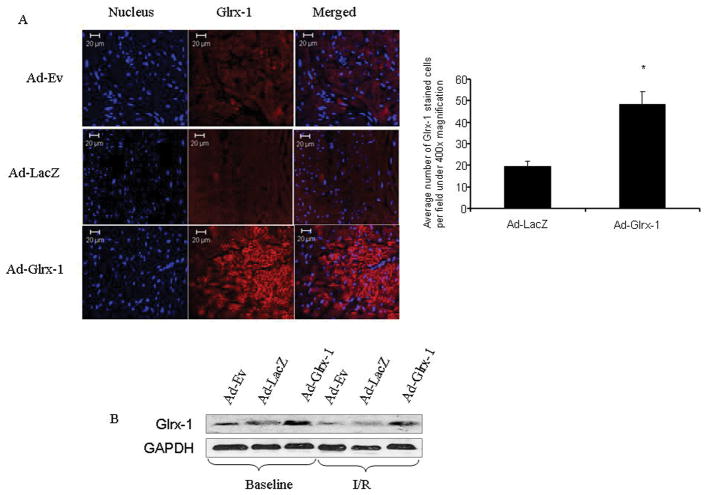
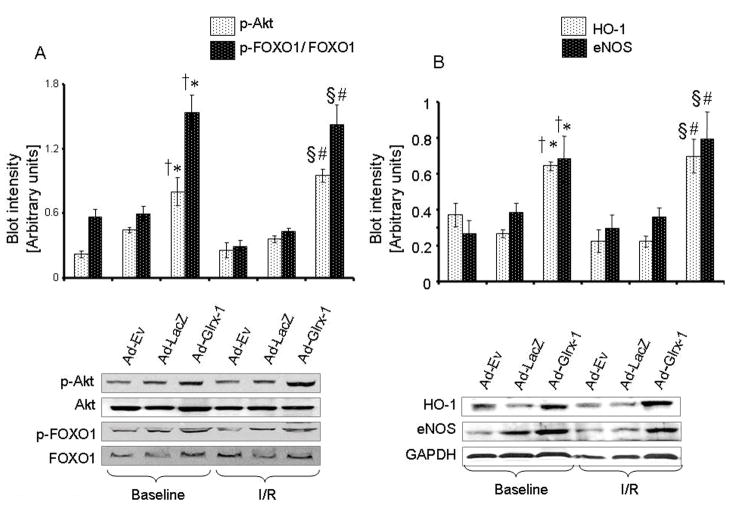
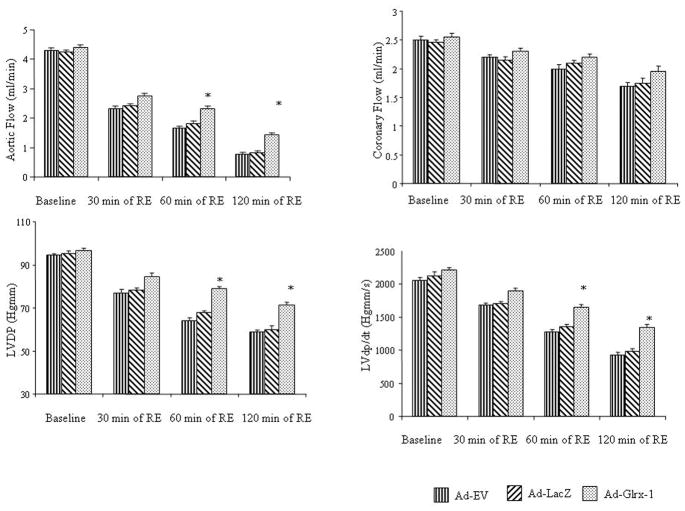
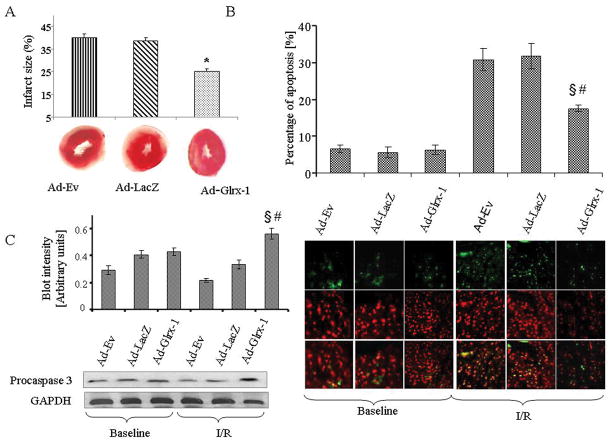
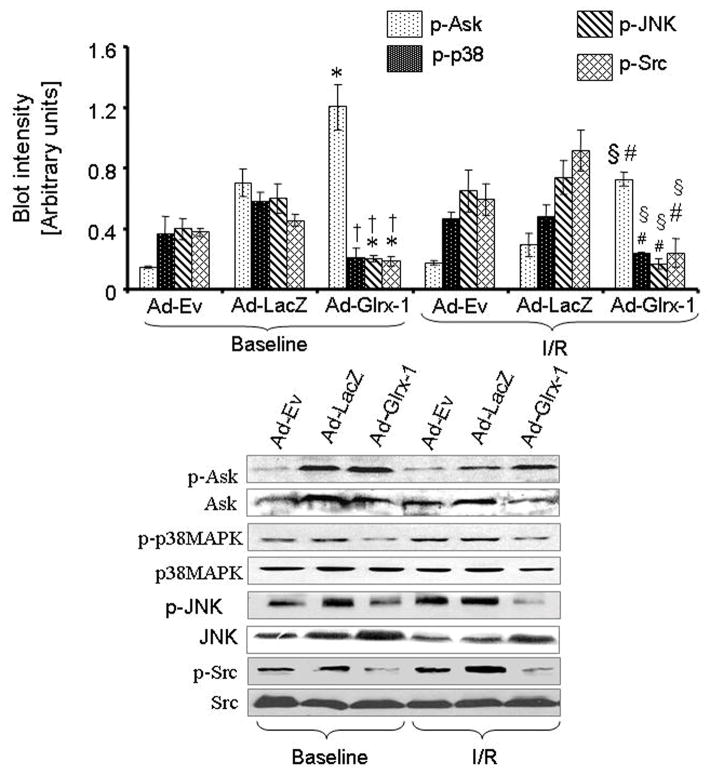
Recent studies suggest that glutaredoxin-1 (Glrx-1) may serve as therapeutic target for diabetic hearts. As the level of reactive oxygen species (ROS) is increased in the pathologic hearts including ischemia/reperfusion (I/R) and diabetes, we assumed that upregulation of Glrx-1 could reduce the cardiac risk factors associated with I/R and/or diabetes. Diabetes was induced in mice by i.p. injection of streptozotocin (150 mg kg(-1)). Eight days after when the blood glucose was elevated to 400 mg per 100 ml, the animals were randomly assigned to one of the following three groups, which received either empty vector, or LacZ or Glrx-1 adenoviral construct. Four days later, isolated working hearts were subjected to 30 min ischemia followed by 2 h reperfusion. Glrx-1 gene therapy significantly enhanced the Glrx-1 level, which prevented I/R-mediated reduction of ventricular recovery, increased myocardial infarct size and cardiomyocyte apoptosis in diabetic myocardium. In concert, Glrx-1 prevented diabetes and ischemia-reperfusion induced reduction of cardioprotective proteins including Akt, FoxO-1, and hemeoxygenase-1, and abolished the death signal triggered by Jnk, p38 mitogen-activated protein kinase, and c-Src. Glrx-1 gene therapy seems to prevent cardiac complications in diabetic heart due to the I/R by switching the death signal into survival signal by activating Akt-FoxO-signaling network.
最近的研究表明,谷氧还蛋白-1(Glrx-1)可能成为糖尿病心脏的治疗靶点。由于包括缺血/再灌注(I/R)和糖尿病在内的病理心脏中活性氧(ROS)水平增加,我们假设 Glrx-1 的上调可以降低与 I/R 和/或糖尿病相关的心脏危险因素。通过腹腔注射链脲佐菌素(150mg/kg)在小鼠中诱导糖尿病。在血糖升高至每 100ml100mg 8 天后,将动物随机分配到以下三组中的一组,分别接受空载体、LacZ 或 Glrx-1 腺病毒构建体。四天后,分离的工作心脏接受 30 分钟缺血,随后进行 2 小时再灌注。Glrx-1 基因治疗显著增强了 Glrx-1 水平,防止了 I/R 介导的心室恢复减少,增加了糖尿病心肌中的心肌梗死面积和心肌细胞凋亡。协同作用下,Glrx-1 预防了糖尿病和缺血再灌注引起的包括 Akt、FoxO-1 和血红素加氧酶-1 在内的心脏保护蛋白减少,并消除了由 Jnk、p38 丝裂原活化蛋白激酶和 c-Src 触发的死亡信号。Glrx-1 基因治疗似乎通过激活 Akt-FoxO 信号通路将死亡信号转换为存活信号,从而防止糖尿病心脏因 I/R 而引起的心脏并发症。