Department of Vascular Medicine, Academic Medical Center/University of Amsterdam, Meibergdreef 9, 1105 AZ Amsterdam, The Netherlands.
Diabetologia. 2010 May;53(5):966-70. doi: 10.1007/s00125-010-1687-y. Epub 2010 Feb 25.
AIMS/HYPOTHESIS: Negative effects on the progression of adenocarcinomas by hyperinsulinaemia and the insulin analogue glargine (A21Gly,B31Arg,B32Arg human insulin) have recently been suggested. Most actions of this insulin analogue have hitherto been explained by direct stimulation of growth potential of neoplastic cells and by its IGF-1 related properties. However, insulin-stimulated angiogenesis could be an additional factor involved in tumour progression and clinical outcomes associated with cancer.
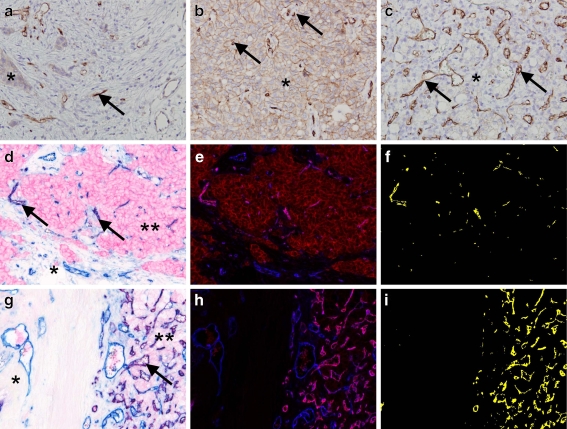
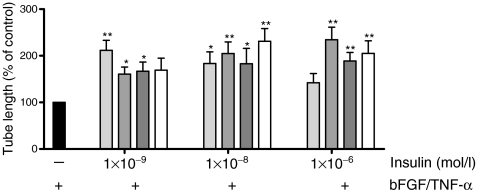
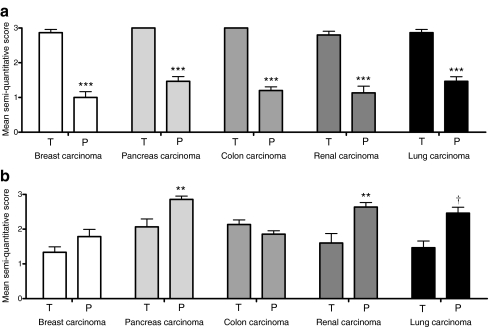
Five types of human adenocarcinoma (breast, colon, pancreas, lung and kidney) were evaluated for the presence of insulin receptors (IRs) on angiogenic structures. In an in vitro angiogenesis assay, various commercially available insulin compounds were evaluated for their potential to increase capillary-like tube formation of human microvascular endothelial cells (hMVEC). Insulin compounds used were: human insulin, insulin lispro (B28Lys,B29Pro human insulin), insulin glargine and insulin detemir (B29Lys[e-tetradecanoyl],desB30 human insulin).
Insulin receptors were found to be strongly expressed on the endothelium of microvessels in all evaluated adenocarcinomas, in addition to variable expression on tumour cells. Low or no detectable expression of IRs was seen on microvessels in extratumoral stroma. Incubation with commercially available insulin compounds increased capillary-like tube formation of hMVEC in vitro.
CONCLUSIONS/INTERPRETATION: Our results suggest that all tested insulin compounds may stimulate tumour growth by enhancing local angiogenesis. Future studies need to confirm the association between insulin therapy in type 2 diabetes and tumour progression.
目的/假设:最近有人提出,高胰岛素血症和胰岛素类似物甘精胰岛素(A21Gly,B31Arg,B32Arg 人胰岛素)对腺癌的进展有负面影响。迄今为止,这种胰岛素类似物的大多数作用都是通过直接刺激肿瘤细胞的生长潜力及其 IGF-1 相关特性来解释的。然而,胰岛素刺激的血管生成可能是肿瘤进展和与癌症相关的临床结果的另一个额外因素。
评估了五种类型的人腺癌(乳腺、结肠、胰腺、肺和肾)中血管生成结构上是否存在胰岛素受体(IRs)。在体外血管生成试验中,评估了各种市售胰岛素化合物增加人微血管内皮细胞(hMVEC)毛细血管样管形成的潜力。使用的胰岛素化合物有人胰岛素、胰岛素赖脯氨酸(B28Lys,B29Pro 人胰岛素)、甘精胰岛素和地特胰岛素(B29Lys[e-十四酰基],desB30 人胰岛素)。
除了肿瘤细胞上的可变表达外,还发现胰岛素受体在所有评估的腺癌的微血管内皮细胞上强烈表达。在肿瘤外基质中的微血管上,IR 的表达低或无法检测到。用市售的胰岛素化合物孵育可增加 hMVEC 的毛细血管样管形成。
结论/解释:我们的结果表明,所有测试的胰岛素化合物都可能通过增强局部血管生成来刺激肿瘤生长。未来的研究需要证实 2 型糖尿病的胰岛素治疗与肿瘤进展之间的关联。