Department of Oral and Maxillofacial Surgery, University of California - San Francisco, San Francisco, CA, USA.
Pain. 2010 May;149(2):263-272. doi: 10.1016/j.pain.2010.02.010. Epub 2010 Mar 1.
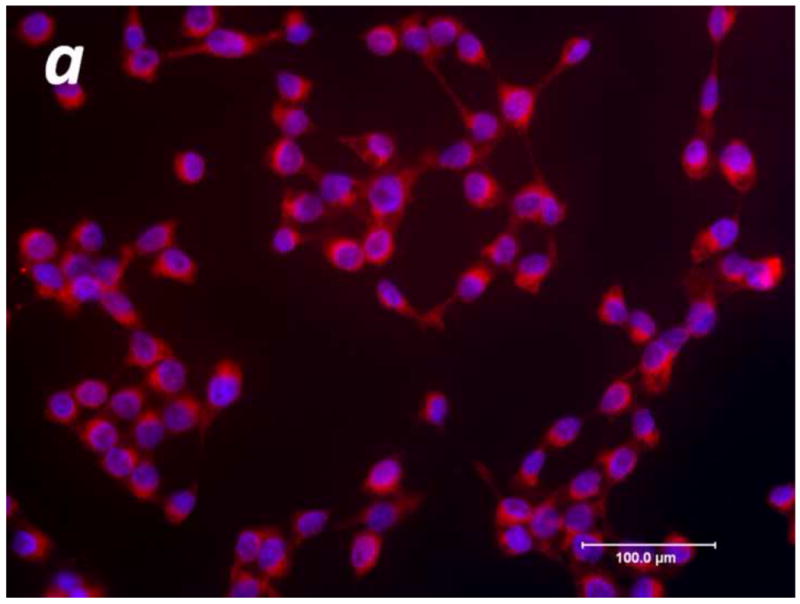
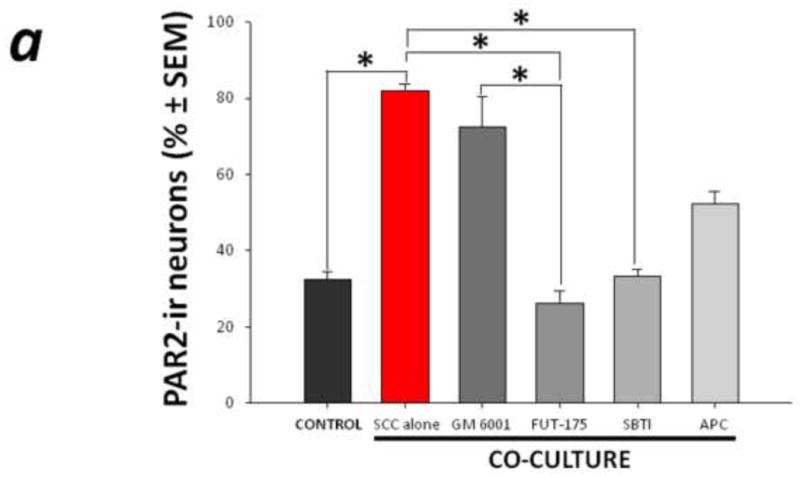
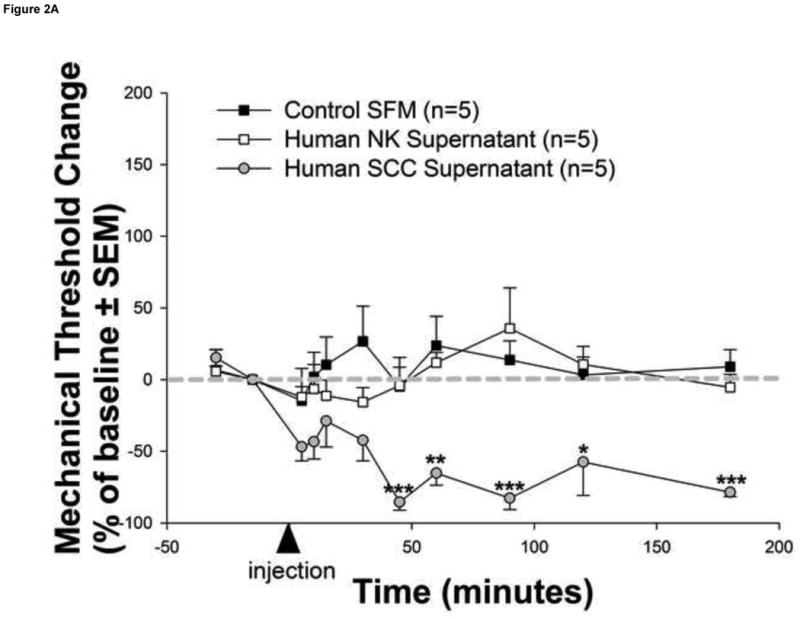
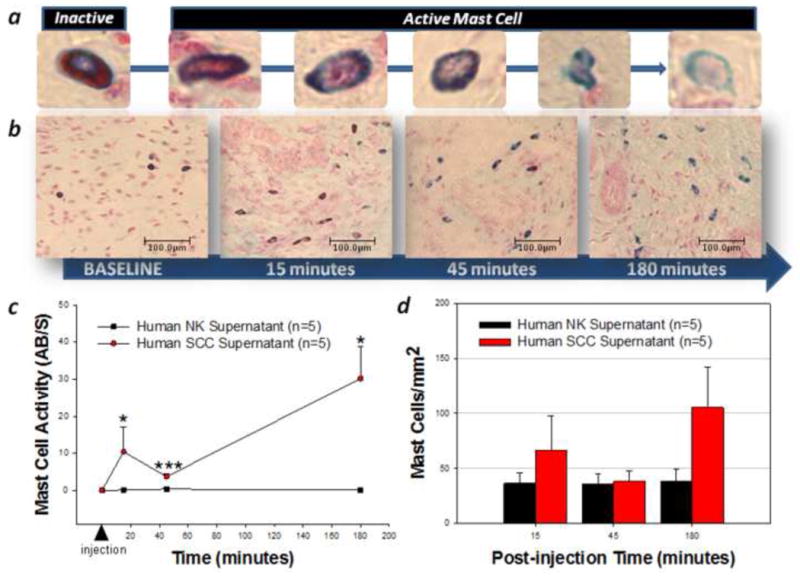
Mediators involved in the generation of pain in patients with cancer are poorly understood. Using a combined molecular, pharmacologic, behavioral, and genetic approach, we have identified a novel mechanism of cancer-dependent allodynia induced by protease-activated receptor 2 (PAR2). Here we show that human head and neck carcinoma cells have increased levels of proteolytic activity compared to normal human cell controls. Supernatant from human carcinoma cells, but not controls, caused marked and prolonged mechanical allodynia in mice, when administered into the hindpaw. This nociceptive effect was abolished by serine protease inhibition, diminished by mast cell depletion and absent in PAR2-deficient mice. In addition, non-contact co-culture of trigeminal ganglion neurons with human head and neck carcinoma cells increased the proportion of neurons that exhibited PAR2-immunoreactivity. Our results point to a direct role for serine proteases and their receptor in the pathogenesis of cancer pain. This previously unrecognized cancer pain pathway has important therapeutic implications wherein serine protease inhibitors and PAR2 antagonists may be useful for the treatment of cancer pain.
在癌症患者中产生疼痛的介质知之甚少。我们采用综合的分子、药理学、行为学和遗传学方法,发现了一种由蛋白酶激活受体 2(PAR2)诱导的新型癌症相关性痛觉过敏的机制。在这里,我们发现与正常的人类细胞对照相比,人头部和颈部癌细胞具有更高水平的蛋白水解活性。用人头颈部癌细胞的上清液(而非对照),当施用于后爪时,可引起小鼠明显且持久的机械性痛觉过敏。这种伤害感受效应被丝氨酸蛋白酶抑制所消除,被肥大细胞耗竭所减弱,并且在 PAR2 缺陷型小鼠中缺失。此外,三叉神经节神经元与人头颈部癌细胞的非接触共培养增加了表现出 PAR2 免疫反应性的神经元的比例。我们的结果表明丝氨酸蛋白酶及其受体在癌症疼痛发病机制中具有直接作用。这种以前未被认识到的癌症疼痛途径具有重要的治疗意义,其中丝氨酸蛋白酶抑制剂和 PAR2 拮抗剂可能对癌症疼痛的治疗有用。