Plant Biology Laboratory, The Salk Institute for Biological Studies, University of California San Diego, La Jolla, California 92037, USA.
Nature. 2010 Mar 18;464(7287):423-6. doi: 10.1038/nature08843. Epub 2010 Feb 28.
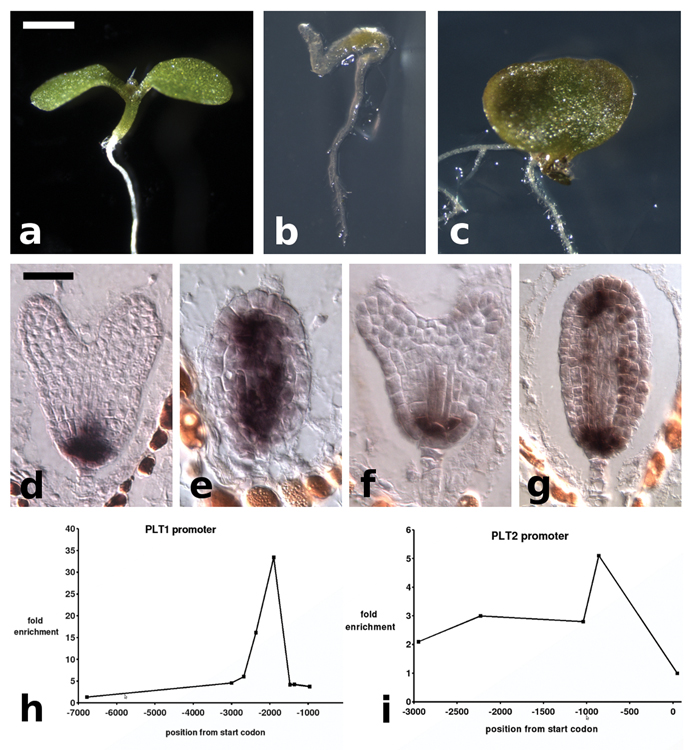
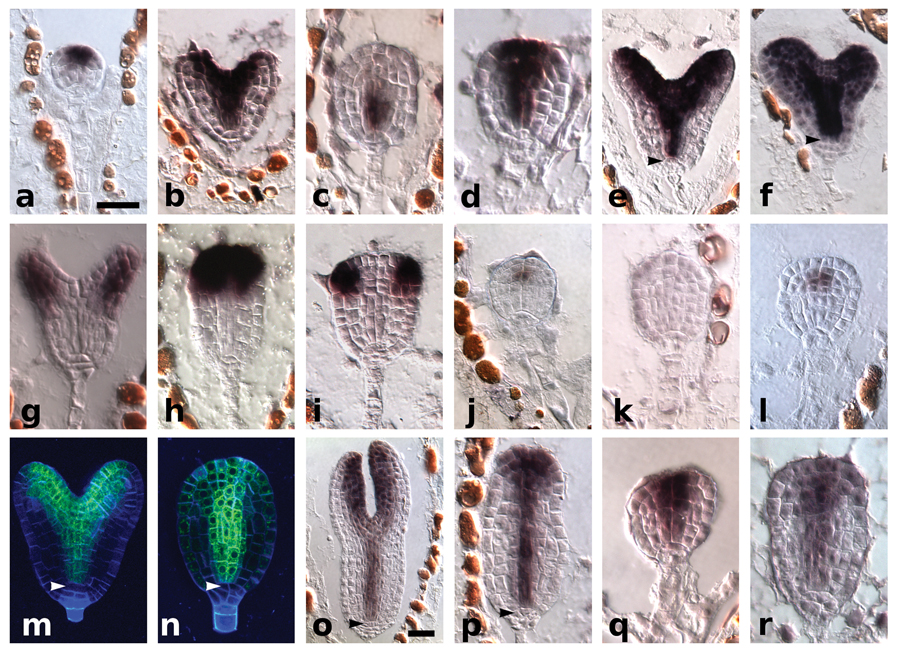
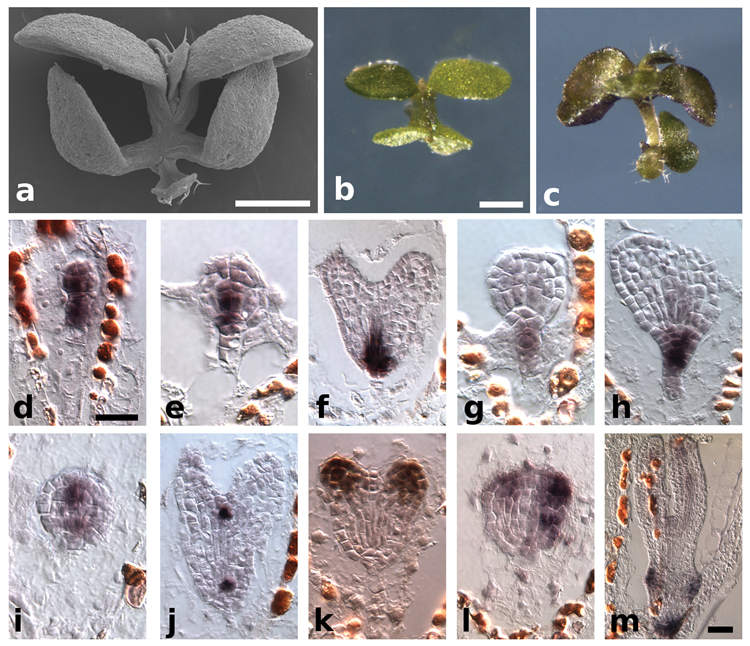
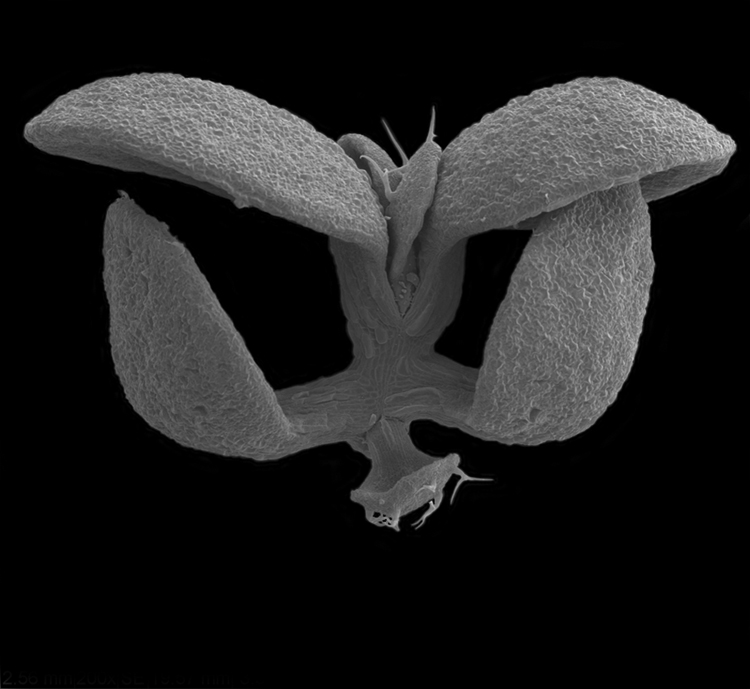
Plants, similarly to animals, form polarized axes during embryogenesis on which cell differentiation and organ patterning programs are orchestrated. During Arabidopsis embryogenesis, establishment of the shoot and root stem cell populations occurs at opposite ends of an apical-basal axis. Recent work has identified the PLETHORA (PLT) genes as master regulators of basal/root fate, whereas the master regulators of apical/shoot fate have remained elusive. Here we show that the PLT1 and PLT2 genes are direct targets of the transcriptional co-repressor TOPLESS (TPL) and that PLT1/2 are necessary for the homeotic conversion of shoots to roots in tpl-1 mutants. Using tpl-1 as a genetic tool, we identify the CLASS III HOMEODOMAIN-LEUCINE ZIPPER (HD-ZIP III) transcription factors as master regulators of embryonic apical fate, and show they are sufficient to drive the conversion of the embryonic root pole into a second shoot pole. Furthermore, genetic and misexpression studies show an antagonistic relationship between the PLT and HD-ZIP III genes in specifying the root and shoot poles.
与动物类似,植物在胚胎发生过程中形成极性轴,细胞分化和器官模式形成程序在其上协调。在拟南芥胚胎发生过程中,茎和根干细胞群的建立发生在顶端-基轴的相对两端。最近的工作已经确定了 PLETHORA(PLT)基因是基础/根命运的主要调节因子,而顶端/茎命运的主要调节因子仍然难以捉摸。在这里,我们表明 PLT1 和 PLT2 基因是转录共抑制因子 TOPLESS(TPL)的直接靶标,并且 PLT1/2 对于 tpl-1 突变体中茎向根的同源转化是必需的。使用 tpl-1 作为遗传工具,我们确定 CLASS III HOMEODOMAIN-LEUCINE ZIPPER(HD-ZIP III)转录因子是胚胎顶端命运的主要调节因子,并表明它们足以驱动胚胎根极转化为第二个茎极。此外,遗传和异位表达研究表明,PLT 和 HD-ZIP III 基因在指定根极和茎极方面存在拮抗关系。