Lee William, Parpura Vladimir
Department of Neurobiology, Center for Glial Biology in Medicine, Atomic Force Microscopy and Nanotechnology Laboratories, Civitan International Research Center, Evelyn F. McKnight Brain Institute, University of Alabama, Birmingham, AL, USA.
Front Neurosci. 2009 Dec 15;3(3):381-7. doi: 10.3389/neuro.01.033.2009. eCollection 2009.
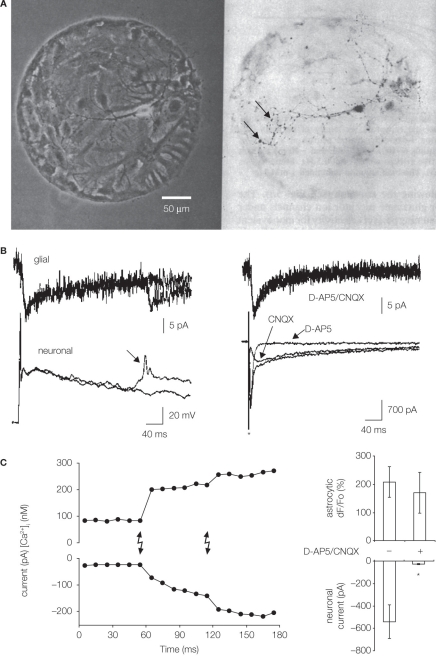
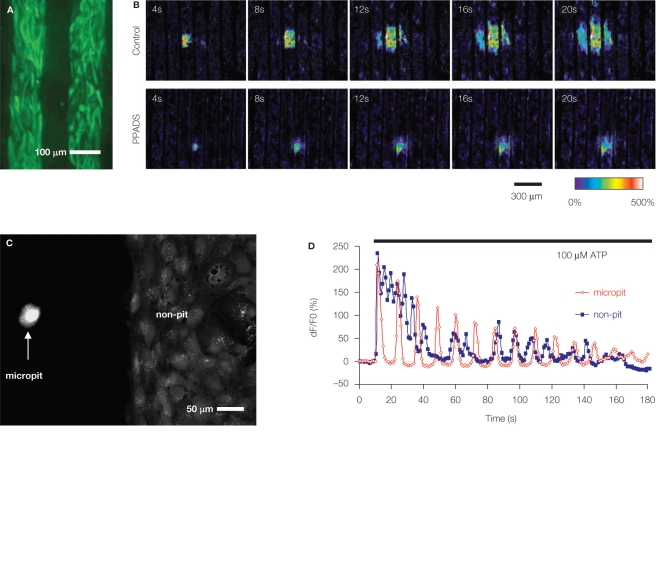
Recent studies of the physiological roles of astrocytes have ignited renewed interest in the functional significance of these glial cells in the central nervous system. Many of the newly discovered astrocytic functions were initially demonstrated and characterized in cell culture systems. We discuss the use of microculture techniques and micropatterning of cell-adhesive substrates in studies of astrocytic Ca(2+) excitability and bidirectional neuron-astrocyte signaling. This culturing approach aims to reduce the level of complexity of the system by limiting the interacting partners and by controlling the localization of cells. It provides tight control over experimental conditions allowing detailed characterization of cellular functions and intercellular communication. Although such a reductionist approach yields some difference in observations between astrocytic properties in culture and in situ, general phenomena discovered in cell culture systems, however, have also been found in vivo.
近期对星形胶质细胞生理作用的研究重新点燃了人们对这些神经胶质细胞在中枢神经系统中功能意义的兴趣。许多新发现的星形胶质细胞功能最初是在细胞培养系统中得到证实和表征的。我们讨论了在星形胶质细胞钙(Ca²⁺)兴奋性和双向神经元 - 星形胶质细胞信号传导研究中微培养技术和细胞粘附底物微图案化的应用。这种培养方法旨在通过限制相互作用的伙伴和控制细胞定位来降低系统的复杂程度。它能对实验条件进行严格控制,从而详细表征细胞功能和细胞间通讯。尽管这种简化方法在培养的星形胶质细胞特性与原位特性之间的观察结果上存在一些差异,但在细胞培养系统中发现的一般现象在体内也已被发现。