Faculty of Forest Sciences, University of Joensuu, P.O. Box 111, FI-80101 Joensuu, Finland;
Persoonia. 2009 Dec;23:9-15. doi: 10.3767/003158509X468038. Epub 2009 Jul 22.
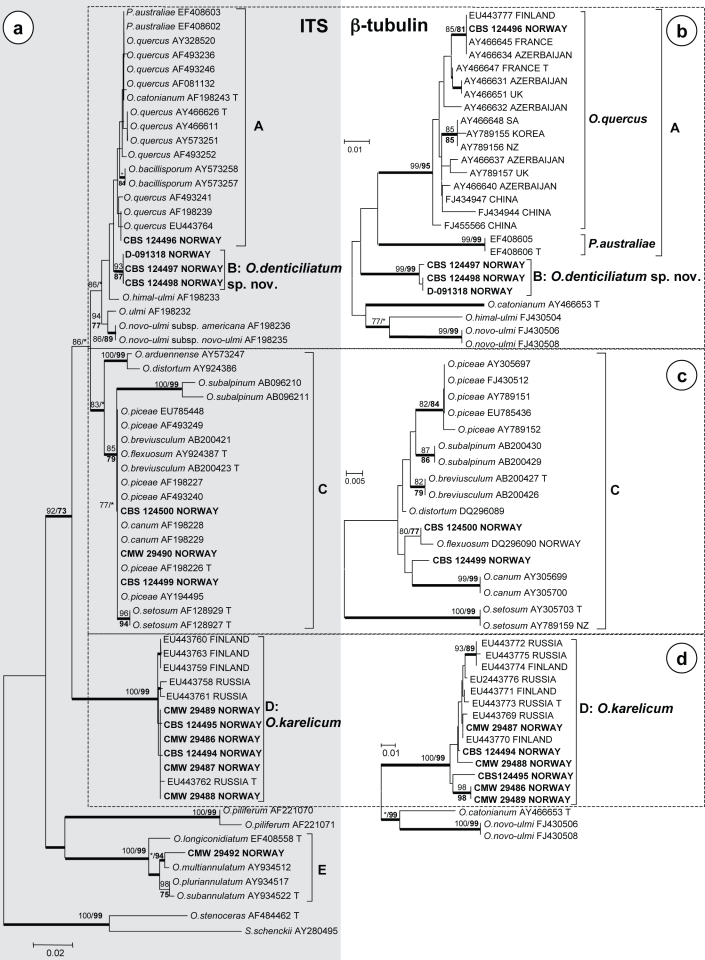
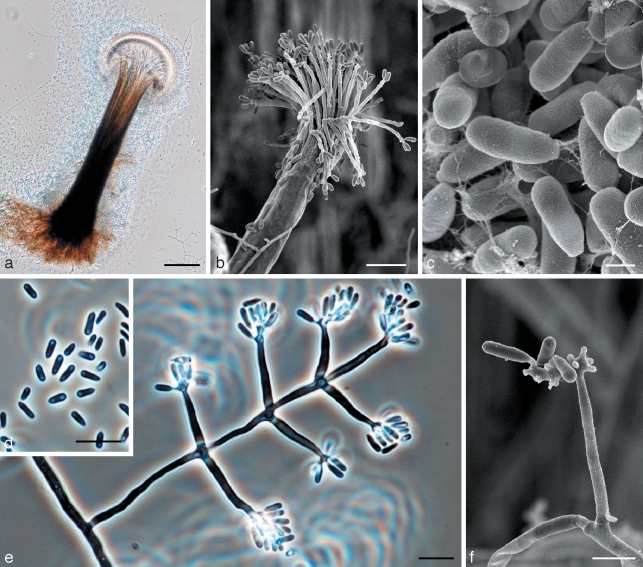
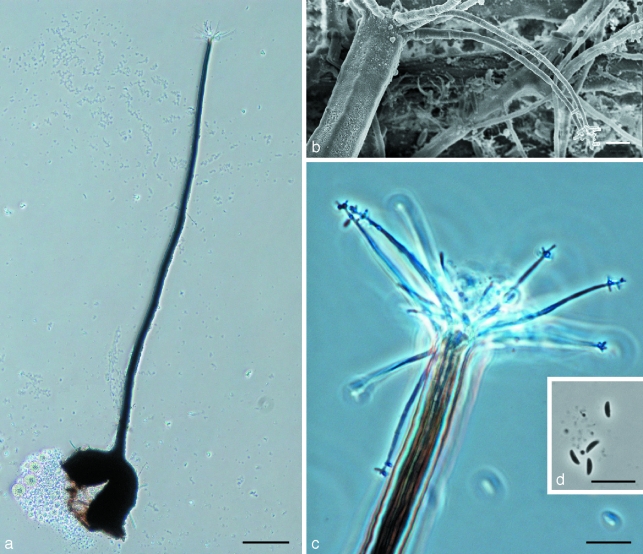
Ophiostomatoid fungi were isolated from Scolytus ratzeburgi infesting Betula pendula and B. pubescens in Norway. Fungi were identified based on morphology, DNA sequence comparison for two gene regions and phylogenetic analyses. The most abundant fungus was Ophiostoma karelicum, suggesting a specific relationship between the fungus, the vector insect and the host tree. Our results suggest that O. karelicum occurs across the geographic range of S. ratzeburgi and its close relatedness to the Dutch elm disease fungi suggests that it could be important if introduced into other parts of the world. Other fungi, only occasionally isolated from S. ratzeburgi, were identified as O. quercus and a novel taxon, described here as O. denticiliatum sp. nov.
从侵害挪威欧洲山杨和毛白杨的光肩星天牛中分离到了小穴壳属真菌。基于形态学、两个基因区域的 DNA 序列比较和系统发育分析对真菌进行了鉴定。最丰富的真菌是卡氏穴壳霉,这表明真菌、媒介昆虫和宿主树之间存在特定关系。我们的研究结果表明,卡氏穴壳霉存在于光肩星天牛的地理分布范围内,并且与荷兰榆树病真菌密切相关,这表明如果引入到世界其他地区,它可能很重要。其他真菌仅偶尔从光肩星天牛中分离出来,被鉴定为栎生小穴壳霉和一个新种,这里描述为齿突小穴壳霉。