The Protein Crystallography Unit, ARC Centre of Excellence in Structural and Functional Microbial Genomics, Department of Biochemistry and Molecular Biology, School of Biomedical Sciences, Monash University, Clayton, Victoria 3800, Australia.
Trends Biochem Sci. 2010 Jul;35(7):411-8. doi: 10.1016/j.tibs.2010.02.003. Epub 2010 Mar 2.
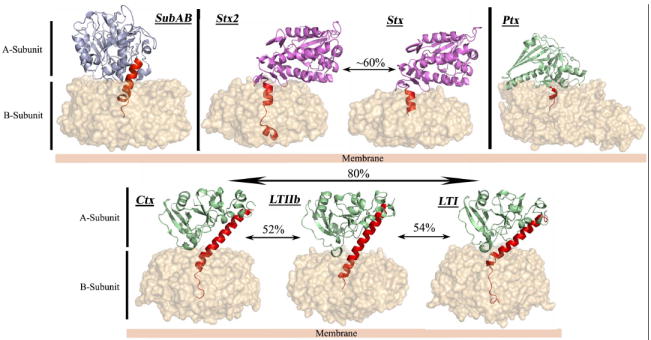
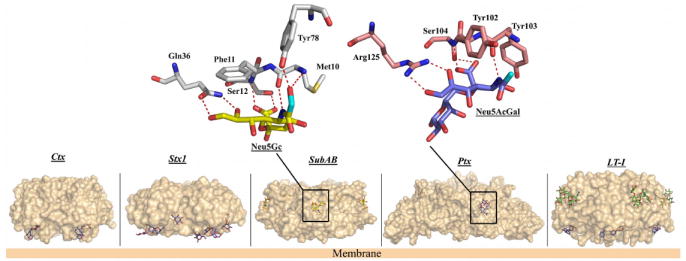
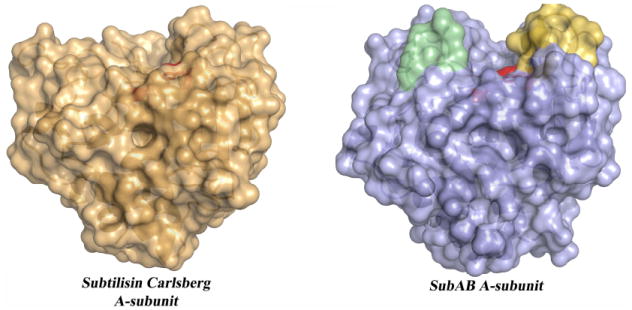
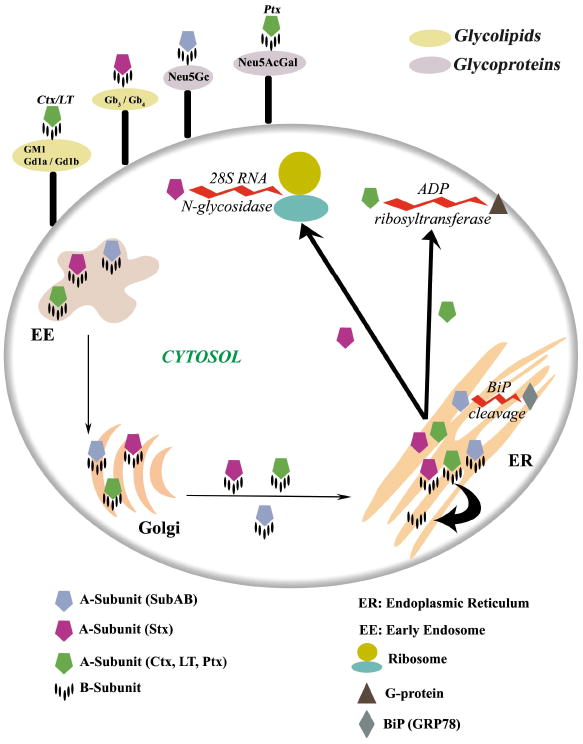
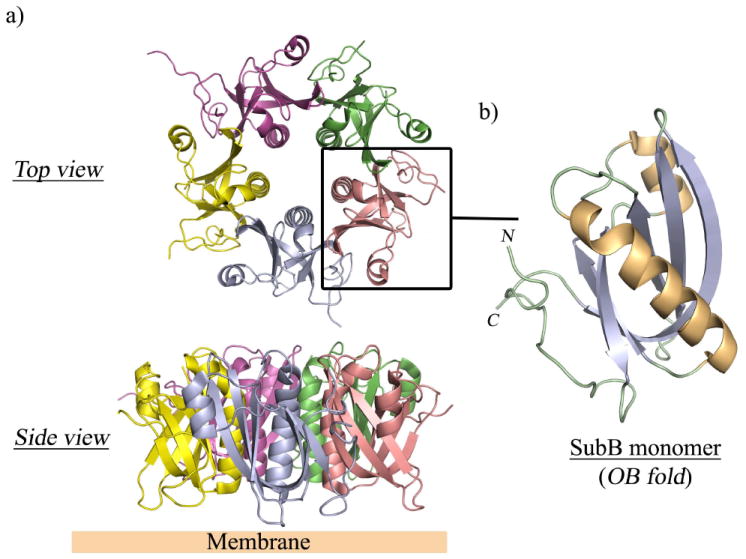
AB(5) toxins are important virulence factors for several major bacterial pathogens, including Bordetella pertussis, Vibrio cholerae, Shigella dysenteriae and at least two distinct pathotypes of Escherichia coli. The AB(5) toxins are so named because they comprise a catalytic A-subunit, which is responsible for disruption of essential host functions, and a pentameric B-subunit that binds to specific glycan receptors on the target cell surface. The molecular mechanisms by which the AB(5) toxins cause disease have been largely unravelled, including recent insights into a novel AB(5) toxin family, subtilase cytotoxin (SubAB). Furthermore, AB(5) toxins have become a valuable tool for studying fundamental cellular functions, and are now being investigated for potential applications in the clinical treatment of human diseases.
AB(5) 毒素是包括百日咳博德特氏菌、霍乱弧菌、志贺氏菌和至少两种不同大肠杆菌血清型在内的几种主要细菌病原体的重要毒力因子。AB(5) 毒素之所以这样命名,是因为它们由负责破坏宿主重要功能的催化 A 亚单位和与靶细胞表面特定聚糖受体结合的五聚体 B 亚单位组成。AB(5) 毒素引起疾病的分子机制在很大程度上已经被揭示,包括最近对新型 AB(5) 毒素家族——枯草杆菌蛋白酶细胞毒素 (SubAB) 的深入了解。此外,AB(5) 毒素已成为研究基本细胞功能的有价值工具,目前正在研究其在人类疾病临床治疗中的潜在应用。