Terrazas César A, Terrazas Luis I, Gómez-García Lorena
Unidad de Biomedicina, Facultad de Estudios Superiores Iztacala, Universidad Nacional Autónoma de México (UNAM), 54090 Tlalnepantla, Estado de México, Mexico.
J Biomed Biotechnol. 2010;2010:357106. doi: 10.1155/2010/357106. Epub 2010 Feb 24.
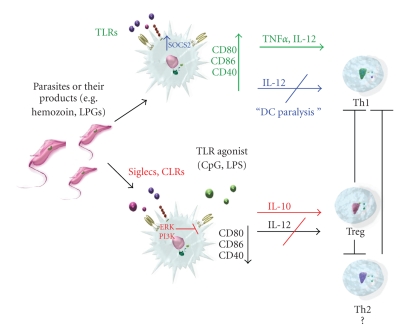
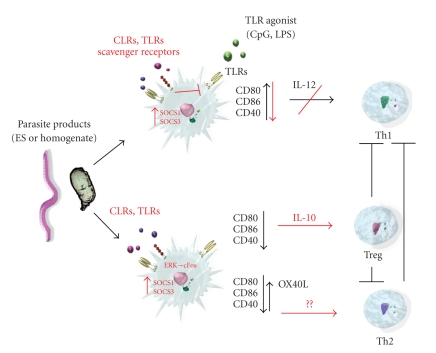
Parasitic infections are one of the most important causes of morbidity and mortality in our planet and the immune responses triggered by these organisms are critical to determine their outcome. Dendritic cells are key elements for the development of immunity against parasites; they control the responses required to eliminate these pathogens while maintaining host homeostasis. However, there is evidence showing that parasites can influence and regulate dendritic cell function in order to promote a more permissive environment for their survival. In this review we will focus on the strategies protozoan and helminth parasites have developed to interfere with dendritic cell activities as well as in the possible mechanisms involved.
寄生虫感染是全球发病和死亡的最重要原因之一,这些生物体引发的免疫反应对于决定感染结果至关重要。树突状细胞是抵御寄生虫免疫反应的关键要素;它们控制着清除这些病原体所需的反应,同时维持宿主内环境稳定。然而,有证据表明寄生虫可影响和调节树突状细胞功能,以营造更有利于其生存的环境。在本综述中,我们将重点关注原生动物和蠕虫寄生虫为干扰树突状细胞活性所采取的策略以及其中可能涉及的机制。