Cambridge Institute for Medical Research, Addenbrooke's, Cambridge, United Kingdom.
Curr Opin Immunol. 2010 Jun;22(3):308-13. doi: 10.1016/j.coi.2010.02.008. Epub 2010 Mar 11.
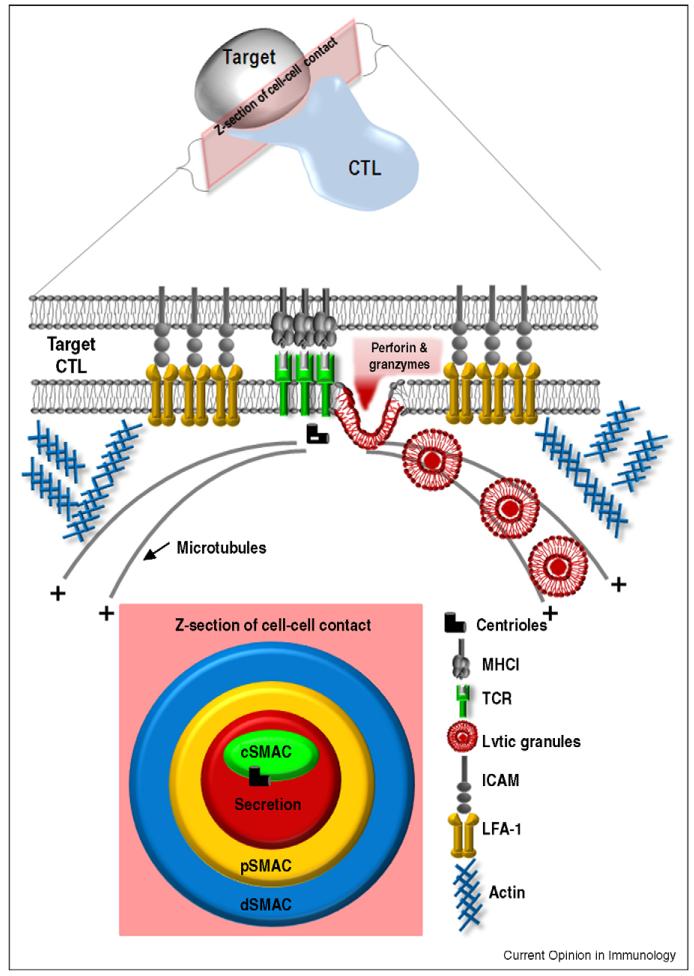
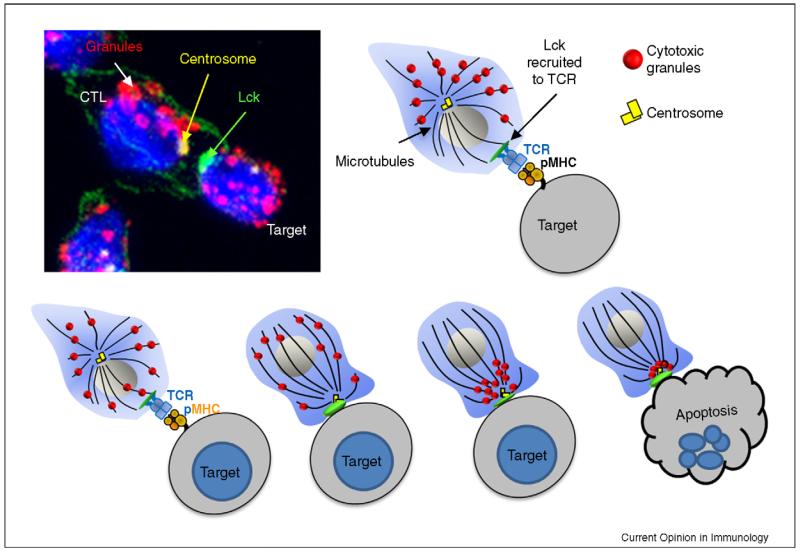
Cytotoxic T lymphocytes (CTLs) rapidly kill target cells via the release of lytic granules into the immunological synapse, a process directed by the docking of the centrosome at the plasma membrane. New evidence highlights how signal strength and avidity influence the recruitment of cytolytic machinery to the synapse, and the role of each synaptic compartment. Release of cytolytic effector proteins, including perforin and FasL, is controlled at multiple levels and is also influenced by the avidity of the interaction. New imaging technologies and the use of photoactivatable peptides have allowed the dissection of signalling molecules involved in each step of the cytolytic process. This review highlights the important role of avidity in controlling how a T cell kills its target.
细胞毒性 T 淋巴细胞 (CTL) 通过将溶酶体颗粒释放到免疫突触中快速杀死靶细胞,这个过程由中心体在质膜上的对接来指导。新的证据强调了信号强度和亲和力如何影响细胞溶解机制向突触的募集,以及每个突触隔室的作用。细胞毒性效应蛋白(包括穿孔素和 FasL)的释放受到多个水平的控制,并且还受到相互作用的亲和力的影响。新的成像技术和光活化肽的使用允许对参与细胞溶解过程每个步骤的信号分子进行剖析。这篇综述强调了亲和力在控制 T 细胞杀死其靶标方面的重要作用。