Newell N, Lai C J, Khoury G, Kelly T J
J Virol. 1978 Jan;25(1):193-201. doi: 10.1128/JVI.25.1.193-201.1978.
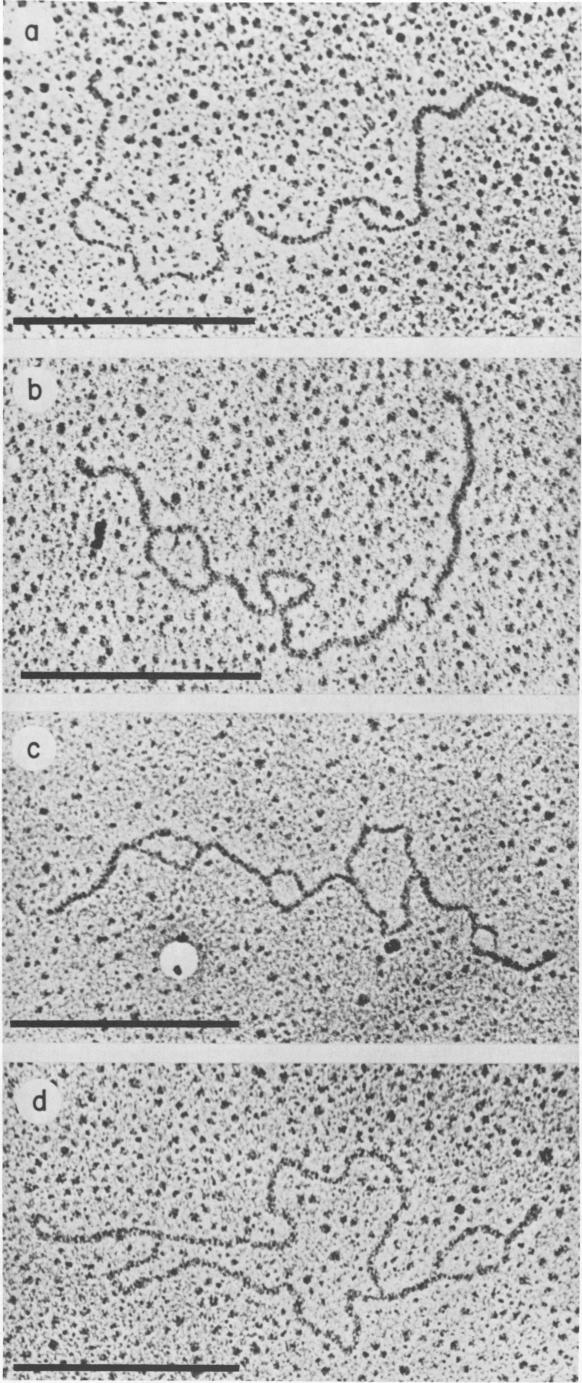
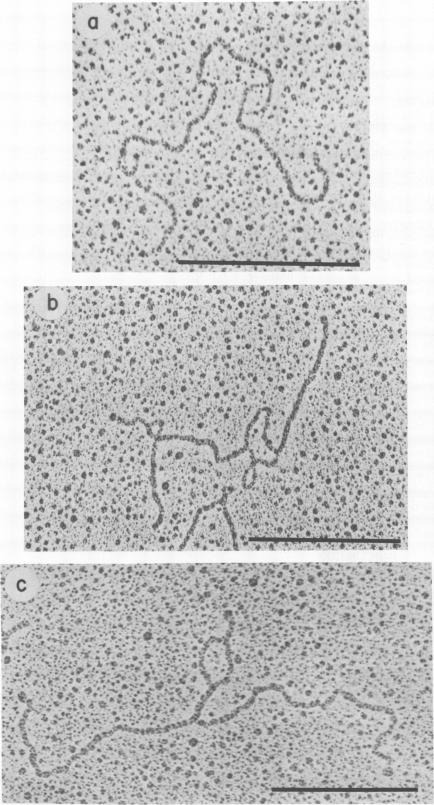
The base sequence homology between the genomes of simian virus 40 (SV40) and human papovavirus BK (BKV) was studied by the heteroduplex method of Ferguson and Davis (J. Mol. Biol. 94:135-149, 1975). When mounted for microscopy in 30% formamide (Tm-35 degrees C), BKV/SV40 heteroduplexes were an average of 92% double-stranded and contained only two small nonhomologous regions that mapped near the junctions between the early and late regions of the SV40 Genome. At higher formamide concentrations, the fraction of duplex DNA in the BKV/SV40 heteroduplexes decreased, indicating significant base mismatching in the homologous regions. The strongest regions of homology were located in the late region.
通过弗格森和戴维斯的异源双链法(《分子生物学杂志》94:135 - 149,1975年)研究了猴病毒40(SV40)和人乳头多瘤病毒BK(BKV)基因组之间的碱基序列同源性。当在30%甲酰胺(熔点温度-35℃)中固定用于显微镜观察时,BKV/SV40异源双链平均92%为双链,仅包含两个小的非同源区域,这些区域位于SV40基因组早期和晚期区域之间的连接处附近。在更高的甲酰胺浓度下,BKV/SV40异源双链中双链DNA的比例降低,表明同源区域存在明显的碱基错配。同源性最强的区域位于晚期区域。