University of Brasília, Bazil.
Braz J Otorhinolaryngol. 2010 Jan-Feb;76(1):102-6. doi: 10.1590/S1808-86942010000100017.
Although group therapy for tinnitus is a well documented field in the international literature, as far as we know it has never been held in Brazil. This study represents a successful experience of a group therapy for tinnitus based on the tinnitus retraining therapy associated with behavioral cognitive techniques. The goal of the present study is to assess patients with tinnitus before and after the group therapy based on the tinnitus retraining therapy and the behavioral cognitive therapy.
Prospective cohort study: 27 subjects signed in for the study, and answered the Tinnitus Handicap Inventory (THI) and the Hospital Depression and Anxiety Scale (HAD), before and after the treatment. We held six structured sessions according to the principles of tinnitus retraining therapy associated with behavioral cognitive techniques.
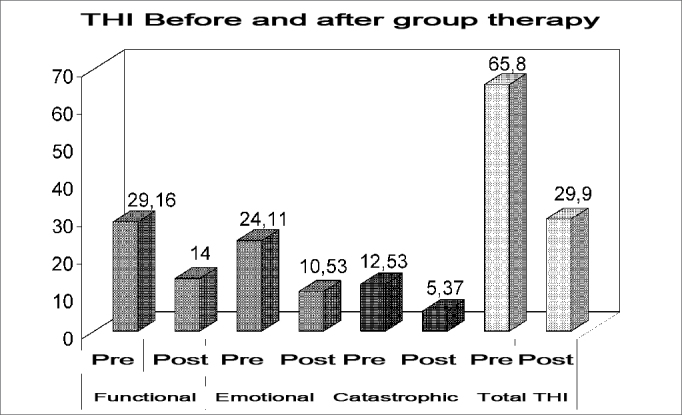
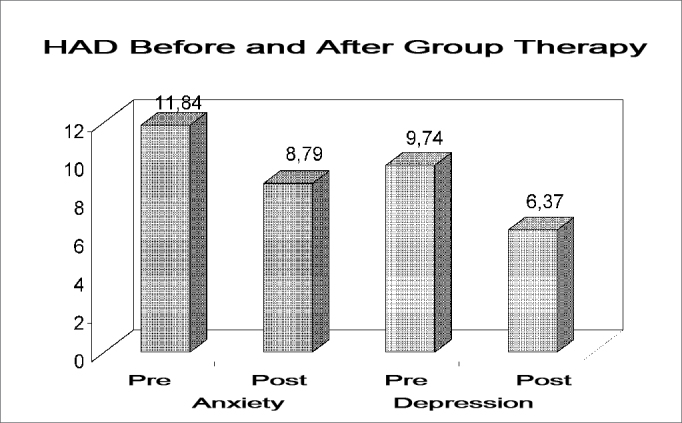
27 patients started and 19 finished the treatment (8 were taken off). 47.4% men, mean age of 47.6. THI results before and after treatment were respectively: functional: 29 and 14, emotional 24 and 10 and catastrophic 12 and 5 and the HAD scale: anxiety 2 and 9 and depression 10 and 6.
The treatment described is effective in improving tinnitus symptoms.
背景:尽管在国际文献中,耳鸣的团体治疗已被充分记录,但据我们所知,这种治疗在巴西从未实施过。本研究代表了一种基于耳鸣再训练疗法和行为认知技术的耳鸣团体治疗的成功经验。本研究的目的是基于耳鸣再训练疗法和行为认知疗法,在团体治疗前后评估耳鸣患者。
材料和方法:前瞻性队列研究:27 名患者报名参加了这项研究,并在治疗前后回答了耳鸣残疾量表(THI)和医院抑郁焦虑量表(HAD)。我们根据耳鸣再训练疗法和行为认知技术的原则,进行了六次结构化的治疗。
结果:27 名患者开始治疗,19 名患者完成了治疗(8 名患者退出)。47.4%为男性,平均年龄为 47.6 岁。治疗前后的 THI 结果分别为:功能:29 分和 14 分,情感:24 分和 10 分,灾难性:12 分和 5 分,HAD 量表:焦虑:2 分和 9 分,抑郁:10 分和 6 分。
结论:所描述的治疗方法在改善耳鸣症状方面是有效的。