Evolutionary Medicine, Shiga Medical Center Research Institute, Moriyama, Japan.
PLoS One. 2010 Mar 24;5(3):e9846. doi: 10.1371/journal.pone.0009846.
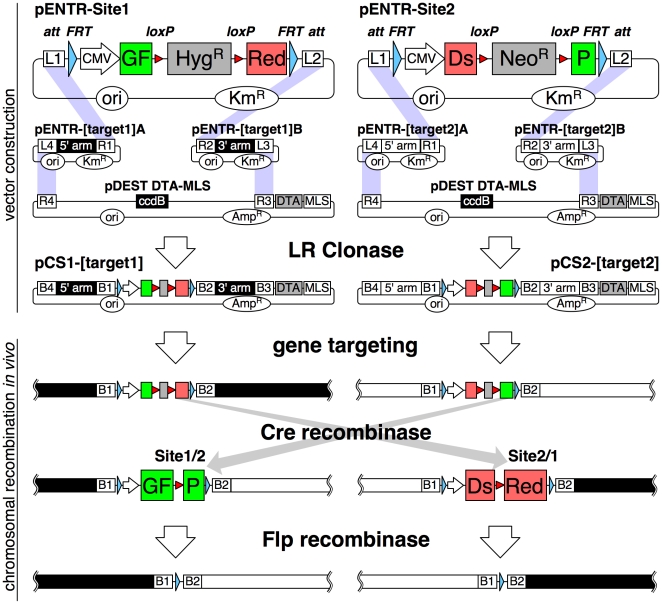
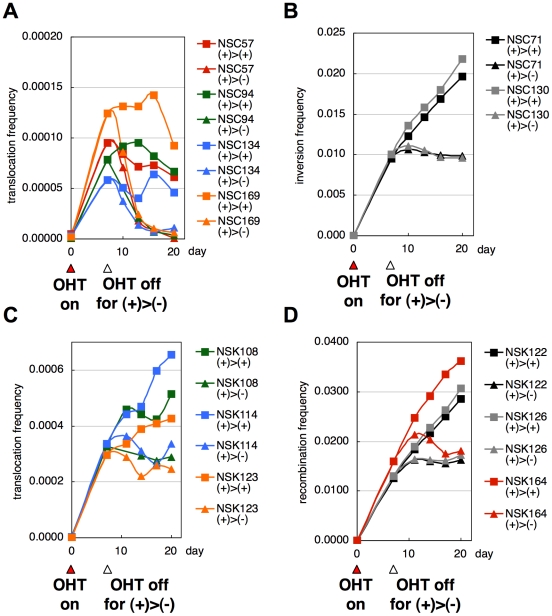
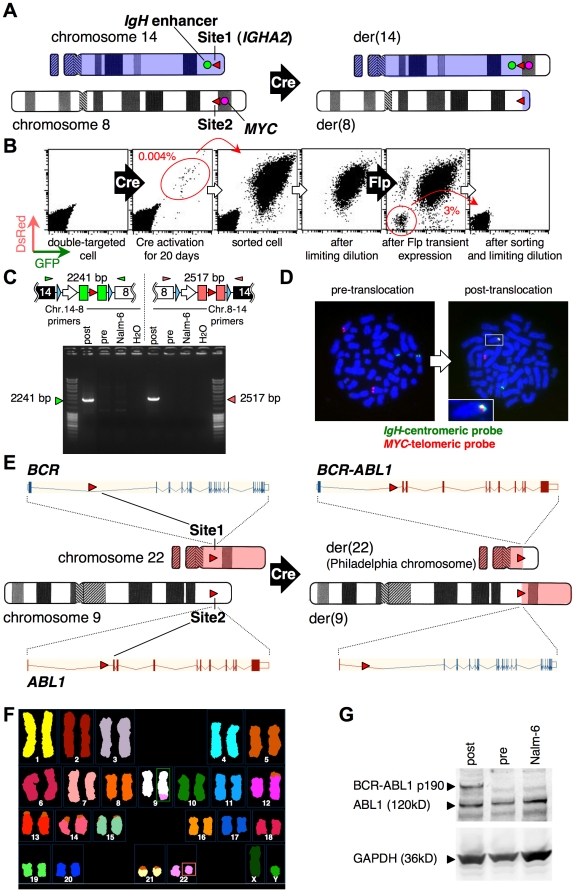
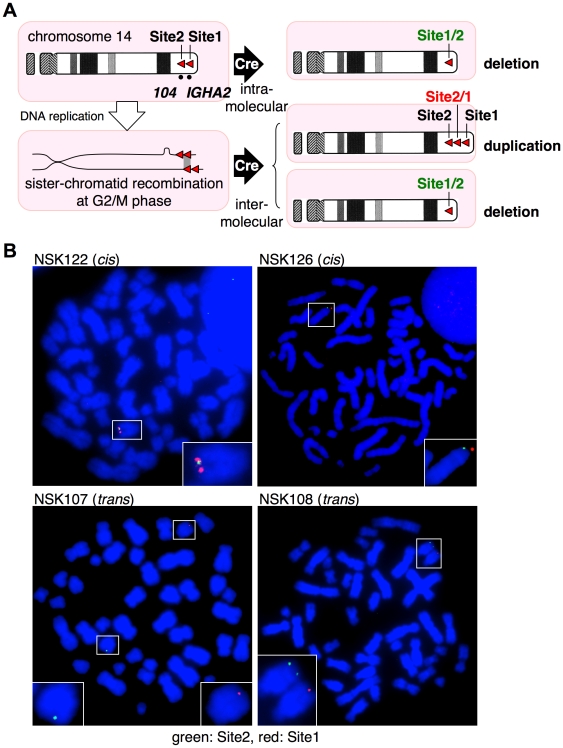
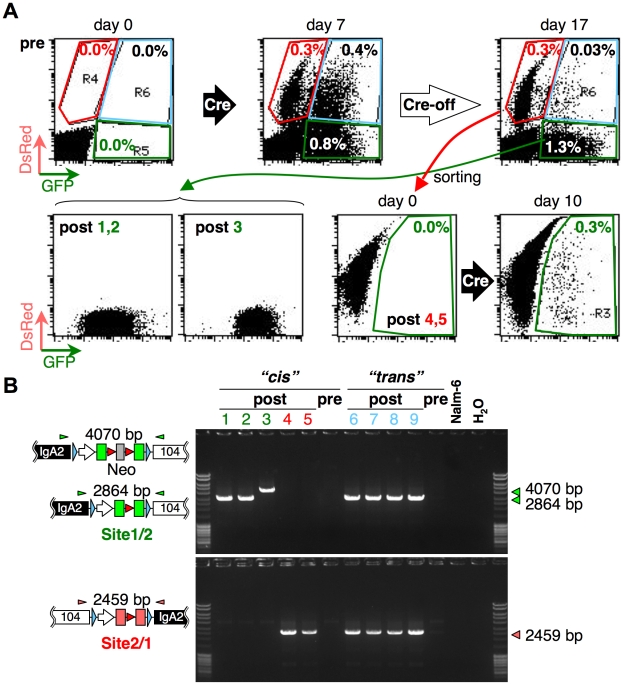
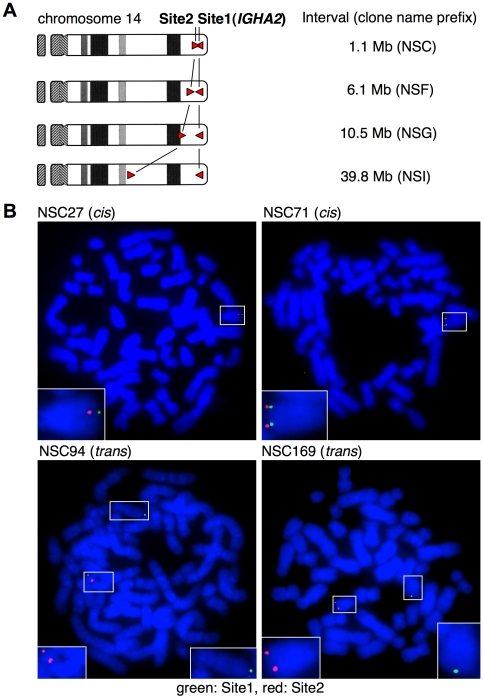
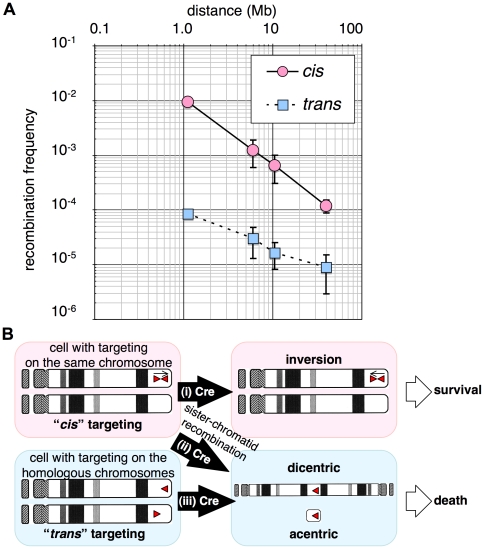
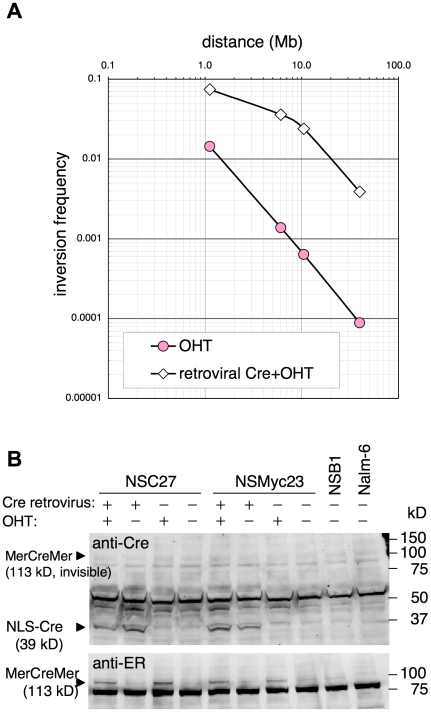
Feasibility of chromosomal manipulation in mammalian cells was first reported 15 years ago. Although this technique is useful for precise understanding of gene regulation in the chromosomal context, a limited number of laboratories have used it in actual practice because of associated technical difficulties. To overcome the practical hurdles, we developed a Cre-mediated chromosomal recombination system using fluorescent proteins and various site-specific recombinases. These techniques enabled quick construction of targeting vectors, easy identification of chromosome-rearranged cells, and rearrangement leaving minimum artificial elements at junctions. Applying this system to a human cell line, we successfully recapitulated two types of pathogenic chromosomal translocations in human diseases: MYC/IgH and BCR/ABL1. By inducing recombination between two loxP sites targeted into the same chromosome, we could mark cells harboring deletion or duplication of the inter-loxP segments with different colors of fluorescence. In addition, we demonstrated that the intrachromosomal recombination frequency is inversely proportional to the distance between two recombination sites, implicating a future application of this frequency as a proximity sensor. Our method of chromosomal manipulation can be employed for particular cell types in which gene targeting is possible (e.g. embryonic stem cells). Experimental use of this system would open up new horizons in genome biology, including the establishment of cellular and animal models of diseases caused by translocations and copy-number variations.
15 年前首次报道了在哺乳动物细胞中进行染色体操作的可行性。尽管该技术对于在染色体背景下精确理解基因调控非常有用,但由于相关技术困难,只有少数实验室在实际中使用它。为了克服实际障碍,我们使用荧光蛋白和各种位点特异性重组酶开发了一种 Cre 介导的染色体重组系统。这些技术使靶向载体的快速构建、染色体重排细胞的易于鉴定以及在连接点处留下最小的人工元件的重排成为可能。将该系统应用于人类细胞系,我们成功地在人类疾病中重现了两种致病性染色体易位:MYC/IgH 和 BCR/ABL1。通过诱导靶向同一染色体的两个 loxP 位点之间的重组,我们可以用不同颜色的荧光标记携带有 loxP 片段缺失或重复的细胞。此外,我们证明了两个重组位点之间的重组频率与距离成反比,这暗示了该频率可作为一种接近传感器的未来应用。我们的染色体操作方法可用于基因靶向可能的特定细胞类型(例如胚胎干细胞)。该系统的实验应用将为基因组生物学开辟新的视野,包括建立由易位和拷贝数变异引起的疾病的细胞和动物模型。