Department of Neuroscience, Erasmus Medical Center, Rotterdam, The Netherlands.
EMBO J. 2010 May 19;29(10):1637-51. doi: 10.1038/emboj.2010.51. Epub 2010 Apr 1.
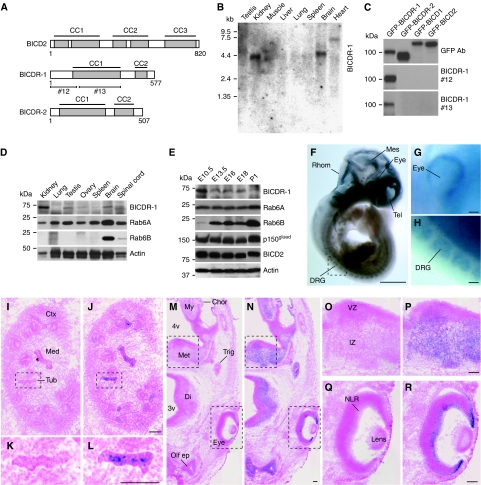
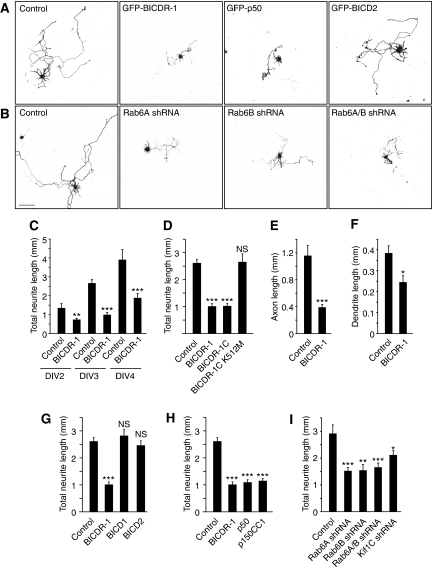
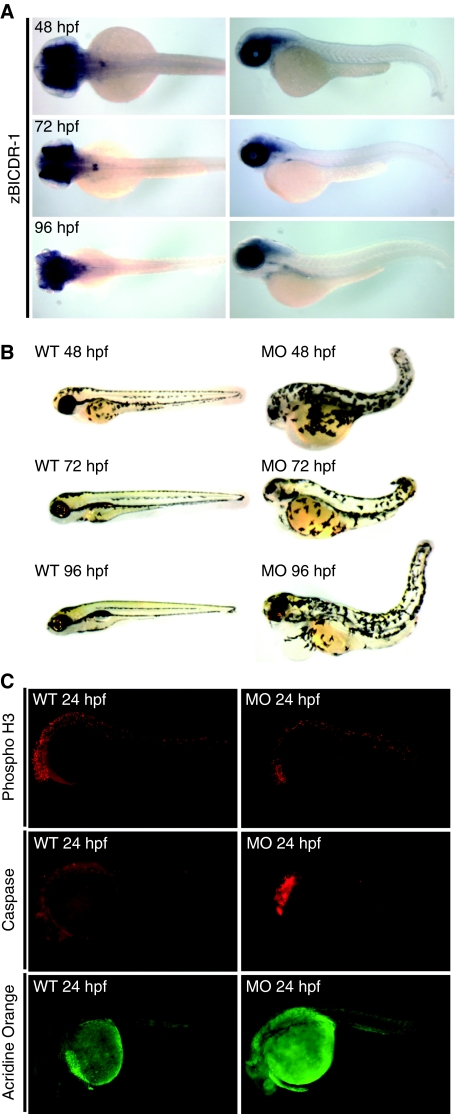
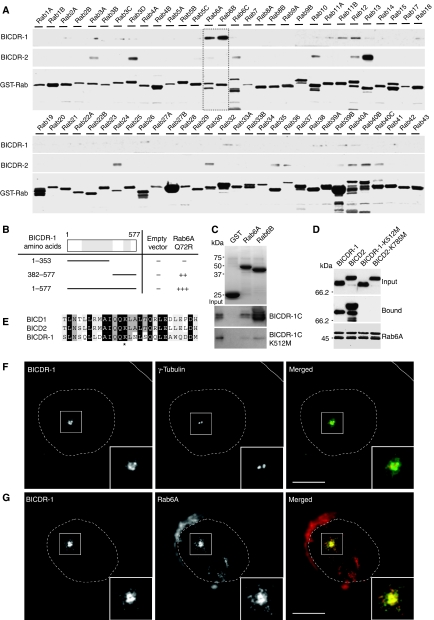
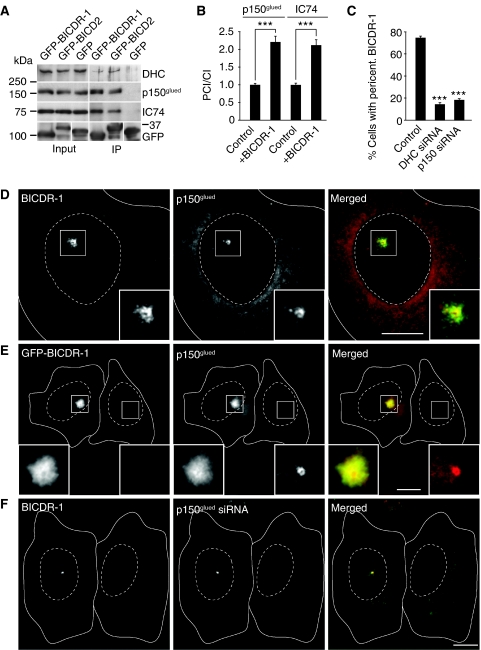
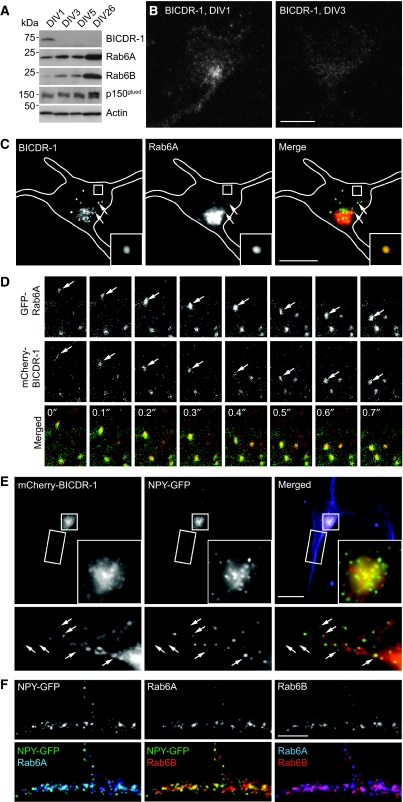
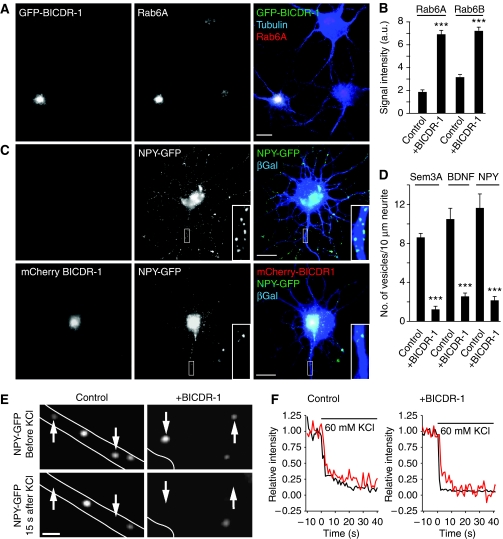
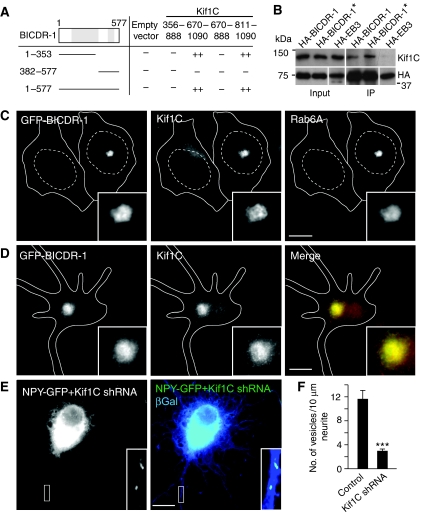
Membrane and secretory trafficking are essential for proper neuronal development. However, the molecular mechanisms that organize secretory trafficking are poorly understood. Here, we identify Bicaudal-D-related protein 1 (BICDR-1) as an effector of the small GTPase Rab6 and key component of the molecular machinery that controls secretory vesicle transport in developing neurons. BICDR-1 interacts with kinesin motor Kif1C, the dynein/dynactin retrograde motor complex, regulates the pericentrosomal localization of Rab6-positive secretory vesicles and is required for neural development in zebrafish. BICDR-1 expression is high during early neuronal development and strongly declines during neurite outgrowth. In young neurons, BICDR-1 accumulates Rab6 secretory vesicles around the centrosome, restricts anterograde secretory transport and inhibits neuritogenesis. Later during development, BICDR-1 expression is strongly reduced, which permits anterograde secretory transport required for neurite outgrowth. These results indicate an important role for BICDR-1 as temporal regulator of secretory trafficking during the early phase of neuronal differentiation.
膜和分泌运输对于神经元的正常发育至关重要。然而,组织分泌运输的分子机制还知之甚少。在这里,我们确定了双尾相关蛋白 1(BICDR-1)是小 GTPase Rab6 的效应物,也是控制发育神经元中分泌囊泡运输的分子机制的关键组成部分。BICDR-1 与驱动蛋白 Kif1C 相互作用,与胞质动力蛋白/dynactin 逆行运动复合物相互作用,调节 Rab6 阳性分泌囊泡的中心体周围定位,并且在斑马鱼的神经发育中是必需的。BICDR-1 在早期神经元发育过程中表达水平较高,而在神经突生长过程中表达水平强烈下降。在年轻的神经元中,BICDR-1 在中心体周围积累 Rab6 分泌囊泡,限制正向分泌运输并抑制神经突生成。在发育后期,BICDR-1 的表达水平显著降低,这允许正向分泌运输,这是神经突生长所必需的。这些结果表明 BICDR-1 在神经元分化的早期阶段作为分泌运输的时间调节剂发挥着重要作用。