School of Biosciences, University of Birmingham, Edgbaston, Birmingham, UK.
EMBO J. 2010 May 5;29(9):1537-51. doi: 10.1038/emboj.2010.48. Epub 2010 Apr 1.
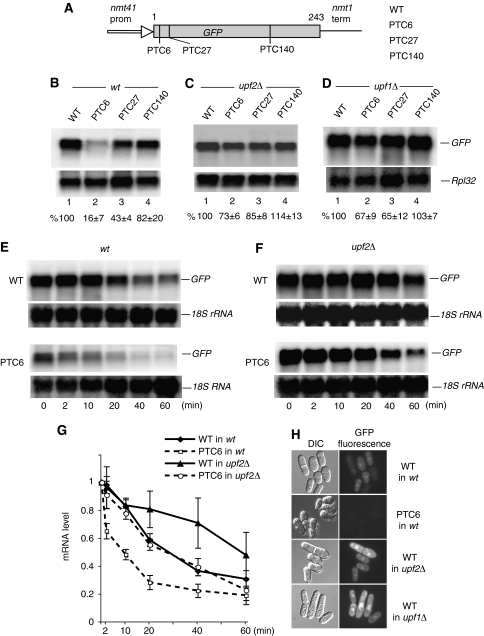
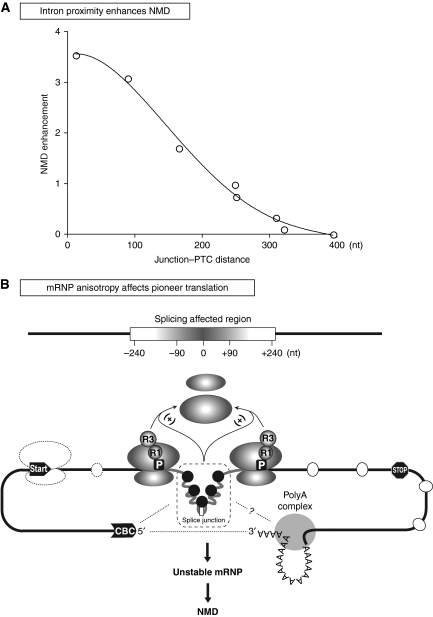
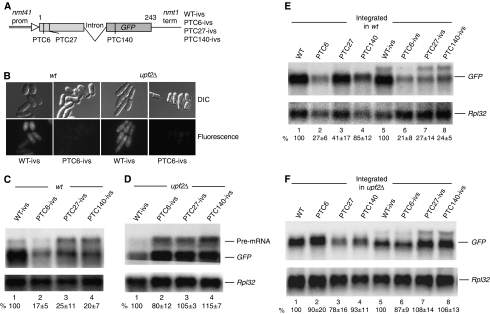
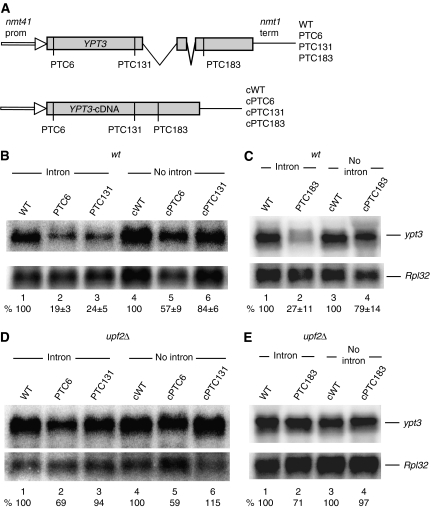
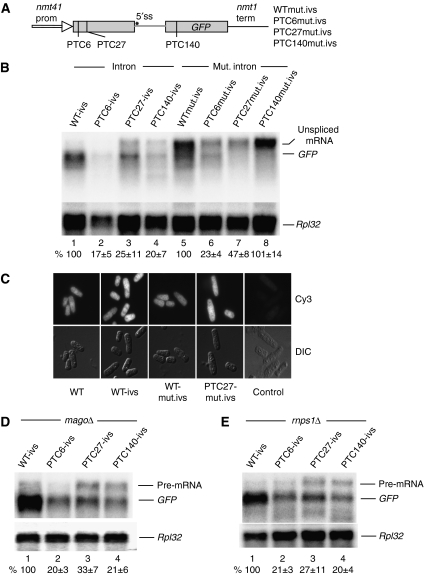
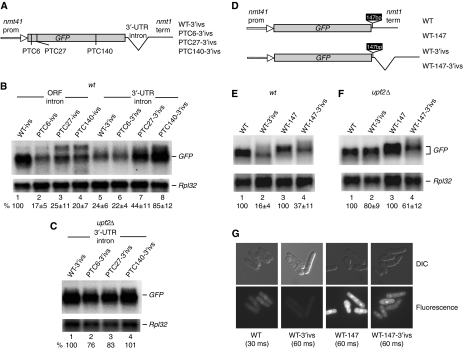
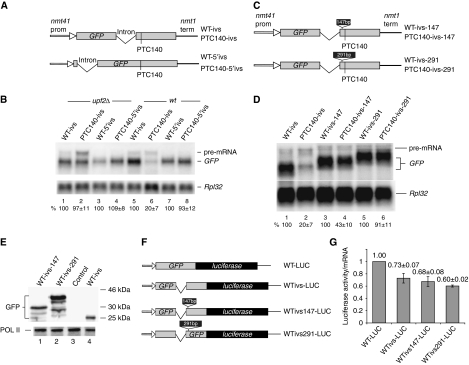
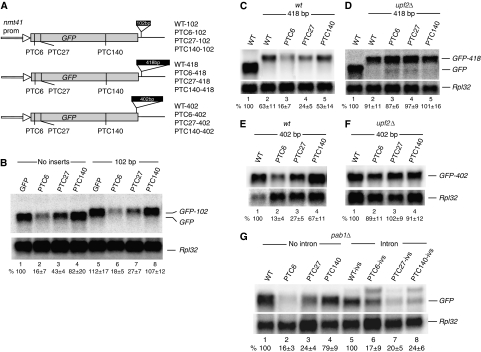
Nonsense-mediated mRNA decay (NMD) is a translation-linked process that destroys mRNAs with premature translation termination codons (PTCs). In mammalian cells, NMD is also linked to pre-mRNA splicing, usually PTCs trigger strong NMD only when positioned upstream of at least one intron. The exon junction complex (EJC) is believed to mediate the link between splicing and NMD in these systems. Here, we report that in Schizosaccharomyces pombe splicing also enhances NMD, but against the EJC model prediction, an intron stimulated NMD regardless of whether it is positioned upstream or downstream of the PTC and EJC components are not required. Still the effect of splicing seems to be direct-we have found that the important NMD determinant is the proximity of an intron to the PTC, not just the occurrence of splicing. On the basis of these results, we propose a new model to explain how splicing could affect NMD.
无意义介导的 mRNA 降解 (NMD) 是一种与翻译相关的过程,可破坏带有过早翻译终止密码子 (PTC) 的 mRNA。在哺乳动物细胞中,NMD 也与前体 mRNA 剪接相关联,通常情况下,只有当 PTC 位于至少一个内含子的上游时,才会引发强烈的 NMD。外显子结合复合物 (EJC) 被认为介导了这些系统中剪接和 NMD 之间的联系。在这里,我们报告说,在裂殖酵母中,剪接也增强了 NMD,但与 EJC 模型的预测相反,一个内含子刺激了 NMD,而不管它是位于 PTC 的上游还是下游,并且不需要 EJC 成分。尽管如此,剪接的作用似乎是直接的——我们已经发现,重要的 NMD 决定因素是内含子与 PTC 的接近程度,而不仅仅是剪接的发生。基于这些结果,我们提出了一个新的模型来解释剪接如何影响 NMD。