Campbell J R, Baker C J, Edwards M S
Department of Pediatrics, Baylor College of Medicine, Houston, Texas 77030.
Infect Immun. 1991 Jun;59(6):1978-83. doi: 10.1128/iai.59.6.1978-1983.1991.
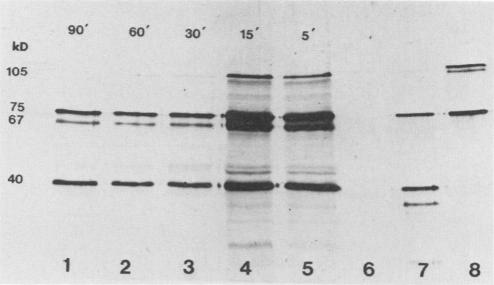
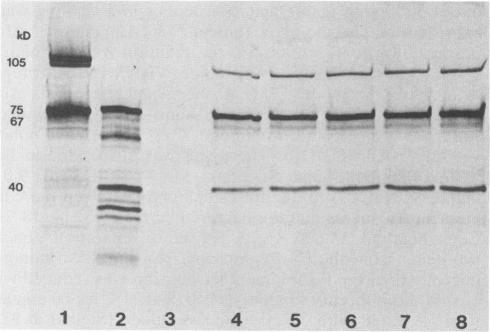
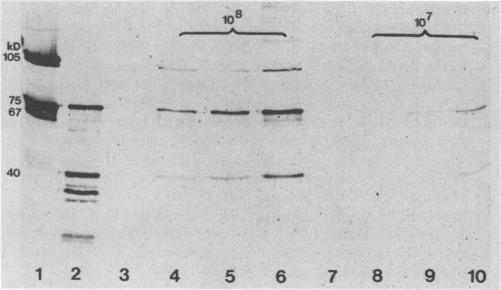
Antibody to the polysaccharide capsule of type III group B streptococci (GBS) and complement are essential to host defense against systemic infection in neonates. Interactions between C3 degradation products and specific neutrophil receptors mediate the attachment and ingestion of these organisms. To evaluate the influence of capsule on C3 disposition, we compared the C3 fragments released from a highly encapsulated clinical isolate (M861) with those from an unencapsulated mutant (COH 31-15) and an asialo mutant (COH 31-21) of type III GBS after opsonization with hypogammaglobulinemic serum. Upon sodium dodecyl sulfate-polyacrylamide gel electrophoresis and Western blot (immunoblot) analysis, the three strains displayed similar patterns of C3 degradation; both C3b and iC3b were detectable. However, as the duration of opsonization increased, C3 fragment bands became more prominent on the encapsulated strain. The capsule, and specifically sialylation of the capsular polysaccharide of type III GBS, promotes C3 fragment deposition. However, C3 was deposited and degraded to iC3b in the absence of capsule. Opsonization of strain M861 with serum containing antibody specific for the polysaccharide capsule facilitated C3 fragment deposition in the early phases of opsonization. Because iC3b is one of the C3 fragments on an encapsulated strain of type III GBS, the relative deficiency of neonatal neutrophil receptors for this ligand may contribute to the virulence of this organism. Sufficient concentrations of antibody may enhance opsonization by facilitating C3 deposition as well as by interacting with Fc receptors on neutrophils.
抗B族链球菌III型(GBS)多糖荚膜抗体和补体对于新生儿抵御全身性感染的宿主防御至关重要。C3降解产物与特定中性粒细胞受体之间的相互作用介导了这些病原体的附着和摄取。为了评估荚膜对C3沉积的影响,我们比较了用低丙种球蛋白血症血清进行调理后,高度荚膜化的临床分离株(M861)与III型GBS的无荚膜突变株(COH 31-15)和去唾液酸突变株(COH 31-21)释放的C3片段。经十二烷基硫酸钠-聚丙烯酰胺凝胶电泳和蛋白质印迹(免疫印迹)分析,这三种菌株呈现出相似的C3降解模式;C3b和iC3b均能被检测到。然而,随着调理时间的延长,C3片段条带在荚膜化菌株上变得更加明显。III型GBS的荚膜,特别是荚膜多糖的唾液酸化,促进了C3片段的沉积。然而,在没有荚膜的情况下,C3也会沉积并降解为iC3b。用含有针对多糖荚膜的特异性抗体的血清对菌株M861进行调理,在调理早期促进了C3片段的沉积。由于iC3b是III型GBS荚膜化菌株上的C3片段之一,新生儿中性粒细胞对该配体受体的相对缺乏可能导致这种病原体的毒力。足够浓度的抗体可能通过促进C3沉积以及与中性粒细胞上的Fc受体相互作用来增强调理作用。