Department of Radiology and Integrative Mathematical Oncology, Moffitt Cancer Center, Tampa, FL, USA.
Biol Direct. 2010 Apr 20;5:25. doi: 10.1186/1745-6150-5-25.
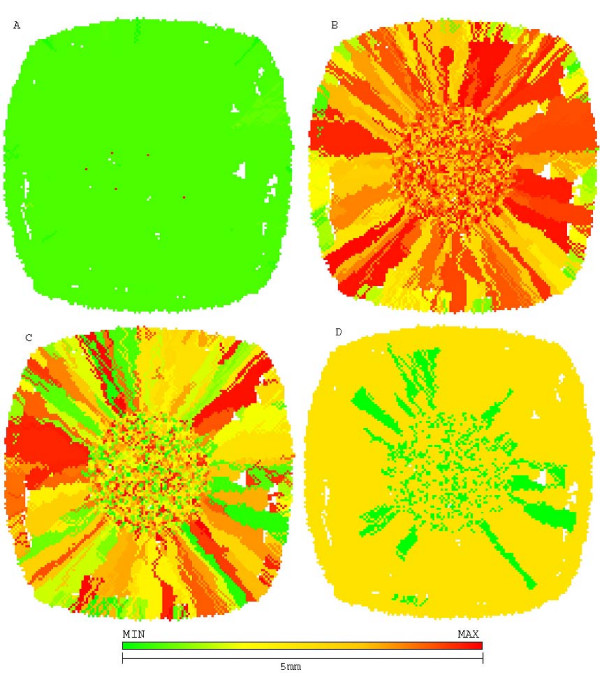
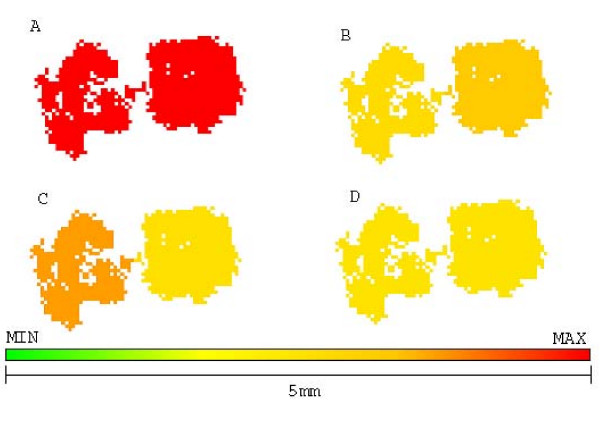
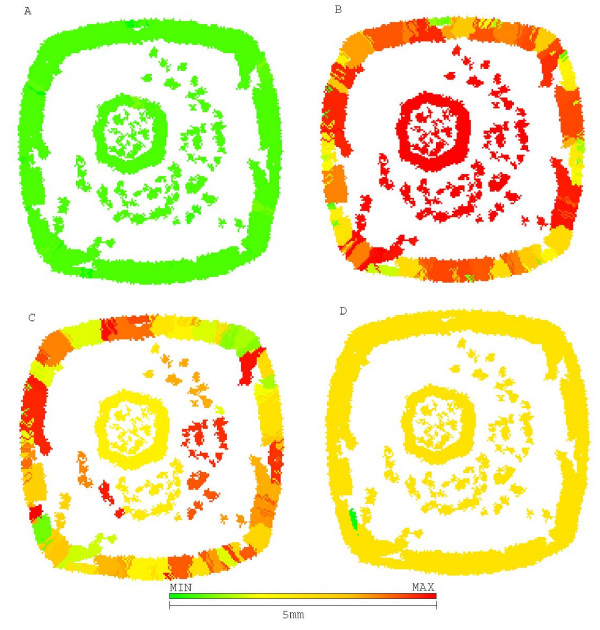
Disseminated cancer remains a nearly uniformly fatal disease. While a number of effective chemotherapies are available, tumors inevitably evolve resistance to these drugs ultimately resulting in treatment failure and cancer progression. Causes for chemotherapy failure in cancer treatment reside in multiple levels: poor vascularization, hypoxia, intratumoral high interstitial fluid pressure, and phenotypic resistance to drug-induced toxicity through upregulated xenobiotic metabolism or DNA repair mechanisms and silencing of apoptotic pathways. We propose that in order to understand the evolutionary dynamics that allow tumors to develop chemoresistance, a comprehensive quantitative model must be used to describe the interactions of cell resistance mechanisms and tumor microenvironment during chemotherapy.Ultimately, the purpose of this model is to identify the best strategies to treat different types of tumor (tumor microenvironment, genetic/phenotypic tumor heterogeneity, tumor growth rate, etc.). We predict that the most promising strategies are those that are both cytotoxic and apply a selective pressure for a phenotype that is less fit than that of the original cancer population. This strategy, known as double bind, is different from the selection process imposed by standard chemotherapy, which tends to produce a resistant population that simply upregulates xenobiotic metabolism. In order to achieve this goal we propose to simulate different tumor progression and therapy strategies (chemotherapy and glucose restriction) targeting stabilization of tumor size and minimization of chemoresistance.
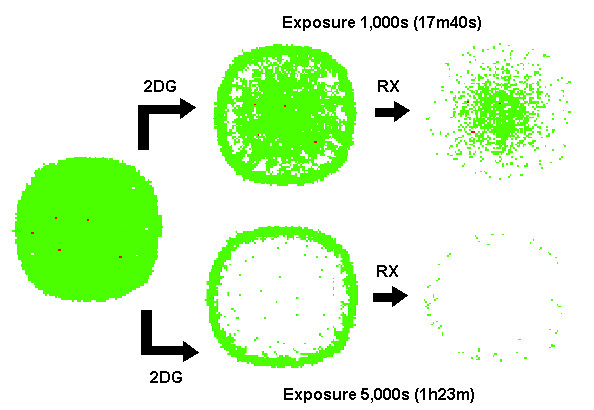
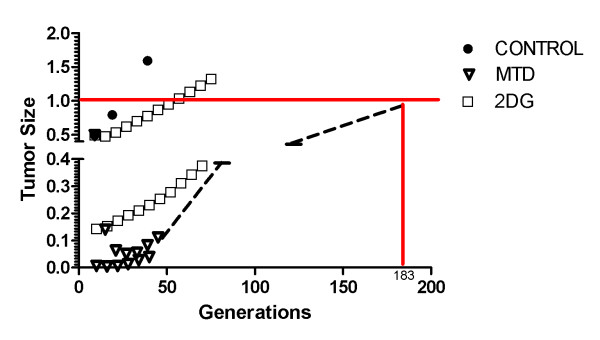
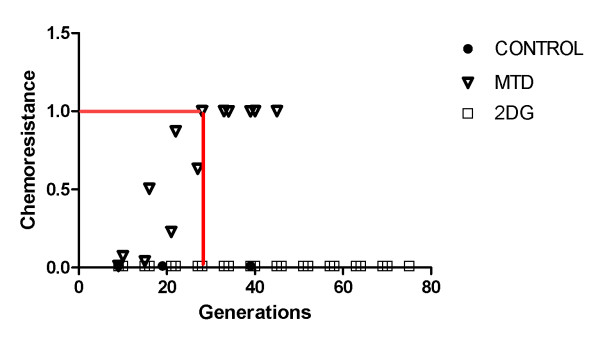
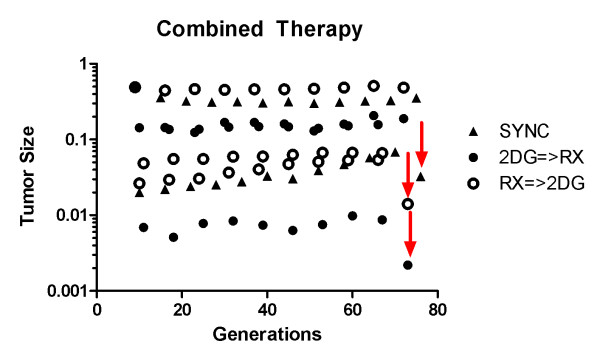
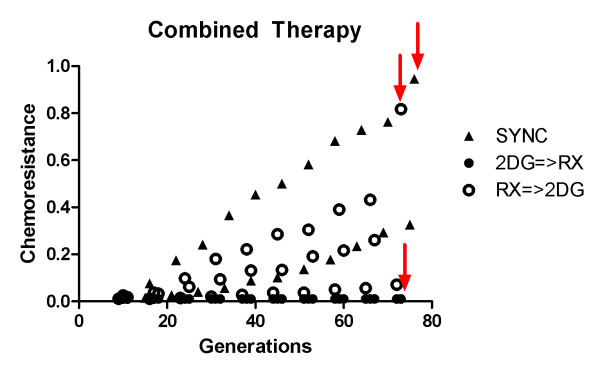
This work confirms the prediction of previous mathematical models and simulations that suggested that administration of chemotherapy with the goal of tumor stabilization instead of eradication would yield better results (longer subject survival) than the use of maximum tolerated doses. Our simulations also indicate that the simultaneous administration of chemotherapy and 2-deoxy-glucose does not optimize treatment outcome because when simultaneously administered these drugs are antagonists. The best results were obtained when 2-deoxy-glucose was followed by chemotherapy in two separate doses.
These results suggest that the maximum potential of a combined therapy may depend on how each of the drugs modifies the evolutionary landscape and that a rational use of these properties may prevent or at least delay relapse.
This article was reviewed by Dr Marek Kimmel and Dr Mark Little.
癌症转移仍是一种几乎普遍致命的疾病。尽管有许多有效的化疗药物可用,但肿瘤不可避免地会对这些药物产生耐药性,最终导致治疗失败和癌症进展。癌症治疗中化疗失败的原因存在于多个层面:血管生成不良、缺氧、肿瘤内间质液高压以及通过上调异生物质代谢或 DNA 修复机制和抑制凋亡途径对药物诱导的毒性产生表型耐药。我们提出,为了了解允许肿瘤产生化疗耐药性的进化动态,必须使用全面的定量模型来描述化疗过程中细胞耐药机制与肿瘤微环境的相互作用。最终,该模型的目的是确定治疗不同类型肿瘤(肿瘤微环境、遗传/表型肿瘤异质性、肿瘤生长速度等)的最佳策略。我们预测,最有前途的策略是那些既具有细胞毒性又对表型施加选择性压力的策略,这种表型比原始癌症群体适应性更差。这种策略称为双重束缚,与标准化疗施加的选择过程不同,标准化疗往往会产生一种简单地上调异生物质代谢的耐药群体。为了实现这一目标,我们提出模拟不同的肿瘤进展和治疗策略(化疗和葡萄糖限制),以稳定肿瘤大小并最小化化疗耐药性。
这项工作证实了先前数学模型和模拟的预测,即通过肿瘤稳定而不是根除的目标来进行化疗给药将比使用最大耐受剂量产生更好的结果(更长的受试者生存时间)。我们的模拟还表明,同时给予化疗和 2-脱氧葡萄糖并不能优化治疗效果,因为同时给予这些药物时它们是拮抗剂。当 2-脱氧葡萄糖在两次单独剂量后再给予化疗时,获得了最佳结果。
这些结果表明,联合治疗的最大潜力可能取决于每种药物如何改变进化景观,并且合理利用这些特性可能预防或至少延迟复发。
本文由 Marek Kimmel 博士和 Mark Little 博士评审。