Department of Radiation Oncology, Steele Laboratory, Massachusetts General Hospital Cancer Center, Boston, Massachusetts, USA.
Cancer Res. 2010 May 1;70(9):3483-93. doi: 10.1158/0008-5472.CAN-09-3107. Epub 2010 Apr 20.
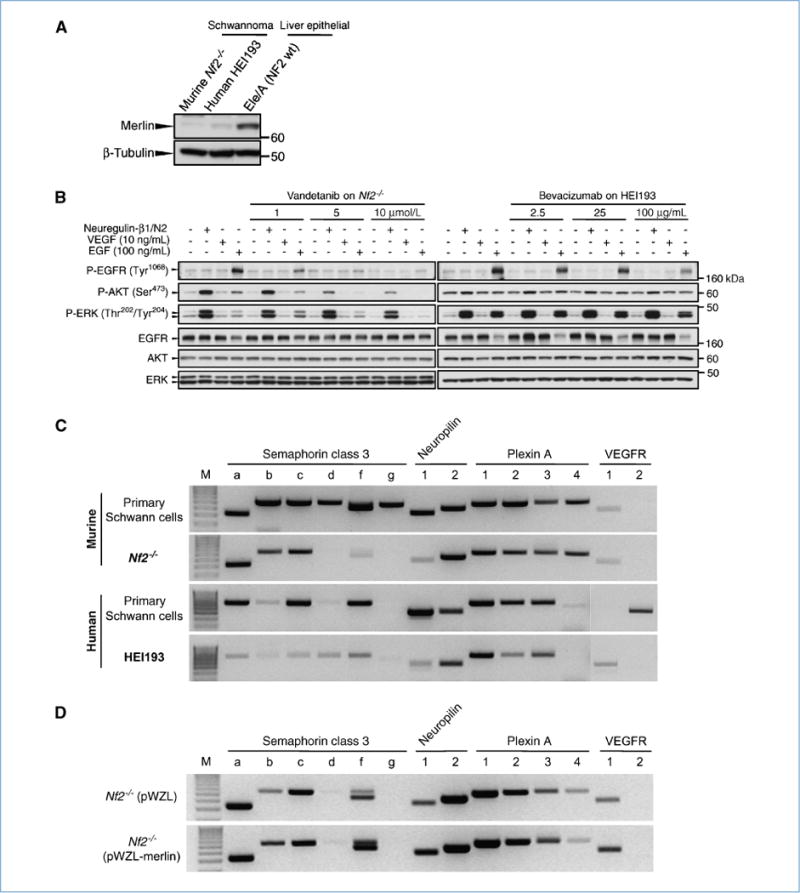
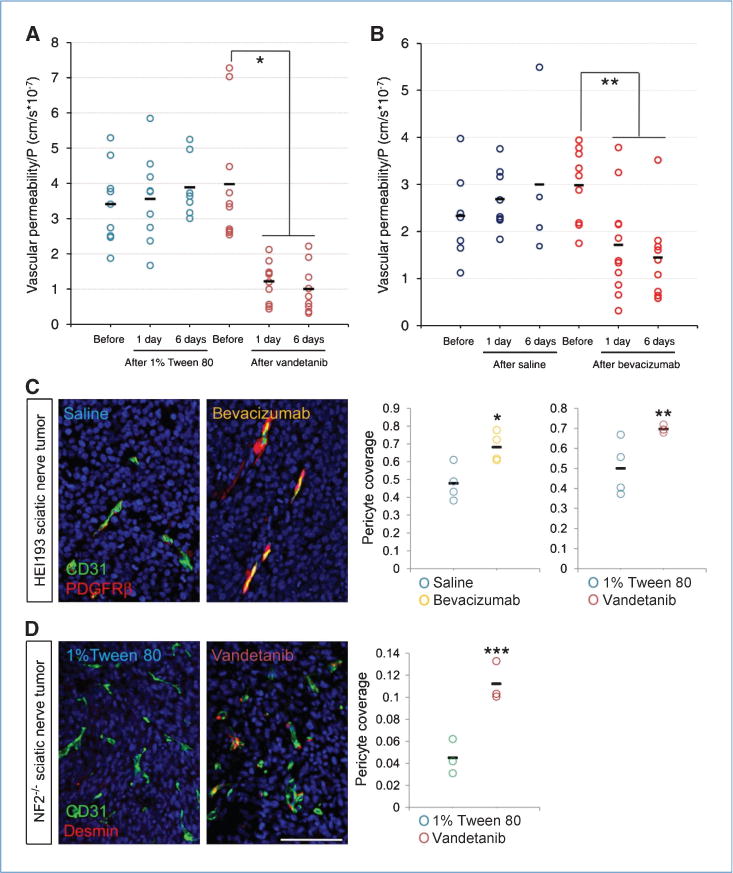
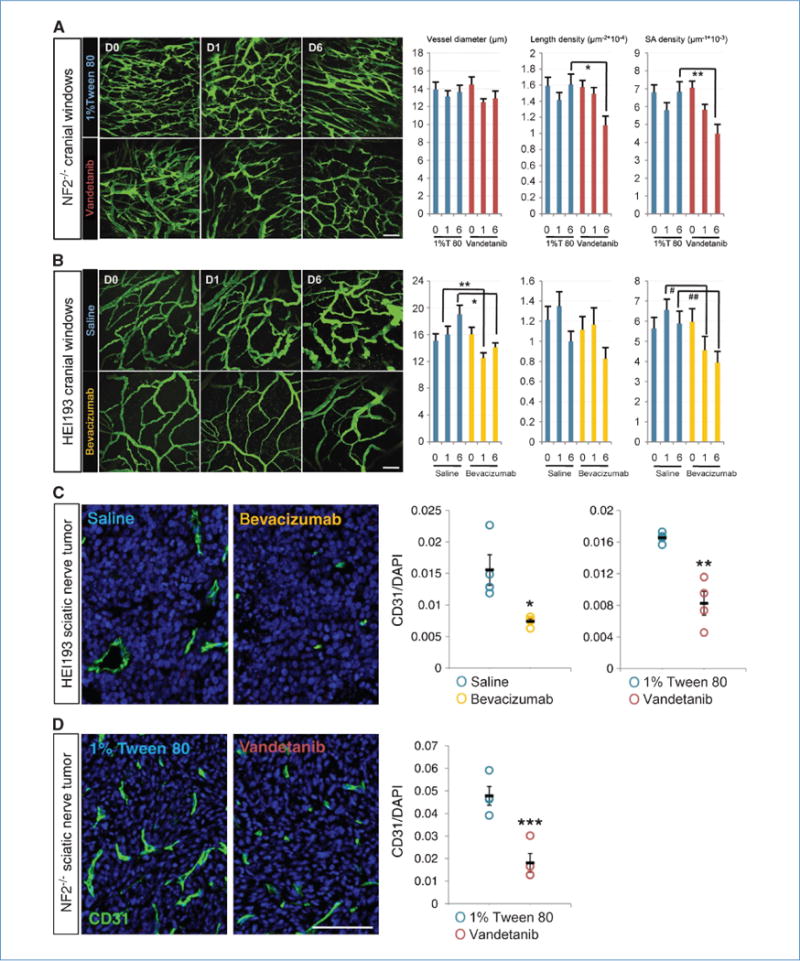
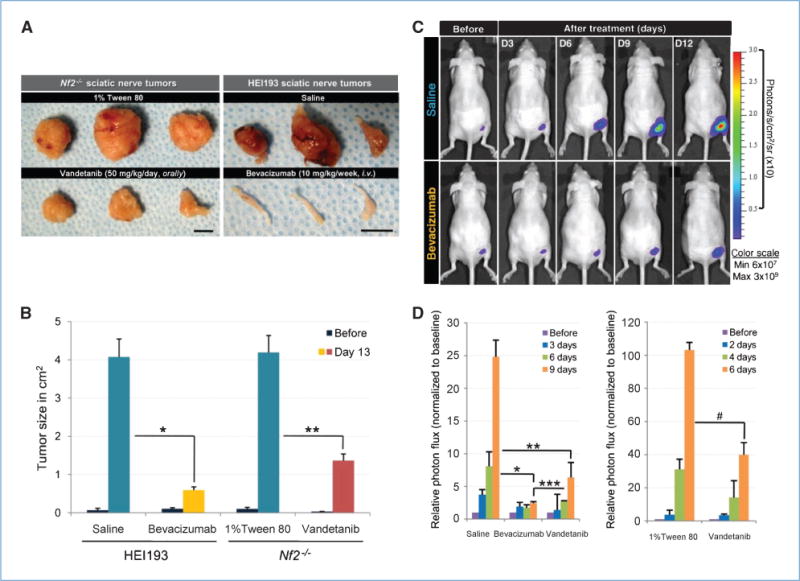
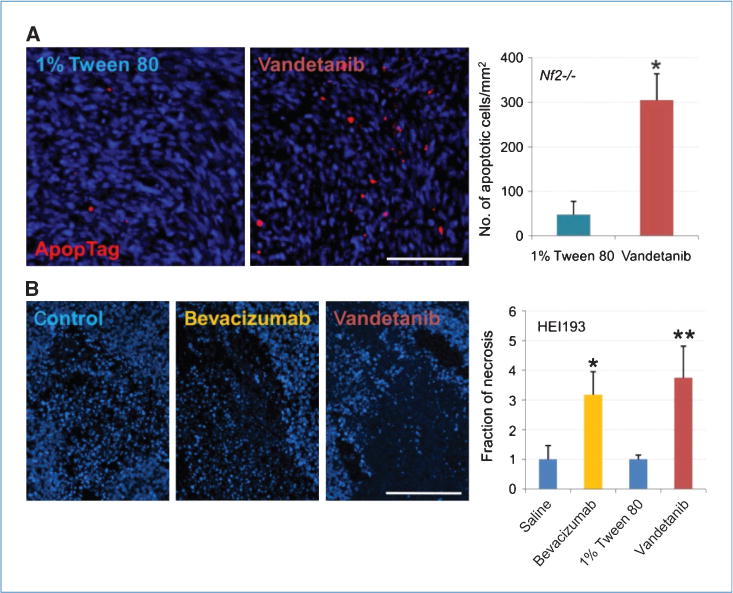
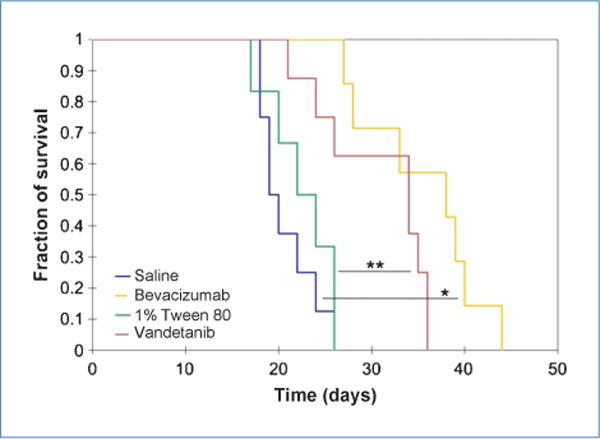
Patients with bilateral vestibular schwannomas associated with neurofibromatosis type 2 (NF2) experience significant morbidity such as complete hearing loss. We have recently shown that treatment with bevacizumab provided tumor stabilization and hearing recovery in a subset of NF2 patients with progressive disease. In the current study, we used two animal models to identify the mechanism of action of anti-vascular endothelial growth factor (VEGF) therapy in schwannomas. The human HEI193 and murine Nf2(-/-) cell lines were implanted between the pia and arachnoid meninges as well as in the sciatic nerve to mimic central and peripheral schwannomas. Mice were treated with bevacizumab (10 mg/kg/wk i.v.) or vandetanib (50 mg/kg/d orally) to block the VEGF pathway. Using intravital and confocal microscopy, together with whole-body imaging, we measured tumor growth delay, survival rate, as well as blood vessel structure and function at regular intervals. In both models, tumor vessel diameter, length/surface area density, and permeability were significantly reduced after treatment. After 2 weeks of treatment, necrosis in HEI193 tumors and apoptosis in Nf2(-/-) tumors were significantly increased, and the tumor growth rate decreased by an average of 50%. The survival of mice bearing intracranial schwannomas was extended by at least 50%. This study shows that anti-VEGF therapy normalizes the vasculature of schwannoma xenografts in nude mice and successfully controls the tumor growth, probably by reestablishing a natural balance between VEGF and semaphorin 3 signaling.
患有双侧听神经鞘瘤并伴有神经纤维瘤病 2 型(NF2)的患者会出现严重的发病情况,例如完全失聪。我们最近发现,贝伐单抗治疗可使部分进展性 NF2 患者的肿瘤稳定并恢复听力。在当前的研究中,我们使用了两种动物模型来确定抗血管内皮生长因子(VEGF)治疗在听神经鞘瘤中的作用机制。人 HEI193 和鼠 Nf2(-/-)细胞系被植入软脑膜和蛛网膜之间以及坐骨神经中,以模拟中枢和外周听神经鞘瘤。小鼠接受贝伐单抗(10mg/kg/周静脉注射)或凡德他尼(50mg/kg/天口服)治疗以阻断 VEGF 通路。通过使用活体和共聚焦显微镜以及全身成像,我们定期测量肿瘤生长延迟、存活率以及血管结构和功能。在这两种模型中,肿瘤血管直径、长度/表面积密度和通透性在治疗后均显著降低。治疗 2 周后,HEI193 肿瘤中的坏死和 Nf2(-/-)肿瘤中的凋亡明显增加,肿瘤生长速度平均降低了 50%。颅内听神经鞘瘤小鼠的存活率至少延长了 50%。这项研究表明,抗 VEGF 治疗可使裸鼠异种移植的听神经鞘瘤血管正常化,并成功控制肿瘤生长,这可能是通过重新建立 VEGF 和 Sema3 信号之间的自然平衡来实现的。