Waykole Yogesh Prakash, Doiphode S S, Rakhewar P S, Mhaske Maya
Post-graduate Student, Department of Periodontology, C.S.M.S.S Dental College and Hospital, Kanchanwadi, Aurangabad - 431 002, India.
J Indian Soc Periodontol. 2009 May;13(2):64-8. doi: 10.4103/0972-124X.55837.
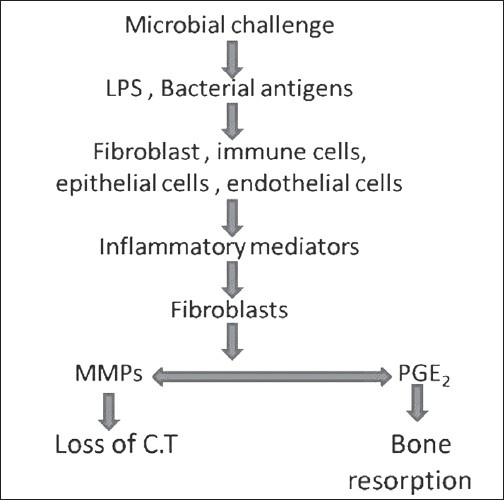
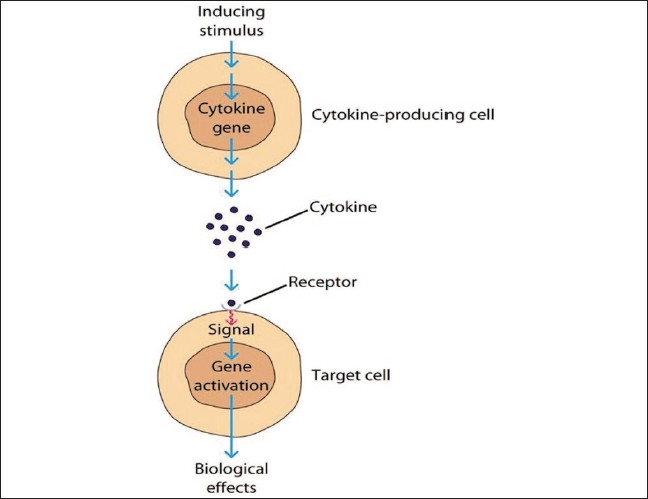
Periodontal destruction is initiated by bacteria that stimulate host responses leading to excess production of cytokines. Anticytokine therapy for periodontal diseases especially targets proinflammatory cytokines, that is, TNF-alpha, IL-1, and IL-6, because these are essential for the initiation of the inflammatory immune reaction and are produced for prolonged periods in periodontitis. This therapy aims to bind the cytokines with the receptors present on target cells such as the fibroblasts. The three basic treatment strategies are: (1) neutralization of cytokines, (2) blockage of cytokine receptors, and (3) activation of anti-inflammatory pathways, such as, immune-suppressive pathways.This new therapy can act as a host response modulator in the control of inflammatory diseases of gums and may provide the basis for new molecular therapeutic approaches to the treatment of periodontitis.
牙周组织破坏由刺激宿主反应并导致细胞因子过度产生的细菌引发。针对牙周疾病的抗细胞因子疗法尤其针对促炎细胞因子,即肿瘤坏死因子-α、白细胞介素-1和白细胞介素-6,因为这些细胞因子对于炎症免疫反应的启动至关重要,且在牙周炎中会长期产生。该疗法旨在使细胞因子与成纤维细胞等靶细胞上存在的受体结合。三种基本治疗策略为:(1)中和细胞因子;(2)阻断细胞因子受体;(3)激活抗炎途径,如免疫抑制途径。这种新疗法可作为宿主反应调节剂来控制牙龈炎症性疾病,并可能为治疗牙周炎的新分子治疗方法提供基础。