Wellcome Trust Centre for Cell-Matrix Research, Faculty of Life Sciences, University of Manchester, Michael Smith Building, Oxford Road, Manchester, M13 9PT, UK.
Cell Stress Chaperones. 2010 Nov;15(6):835-49. doi: 10.1007/s12192-010-0193-y. Epub 2010 Apr 30.
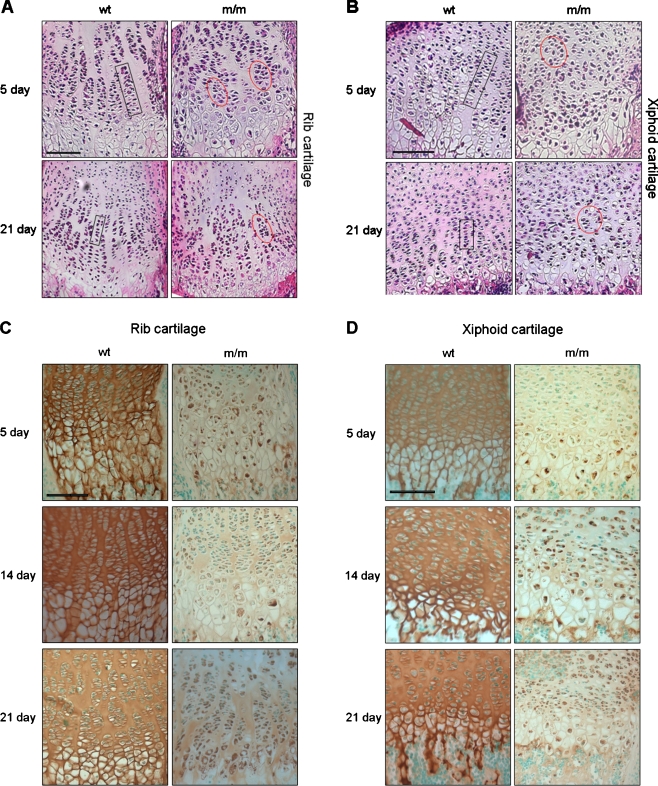
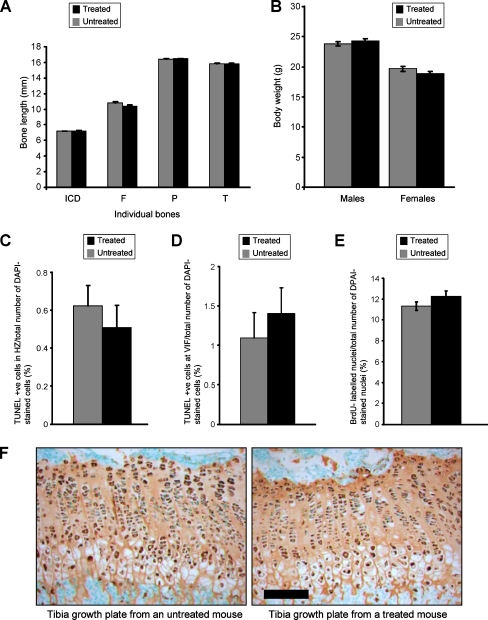
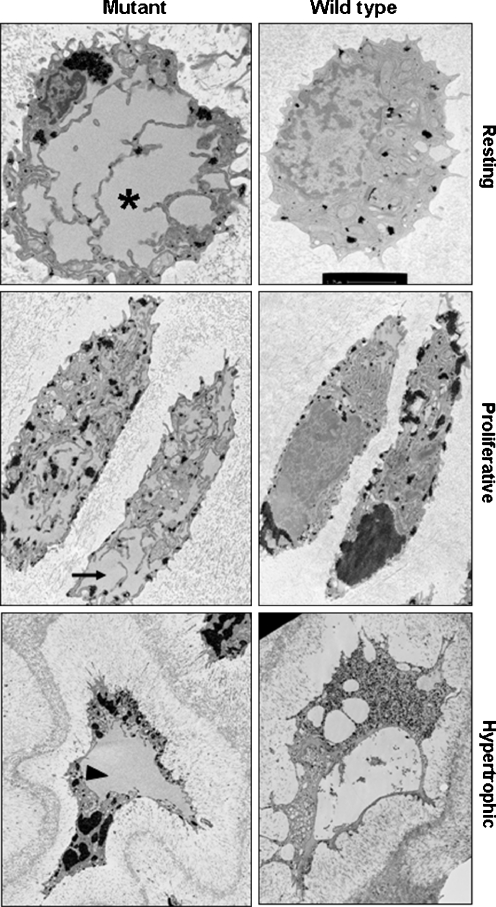
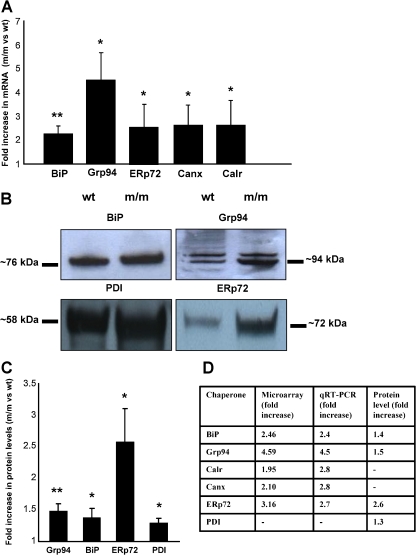
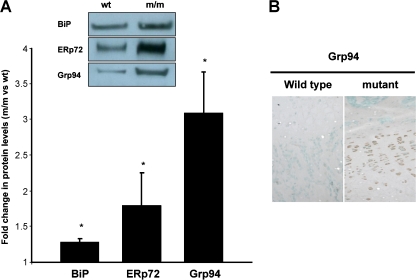
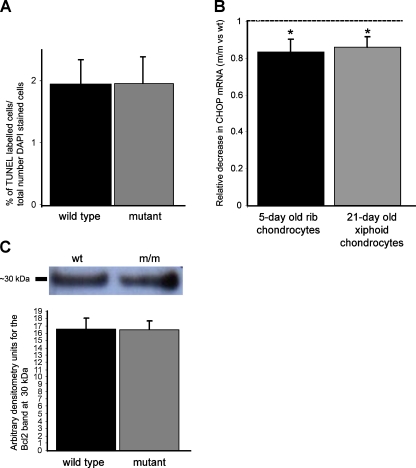
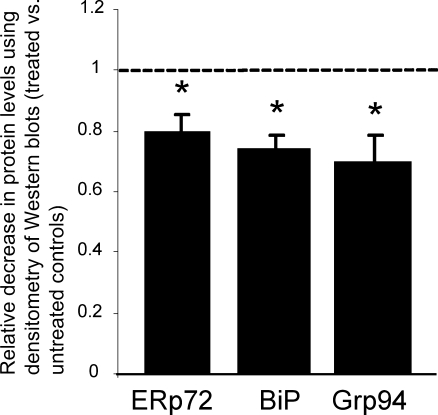
Multiple epiphyseal dysplasia (MED) can result from mutations in matrilin-3, a structural protein of the cartilage extracellular matrix. We have previously shown that in a mouse model of MED the tibia growth plates were normal at birth but developed a progressive dysplasia characterised by the intracellular retention of mutant matrilin-3 and abnormal chondrocyte morphology. By 3 weeks of age, mutant mice displayed a significant decrease in chondrocyte proliferation and dysregulated apoptosis. The aim of this current study was to identify the initial post-natal stages of the disease. We confirmed that the disease phenotype is seen in rib and xiphoid cartilage and, like tibia growth plate cartilage is characterised by the intracellular retention of mutant matrilin-3. Gene expression profiling showed a significant activation of classical unfolded protein response (UPR) genes in mutant chondrocytes at 5 days of age, which was still maintained by 21 days of age. Interestingly, we also noted the upregulation of arginine-rich, mutated in early stage of tumours (ARMET) and cysteine-rich with EGF-like domain protein 2 (CRELD2) are two genes that have only recently been implicated in the UPR. This endoplasmic reticulum (ER) stress and UPR did not lead to increased chondrocyte apoptosis in mutant cartilage by 5 days of age. In an attempt to alleviate ER stress, mutant mice were fed with a chemical chaperone, 4-sodium phenylbutyrate (SPB). SPB at the dosage used had no effect on chaperone expression at 5 days of age but modestly decreased levels of chaperone proteins at 3 weeks. However, this did not lead to increased secretion of mutant matrilin-3 and in the long term did not improve the disease phenotype. We performed similar studies with a mouse model of Schmid metaphyseal chondrodysplasia, but again this treatment did not improve the phenotype.
多发性骨骺发育不良(MED)可由软骨细胞外基质的结构蛋白 matrilin-3 的突变引起。我们之前已经表明,在 MED 的小鼠模型中,出生时的胫骨生长板正常,但会逐渐出现一种进行性发育不良,其特征是突变型 matrilin-3 的细胞内滞留和异常软骨细胞形态。到 3 周龄时,突变型小鼠的软骨细胞增殖明显减少,凋亡失调。本研究的目的是确定疾病的初始产后阶段。我们证实该疾病表型可见于肋骨和剑突软骨,并且与胫骨生长板软骨一样,其特征是突变型 matrilin-3 的细胞内滞留。基因表达谱分析显示,突变型软骨细胞在 5 天时出现明显的经典未折叠蛋白反应(UPR)基因激活,到 21 天时仍保持激活。有趣的是,我们还注意到精氨酸丰富、早期肿瘤中突变的(ARMET)和富含半胱氨酸、具有表皮生长因子样结构域的蛋白 2(CRELD2)的上调,这两个基因最近才被牵连到 UPR 中。这种内质网(ER)应激和 UPR 在 5 天时并没有导致突变型软骨中的软骨细胞凋亡增加。为了减轻 ER 应激,突变型小鼠用化学伴侣 4-苯丁酸钠(SPB)喂养。在 5 天时,SPB 以使用的剂量对伴侣蛋白的表达没有影响,但在 3 周时适度降低了伴侣蛋白的水平。然而,这并没有导致突变型 matrilin-3 的分泌增加,从长远来看也没有改善疾病表型。我们用 Schmid 干骺端软骨发育不良的小鼠模型进行了类似的研究,但这种治疗方法也没有改善表型。