Department of Oral and Maxillofacial Surgery, University Medical Center Groningen University of Groningen, Groningen, 9700 RB, the Netherlands.
Health Qual Life Outcomes. 2010 May 2;8:46. doi: 10.1186/1477-7525-8-46.
As impact of literature concerning this subject is scarce, the objectives of this study were to assess whether the Health Related Quality of Life (HRQoL) is decreased in patients with painful temporomandibular disorders as compared to the HRQoL in the general population, and to evaluate to what extent pain duration affects HRQoL.
Data concerning physical and mental health were retrieved from patients with painful temporomandibular disorders. Assessment tools used were: the Mandibular Function Impairment Questionnaire (MFIQ), the Short-Form-36 (SF-36), the Hospital Anxiety and Depression Schedule (HADS), and the General Health Questionnaire (GHQ). In order to examine the influence of the duration of pain on HRQoL, the total sample was divided into three different subgroups. Subgroup 1 consisted of patients with complaints existing less than one year. Patients with complaints from 1 to 3 years were allocated to the second group. The 3rd subgroup included patients with complaints longer than 3 years.
The total sample consisted of 95 patients (90 females and 5 males). On most physical and social functioning items, groups 2 and 3 scored significantly worse than the general population. On the other hand, none of the groups differed from the general population when comparing the mental items. Duration of pain was significantly correlated with SF-36 subscale physical functioning and the mandibular impairment.
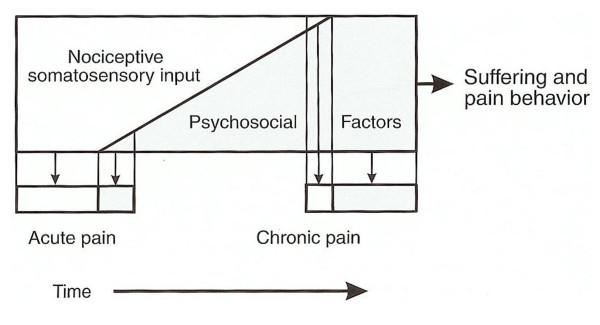
Patients with TMD pain less than one year score better than compared to the population norm. With a longer duration of pain, mental health scores and role limitations due to emotional problems do not appear to be seriously affected by reduced physical health, while social functioning appears to be considerably affected.
由于该主题的文献影响较小,本研究的目的是评估患有疼痛性颞下颌关节紊乱症的患者的健康相关生活质量(HRQoL)是否低于普通人群,以及评估疼痛持续时间对 HRQoL 的影响程度。
从患有疼痛性颞下颌关节紊乱症的患者中检索身体和心理健康数据。使用的评估工具包括:下颌功能障碍问卷(MFIQ)、简明 36 项健康调查量表(SF-36)、医院焦虑和抑郁量表(HADS)和一般健康问卷(GHQ)。为了研究疼痛持续时间对 HRQoL 的影响,将总样本分为三个不同的亚组。第 1 亚组由疼痛持续时间少于 1 年的患者组成。疼痛持续时间为 1 至 3 年的患者被分配到第 2 组。第 3 亚组包括疼痛持续时间超过 3 年的患者。
总样本由 95 名患者(90 名女性和 5 名男性)组成。在大多数身体和社会功能项目中,第 2 组和第 3 组的评分明显低于普通人群。另一方面,在比较心理项目时,没有任何一组与普通人群不同。疼痛持续时间与 SF-36 子量表身体功能和下颌功能障碍显著相关。
疼痛持续时间少于 1 年的 TMD 患者的评分优于人群正常水平。随着疼痛持续时间的延长,心理健康评分和因情绪问题导致的角色限制似乎不会因身体健康状况下降而受到严重影响,而社会功能似乎受到相当大的影响。