Ivanitskaya Lana, Brookins-Fisher Jodi, O Boyle Irene, Vibbert Danielle, Erofeev Dmitry, Fulton Lawrence
The Herbert H. and Grace A. Dow College of Health Professions, Central Michigan University, Mount Pleasant, MI, USA.
J Med Internet Res. 2010 Apr 26;12(2):e11. doi: 10.2196/jmir.1520.
Websites of many rogue sellers of medications are accessible through links in email spam messages or via web search engines. This study examined how well students enrolled in a U.S. higher education institution could identify clearly unsafe pharmacies.
The aim is to estimate these health consumers vulnerability to fraud by illegitimate Internet pharmacies.
Two Internet pharmacy websites, created specifically for this study, displayed multiple untrustworthy features modeled after five actual Internet drug sellers which the authors considered to be potentially dangerous to consumers. The websites had none of the safe pharmacy signs and nearly all of the danger signs specified in the Food and Drug Administration s (FDA s) guide to consumers. Participants were told that a neighborhood pharmacy charged US$165 for a one-month supply of Beozine, a bogus drug to ensure no pre-existing knowledge. After checking its price at two Internet pharmacies-$37.99 in pharmacy A and $57.60 in pharmacy B-the respondents were asked to indicate if each seller was a good place to buy the drug. Responses came from 1,914 undergraduate students who completed an online eHealth literacy assessment in 2005-2008. Participation rate was 78%.
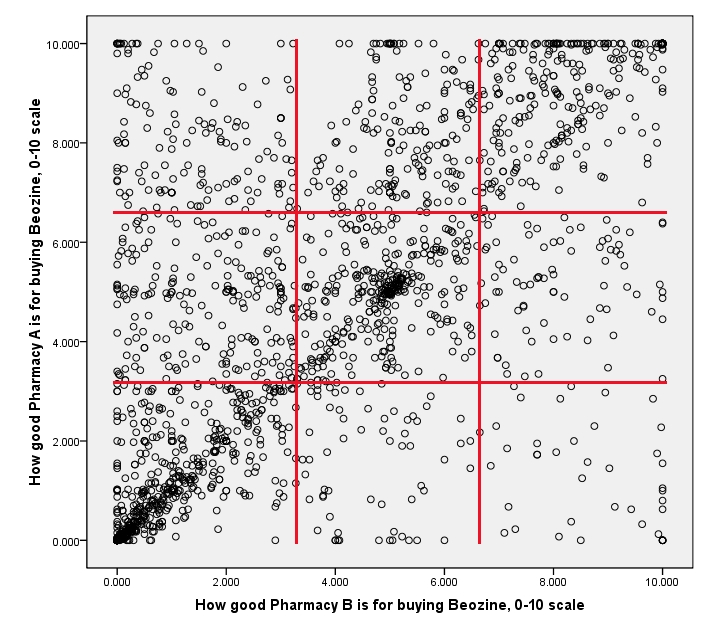
In response to "On a scale from 0-10, how good is this pharmacy as a place for buying Beozine?" many respondents gave favorable ratings. Specifically, 50% of students who reviewed pharmacy A and 37% of students who reviewed pharmacy B chose a rating above the scale midpoint. When explaining a low drug cost, these raters related it to low operation costs, ad revenue, pressure to lower costs due to comparison shopping, and/or high sales volume. Those who said that pharmacy A or B was "a very bad place" for purchasing the drug (25%), as defined by a score of 1 or less, related low drug cost to lack of regulation, low drug quality, and/or customer information sales. About 16% of students thought that people should be advised to buy cheaper drugs at pharmacies such as these but the majority (62%) suggested that people should be warned against buying drugs from such internet sellers. Over 22% of respondents would recommend pharmacy A to friends and family (10% pharmacy B). One-third of participants supplied online health information to others for decision-making purposes. After controlling for the effects of education, health major, and age, these respondents had significantly worse judgment of Internet pharmacies than those who did not act as information suppliers.
At least a quarter of students, including those in health programs, cannot see multiple signs of danger displayed by rogue Internet pharmacies. Many more are likely to be misled by online sellers that use professional design, veil untrustworthy features, and mimic reputable websites. Online health information consumers would benefit from education initiatives that (1) communicate why it can be dangerous to buy medications online and that (2) develop their information evaluation skills. This study highlights the importance of regulating rogue Internet pharmacies and curbing the danger they pose to consumers.
许多违规药品销售商的网站可通过电子邮件垃圾信息中的链接或网络搜索引擎访问。本研究调查了美国高等教育机构的学生识别明显不安全药房的能力。
旨在评估这些健康消费者在面对非法网上药房欺诈行为时的易受骗程度。
专门为本研究创建了两个网上药房网站,展示了多个不可信特征,这些特征是仿照作者认为对消费者有潜在危险的五个实际网上药品销售商设计的。这些网站没有任何安全药房标志,几乎具备了美国食品药品监督管理局(FDA)给消费者的指南中规定的所有危险标志。参与者被告知,附近一家药房一个月用量的Beozine(一种假药)收费165美元,以确保他们事先不了解相关信息。在查看了两家网上药房的价格后(药房A为37.99美元,药房B为57.60美元),受访者被要求指出每个销售商是否是购买该药的好地方。回复来自于2005年至2008年完成在线电子健康素养评估的1914名本科生。参与率为78%。
对于“从0到10打分,这家药房作为购买Beozine的地方有多好?”这一问题,许多受访者给出了正面评价。具体而言,查看药房A的学生中有50%,查看药房B的学生中有37%选择了高于评分中点的分数。在解释药品价格低的原因时,这些评分者将其与低运营成本以及广告收入、因比较购物而产生的降低成本的压力和/或高销量联系起来。那些认为药房A或B是购买该药“非常糟糕的地方”(占25%,即分数为1分及以下)的人,将药品价格低与缺乏监管、药品质量低和/或客户信息销售联系起来。约16%的学生认为应该建议人们在这样的药房购买更便宜的药品,但大多数人(62%)建议应该警告人们不要从这类网上销售商处购买药品。超过22%的受访者会向朋友和家人推荐药房A(推荐药房B的为10%)。三分之一的参与者会为他人提供在线健康信息以供决策。在控制了教育程度、健康专业和年龄的影响后,这些受访者对网上药房的判断明显比那些不提供信息的人更差。
至少四分之一的学生,包括健康专业的学生,无法识别违规网上药房展示的多种危险信号。更多的人可能会被那些采用专业设计、掩盖不可信特征并模仿知名网站的网上销售商误导。在线健康信息消费者将受益于以下教育举措:(1)传达为什么在网上购买药品可能危险,以及(2)培养他们的信息评估技能。本研究强调了监管违规网上药房并遏制其对消费者构成的危险的重要性。
