Department of Anatomy and Neurosciences, Neuroscience Campus Amsterdam, VU University Medical Center Amsterdam, Amsterdam, The Netherlands.
Neurobiol Dis. 2010 Sep;39(3):229-41. doi: 10.1016/j.nbd.2010.04.020. Epub 2010 May 6.
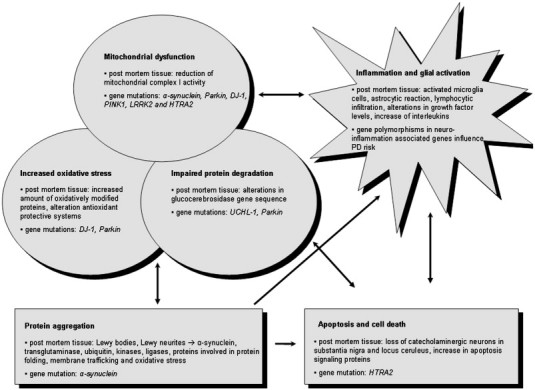
The inaccuracy of the early diagnosis of Parkinson's disease (PD) has been a major incentive for studies aimed at the identification of biomarkers. Brain-derived cerebrospinal fluid (CSF) proteins are potential biomarkers considering the major role that proteins play in PD pathogenesis. In this review, we discuss the current hypotheses about the pathogenesis of PD and identify the most promising candidate biomarkers among the CSF proteins studied so far. The list of potential markers includes proteins involved in various pathogenetic processes, such as oxidative stress and protein aggregation. This list will undoubtedly grow in the near future by application of CSF proteomics and subsequent validation of identified proteins. Probably a single biomarker will not suffice to reach high sensitivity and specificity, because PD is pathogenetically heterogeneous and shares etiological factors with other neurodegenerative diseases. Furthermore, identified candidate biomarkers will have to be thoroughly validated before they can be implemented as diagnostic aids.
帕金森病(PD)早期诊断的不准确性一直是研究旨在确定生物标志物的主要动力。考虑到蛋白质在 PD 发病机制中发挥的主要作用,脑源性脑脊液(CSF)蛋白是一种有潜力的生物标志物。在这篇综述中,我们讨论了 PD 发病机制的当前假设,并确定了迄今为止在 CSF 蛋白研究中最有前途的候选生物标志物。潜在标志物的清单包括涉及各种发病过程的蛋白质,例如氧化应激和蛋白质聚集。通过 CSF 蛋白质组学的应用以及随后对鉴定出的蛋白质进行验证,这个清单无疑将在不久的将来不断增加。可能单一的生物标志物不足以达到高灵敏度和特异性,因为 PD 在发病机制上是异质的,并且与其他神经退行性疾病有共同的病因。此外,在将候选生物标志物作为诊断辅助手段实施之前,还必须对其进行彻底验证。