Toone W M, Rudd K E, Friesen J D
Department of Genetics, Hospital for Sick Children, Toronto, Ontario, Canada.
J Bacteriol. 1991 Jun;173(11):3291-302. doi: 10.1128/jb.173.11.3291-3302.1991.
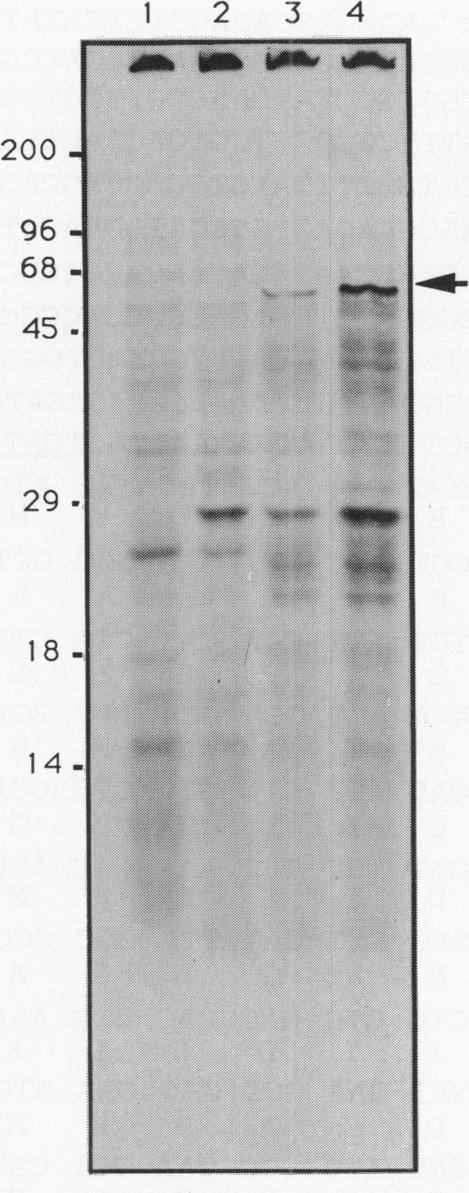
We have cloned and sequenced a new gene from Escherichia coli which encodes a 64-kDa protein. The inferred amino acid sequence of the protein shows remarkable similarity to eIF4A, a murine translation initiation factor that has an ATP-dependent RNA helicase activity and is a founding member of the D-E-A-D family of proteins (characterized by a conserved Asp-Glu-Ala-Asp motif). Our new gene, called deaD, was cloned as a gene dosage-dependent suppressor of temperature-sensitive mutations in rpsB, the gene encoding ribosomal protein S2. We suggest that the DeaD protein plays a hitherto unknown role in translation in E. coli.
我们从大肠杆菌中克隆并测序了一个新基因,该基因编码一种64 kDa的蛋白质。该蛋白质的推断氨基酸序列与eIF4A具有显著相似性,eIF4A是一种小鼠翻译起始因子,具有ATP依赖性RNA解旋酶活性,是D-E-A-D蛋白家族的创始成员(其特征是具有保守的天冬氨酸-谷氨酸-丙氨酸-天冬氨酸基序)。我们的新基因称为deaD,它是作为核糖体蛋白S2编码基因rpsB中温度敏感突变的基因剂量依赖性抑制子而克隆的。我们认为DeaD蛋白在大肠杆菌的翻译过程中发挥着迄今未知的作用。