Laboratoire TIMC-IMAG (Techniques de l'Ingénierie Médicale et de la Complexité - Informatique, Mathématiques et Applications de Grenoble), Centre National de la Recherche Scientifique, Université Joseph Fourier, Grenoble, France.
PLoS One. 2010 May 4;5(5):e10476. doi: 10.1371/journal.pone.0010476.
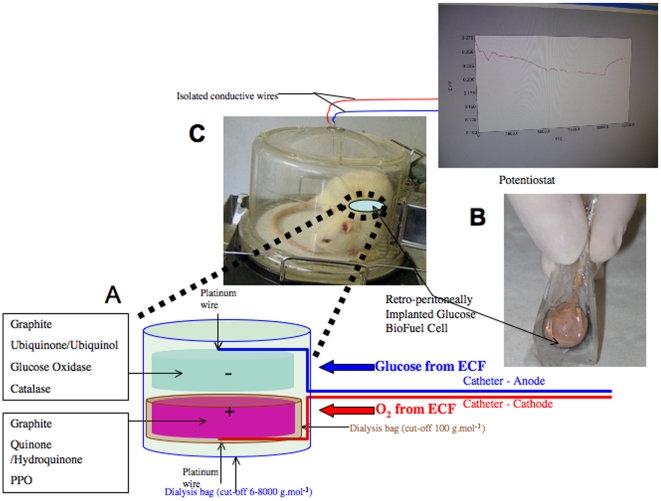
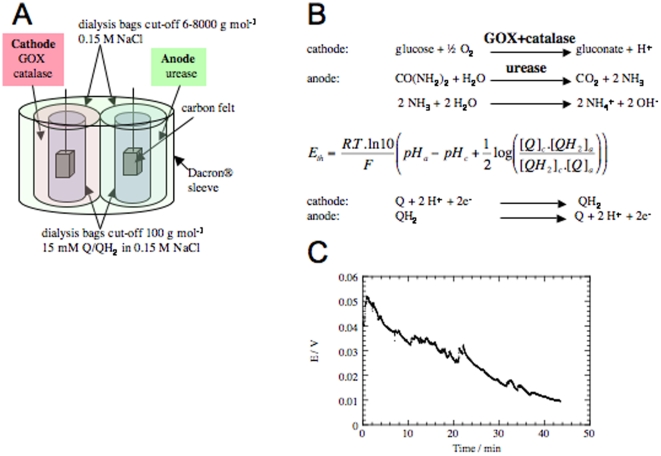
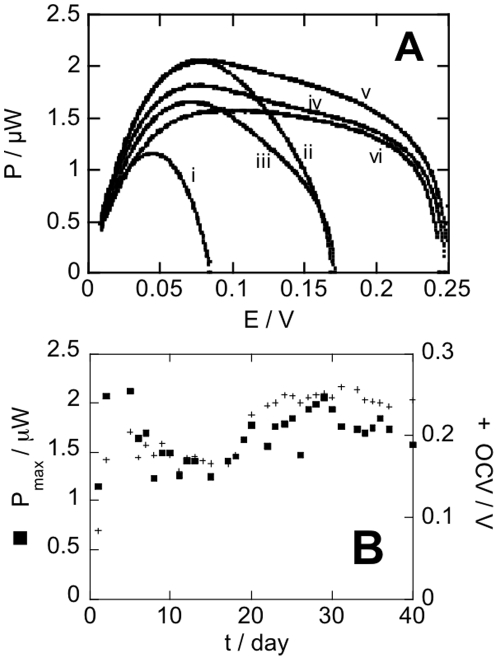
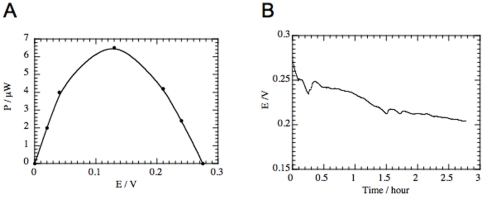
Powering future generations of implanted medical devices will require cumbersome transcutaneous energy transfer or harvesting energy from the human body. No functional solution that harvests power from the body is currently available, despite attempts to use the Seebeck thermoelectric effect, vibrations or body movements. Glucose fuel cells appear more promising, since they produce electrical energy from glucose and dioxygen, two substrates present in physiological fluids. The most powerful ones, Glucose BioFuel Cells (GBFCs), are based on enzymes electrically wired by redox mediators. However, GBFCs cannot be implanted in animals, mainly because the enzymes they rely on either require low pH or are inhibited by chloride or urate anions, present in the Extra Cellular Fluid (ECF). Here we present the first functional implantable GBFC, working in the retroperitoneal space of freely moving rats. The breakthrough relies on the design of a new family of GBFCs, characterized by an innovative and simple mechanical confinement of various enzymes and redox mediators: enzymes are no longer covalently bound to the surface of the electron collectors, which enables use of a wide variety of enzymes and redox mediators, augments the quantity of active enzymes, and simplifies GBFC construction. Our most efficient GBFC was based on composite graphite discs containing glucose oxidase and ubiquinone at the anode, polyphenol oxidase (PPO) and quinone at the cathode. PPO reduces dioxygen into water, at pH 7 and in the presence of chloride ions and urates at physiological concentrations. This GBFC, with electrodes of 0.133 mL, produced a peak specific power of 24.4 microW mL(-1), which is better than pacemakers' requirements and paves the way for the development of a new generation of implantable artificial organs, covering a wide range of medical applications.
为未来的植入式医疗设备供电需要繁琐的经皮能量传输,或从人体中获取能量。尽管人们试图利用塞贝克热电效应、振动或身体运动来获取能量,但目前还没有可行的从人体获取能量的解决方案。葡萄糖燃料电池似乎更有前途,因为它们利用葡萄糖和氧气这两种存在于生理液体中的底物产生电能。最强大的葡萄糖生物燃料电池(GBFC)是基于通过氧化还原介体电连接的酶。然而,GBFC 不能植入动物体内,主要是因为它们所依赖的酶要么需要低 pH 值,要么被氯离子或尿酸阴离子抑制,而氯离子或尿酸阴离子存在于细胞外液(ECF)中。在这里,我们展示了第一个在自由活动的大鼠腹膜后空间中工作的功能性可植入 GBFC。这一突破依赖于一种新型 GBFC 的设计,其特点是对各种酶和氧化还原介体进行了创新和简单的机械限制:酶不再与电子收集器的表面共价结合,这使得可以使用各种酶和氧化还原介体,增加了活性酶的数量,并简化了 GBFC 的构建。我们最有效的 GBFC 是基于包含葡萄糖氧化酶和在阳极的辅酶 Q 的复合石墨盘,以及在阴极的多酚氧化酶(PPO)和醌。PPO 在 pH 值为 7 且氯离子和尿酸浓度处于生理浓度的情况下,将氧气还原成水。这种 GBFC 的电极体积为 0.133 毫升,产生的峰值比功率为 24.4 微瓦/毫升,优于起搏器的要求,为开发新一代植入式人工器官铺平了道路,涵盖了广泛的医疗应用。