College of Bioresources Chemical and Materials Engineering, Shaanxi University of Science & Technology, Xi'an, Shaanxi, 710021, China.
National Demonstration Center for Experimental Light Chemistry Engineering Education, Shaanxi University of Science &Technology, Xi'an, Shaanxi, 710021, China.
Adv Sci (Weinh). 2024 Mar;11(11):e2307369. doi: 10.1002/advs.202307369. Epub 2024 Jan 9.
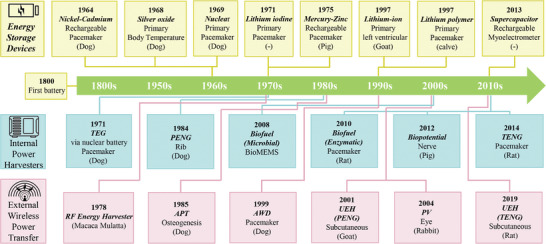
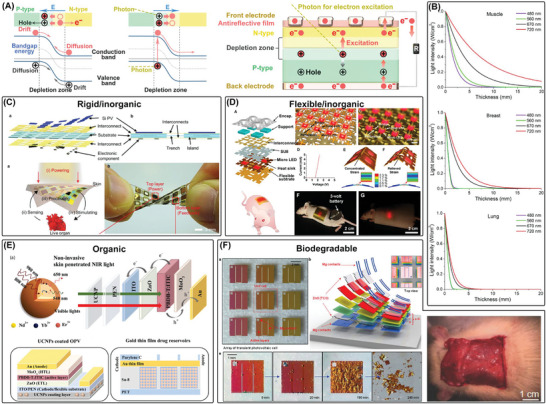
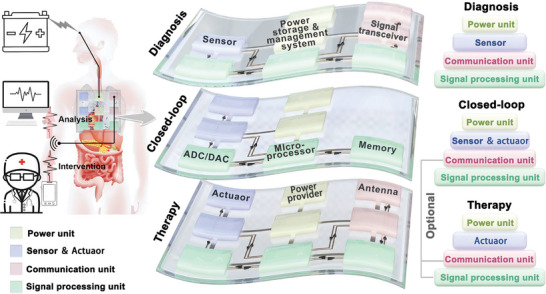
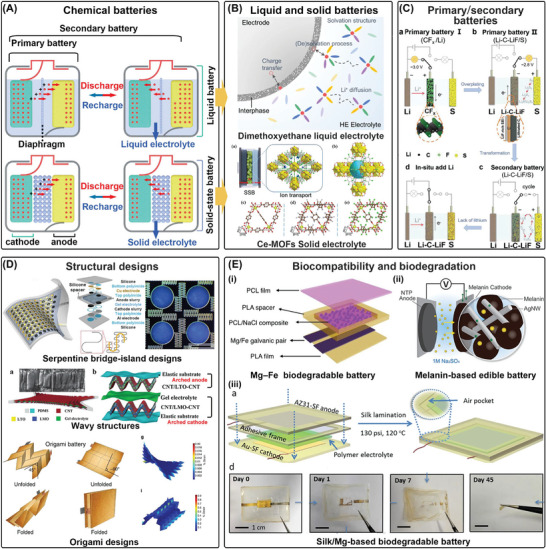
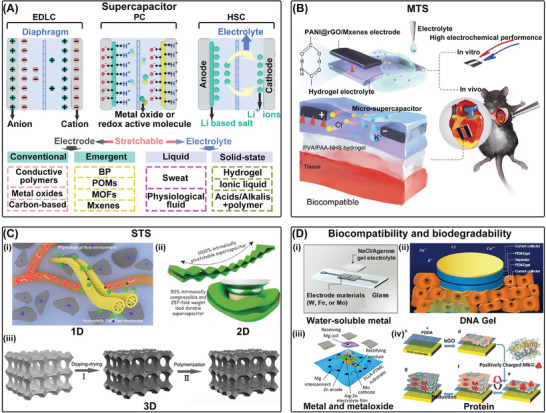
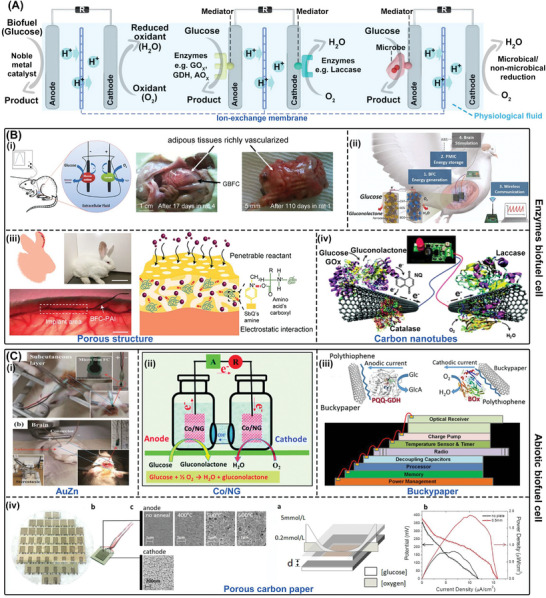
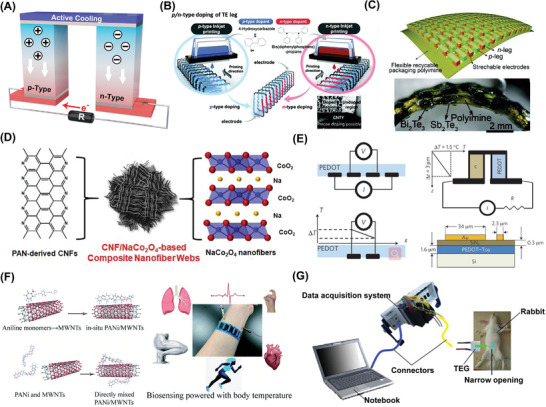
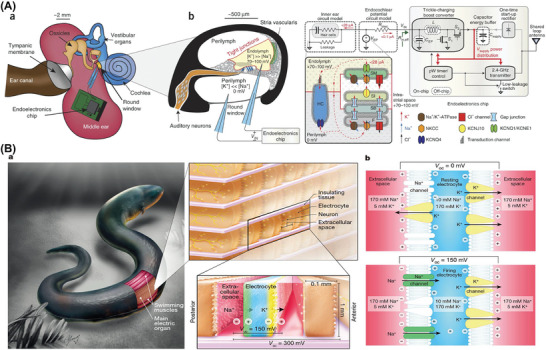
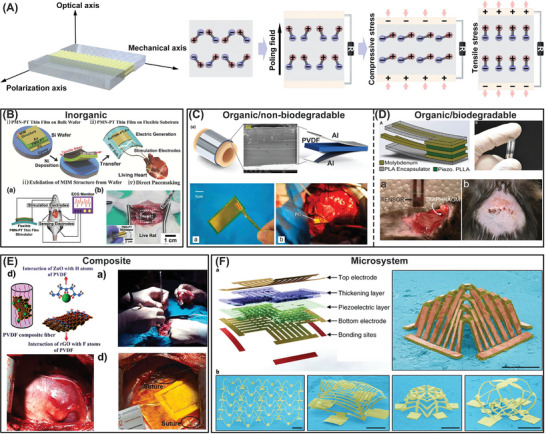
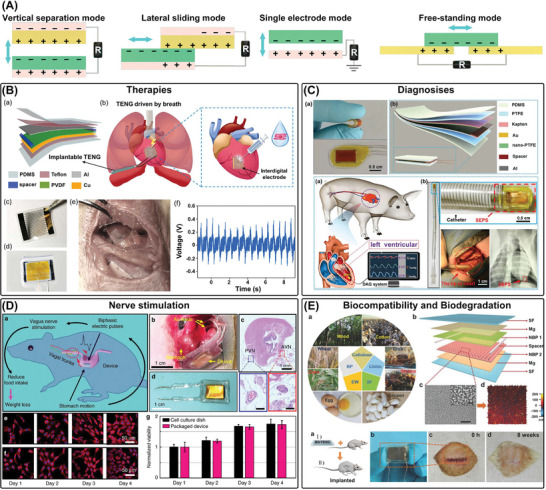
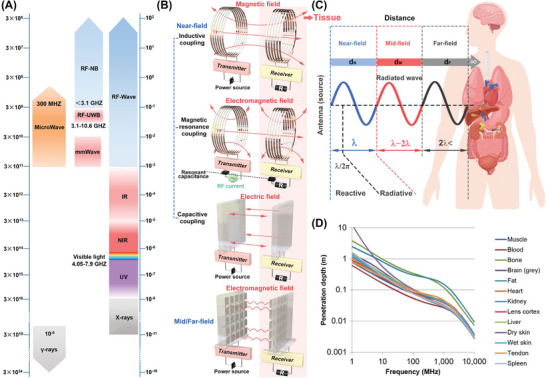
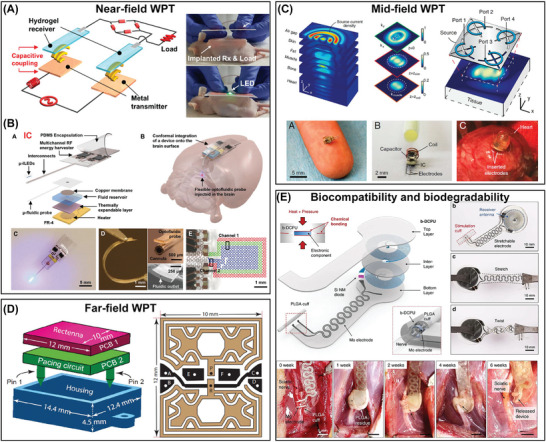
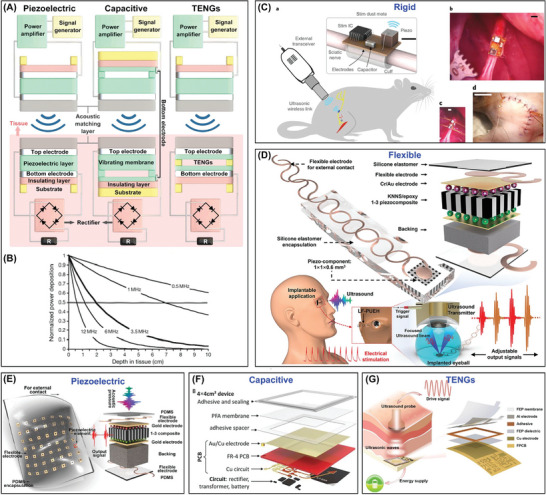
Implantable bioelectronic devices (IBDs) have gained attention for their capacity to conformably detect physiological and pathological signals and further provide internal therapy. However, traditional power sources integrated into these IBDs possess intricate limitations such as bulkiness, rigidity, and biotoxicity. Recently, artificial "tissue batteries" (ATBs) have diffusely developed as artificial power sources for IBDs manufacturing, enabling comprehensive biological-activity monitoring, diagnosis, and therapy. ATBs are on-demand and designed to accommodate the soft and confining curved placement space of organisms, minimizing interface discrepancies, and providing ample power for clinical applications. This review presents the near-term advancements in ATBs, with a focus on their miniaturization, flexibility, biodegradability, and power density. Furthermore, it delves into material-screening, structural-design, and energy density across three distinct categories of TBs, distinguished by power supply strategies. These types encompass innovative energy storage devices (chemical batteries and supercapacitors), power conversion devices that harness power from human-body (biofuel cells, thermoelectric nanogenerators, bio-potential devices, piezoelectric harvesters, and triboelectric devices), and energy transfer devices that receive and utilize external energy (radiofrequency-ultrasound energy harvesters, ultrasound-induced energy harvesters, and photovoltaic devices). Ultimately, future challenges and prospects emphasize ATBs with the indispensability of bio-safety, flexibility, and high-volume energy density as crucial components in long-term implantable bioelectronic devices.
可植入生物电子设备 (IBD) 因其能够顺应性地检测生理和病理信号,并进一步提供内部治疗而受到关注。然而,集成到这些 IBD 中的传统电源具有复杂的局限性,例如体积大、刚性和生物毒性。最近,人工“组织电池”(ATB) 作为 IBD 制造的人工电源广泛发展,能够全面监测、诊断和治疗生物活性。ATB 是按需设计的,以适应生物体的柔软和受限的弯曲放置空间,最大限度地减少接口差异,并为临床应用提供充足的动力。
本综述介绍了 ATB 的近期进展,重点介绍了它们的小型化、灵活性、生物降解性和功率密度。此外,还深入探讨了材料筛选、结构设计以及根据三种不同的电源策略划分的 TB 类别中的能量密度。这些类型包括创新的储能设备(化学电池和超级电容器)、利用人体能量的功率转换设备(生物燃料电池、热电纳米发电机、生物电位设备、压电收割机和摩擦电设备)以及接收和利用外部能量的能量传输设备(射频-超声能量收割机、超声诱导能量收割机和光伏设备)。
最终,未来的挑战和前景强调了 ATB 的生物安全性、灵活性和高体积能量密度的不可或缺性,这是长期可植入生物电子设备的关键组件。