Renal Division, Department of Medicine, Brigham and Women's Hospital, Harvard Medical School, Boston, Massachusetts, USA.
Nat Biotechnol. 2010 May;28(5):478-85. doi: 10.1038/nbt.1623.
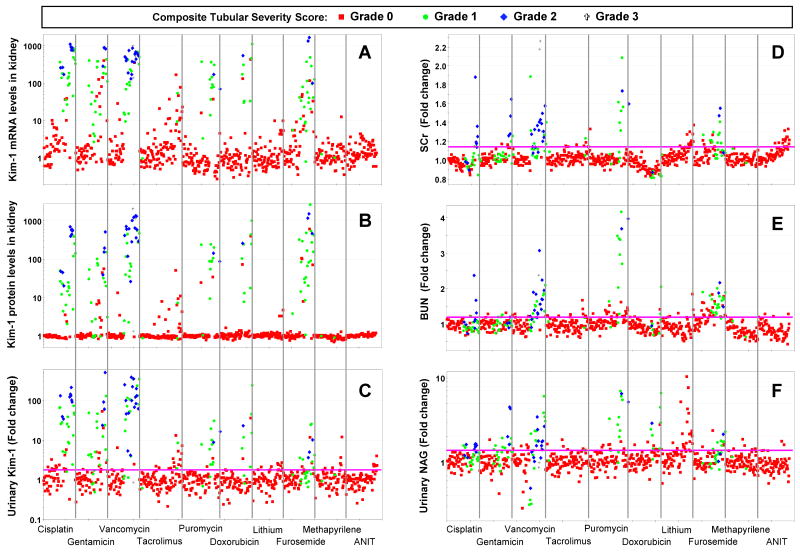
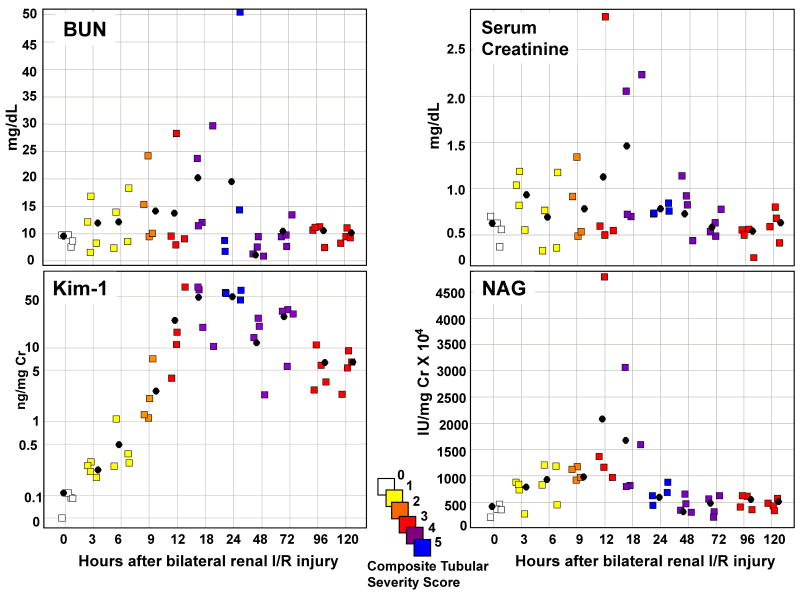
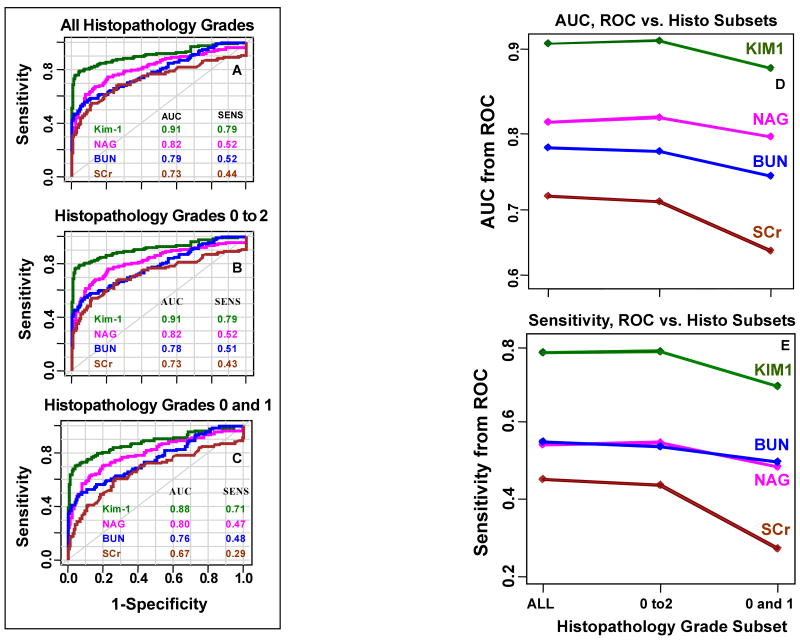
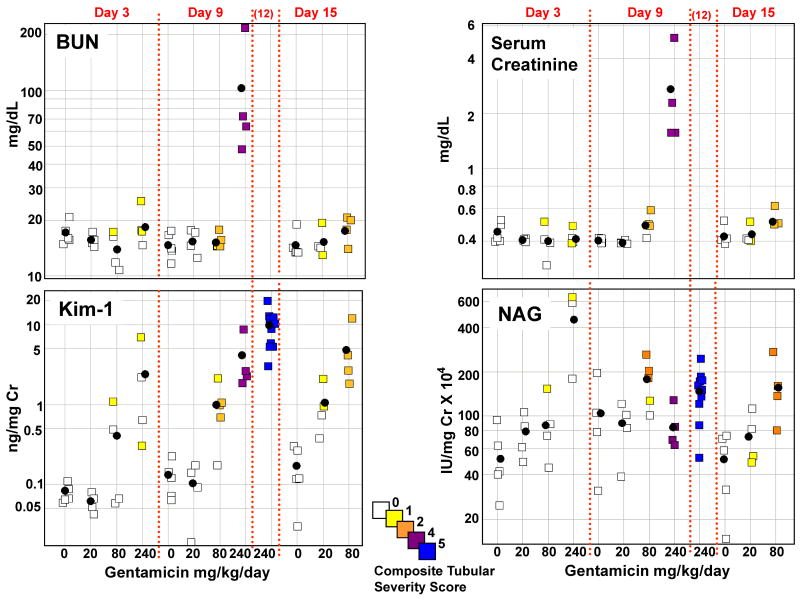
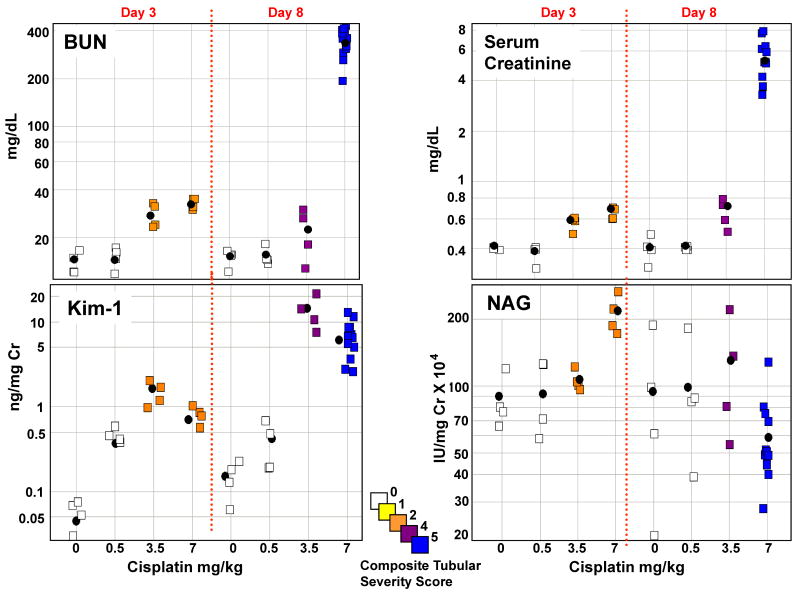
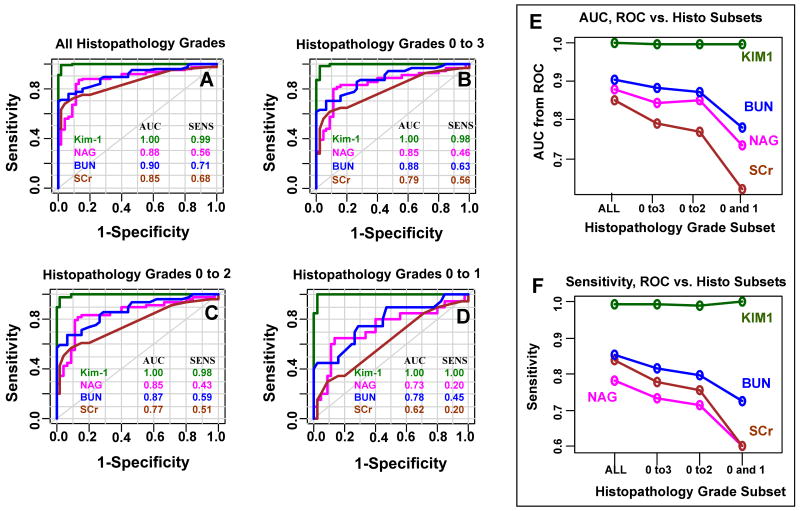
Kidney toxicity accounts both for the failure of many drug candidates as well as considerable patient morbidity. Whereas histopathology remains the gold standard for nephrotoxicity in animal systems, serum creatinine (SCr) and blood urea nitrogen (BUN) are the primary options for monitoring kidney dysfunction in humans. The transmembrane tubular protein kidney injury molecule-1 (Kim-1) was previously reported to be markedly induced in response to renal injury. Owing to the poor sensitivity and specificity of SCr and BUN, we used rat toxicology studies to compare the diagnostic performance of urinary Kim-1 to BUN, SCr and urinary N-acetyl-beta-D-glucosaminidase (NAG) as predictors of kidney tubular damage scored by histopathology. Kim-1 outperforms SCr, BUN and urinary NAG in multiple rat models of kidney injury. Urinary Kim-1 measurements may facilitate sensitive, specific and accurate prediction of human nephrotoxicity in preclinical drug screens. This should enable early identification and elimination of compounds that are potentially nephrotoxic.
肾毒性不仅导致许多候选药物的失败,还导致相当多的患者发病。虽然组织病理学仍然是动物系统中肾毒性的金标准,但血清肌酐(SCr)和血尿素氮(BUN)是监测人类肾功能障碍的主要选择。跨膜管状蛋白肾损伤分子 1(Kim-1)以前被报道在肾损伤时明显诱导。由于 SCr 和 BUN 的灵敏度和特异性较差,我们使用大鼠毒理学研究来比较尿 Kim-1与 BUN、SCr 和尿 N-乙酰-β-D-氨基葡萄糖苷酶(NAG)作为组织病理学评分的肾小管损伤预测因子的诊断性能。Kim-1在多种大鼠肾损伤模型中的表现优于 SCr、BUN 和尿 NAG。尿 Kim-1 测量可能有助于在临床前药物筛选中灵敏、特异和准确地预测人类肾毒性。这应该能够早期识别和消除潜在的肾毒性化合物。