Division of Rheumatology, Department of Internal Medicine, Keio University School of Medicine, 35 Shinanomachi, Shinjuku-ku, Tokyo 160-8582, Japan.
Arthritis Res Ther. 2010;12(3):R80. doi: 10.1186/ar3005. Epub 2010 May 11.
Behçet's disease (BD) is a multisystem inflammatory disorder, in which a T-helper 1 (Th1)-polarized immune response plays a major role in the pathogenic process. We evaluated the regulatory role of natural killer (NK) cells in Th1-biased immune responses in patients with BD.
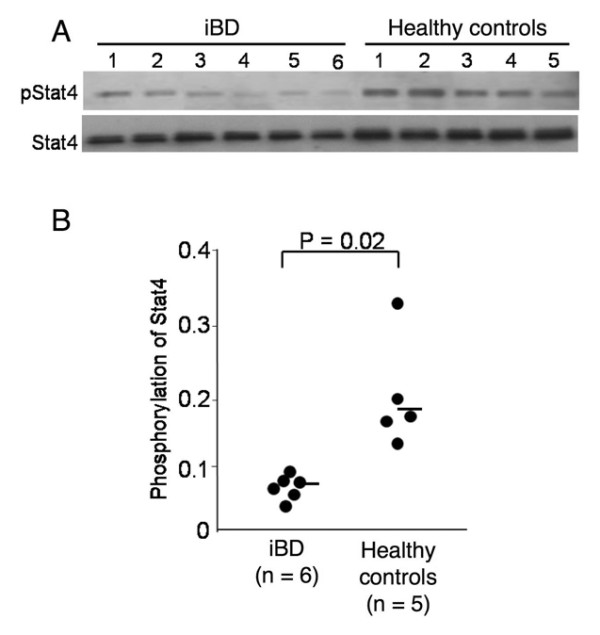
We studied 47 patients with BD, including 10 with active disease (aBD) and 37 with inactive disease (iBD), and 29 healthy controls. The activation status and cytotoxic activity of NK cells were examined by flow cytometry. The levels of mRNAs for immune modulatory and cytotoxic molecules in NK cells were determined by quantitative PCR. The IL-12 signal strength in NK cells was determined by assessing the phosphorylation state of its downstream component, signal transducer and activator of transduction 4, by immunoblotting. Finally, NK cells' ability to modulate the Th1 response was evaluated by co-culturing NK cells and T cells without cell contact.
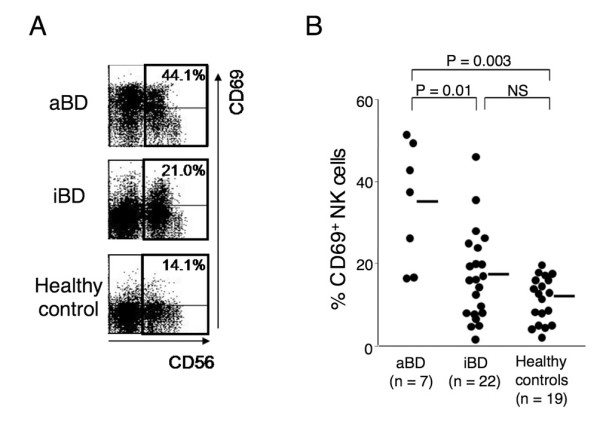
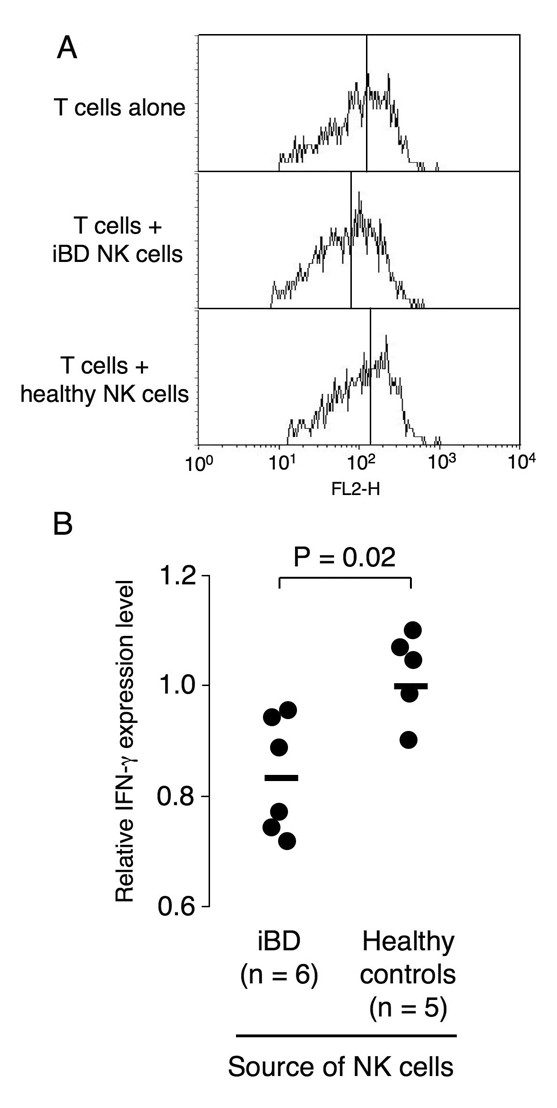
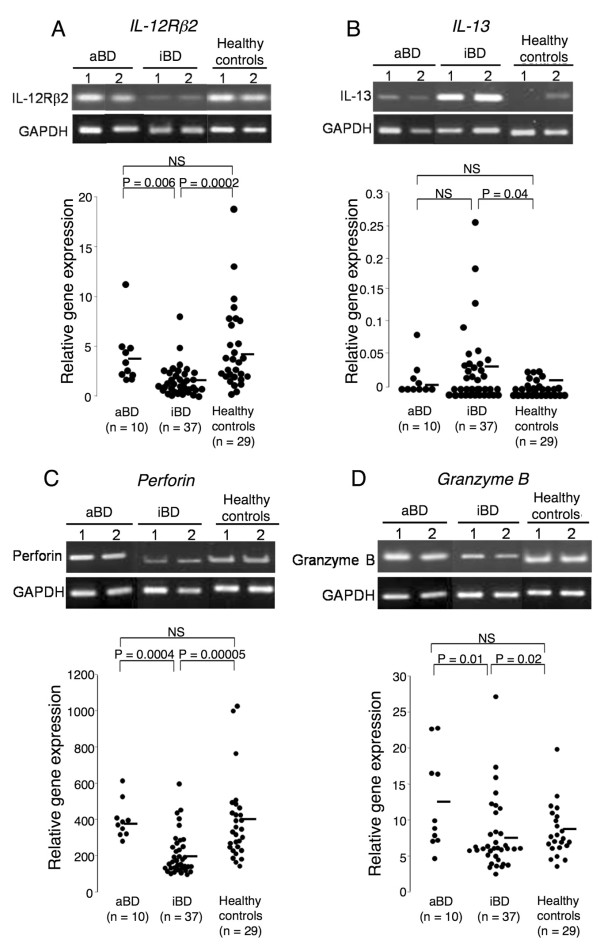
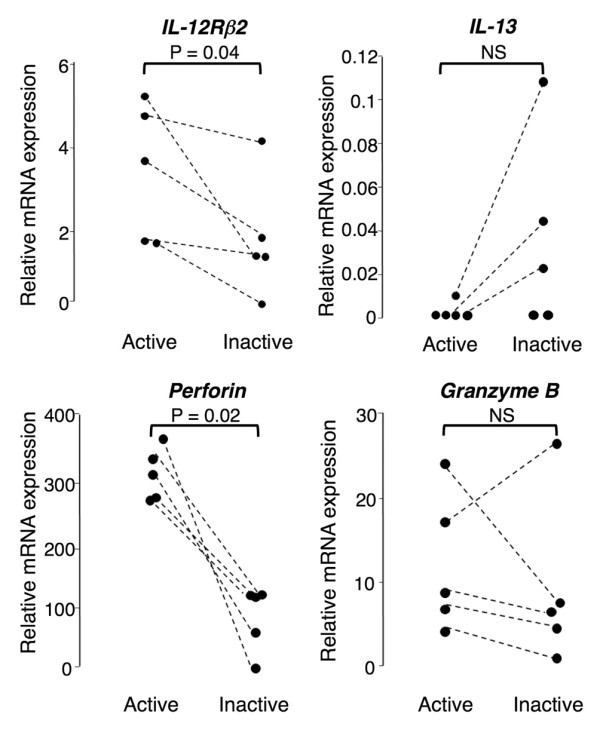
CD69+-activated NK cells were significantly increased in aBD compared with iBD or control samples, although their cytotoxic activities were similar. The iBD NK cells showed downregulated IL-12 receptor beta2 mRNA levels compared with aBD or control NK cells. The increased IL-13 expression was detected in a subset of BD patients: most of them had iBD. The IL-13 expression level in iBD patients was significantly higher than the level in controls, but was not statistically different compared with the level in aBD patients. The gene expression profile in iBD patients was consistent with the NK type 2 phenotype, and the shift to NK type 2 was associated with disease remission. NK cells from iBD patients showed impaired IL-12-induced signal transducer and activator of transduction 4 phosphorylation. Finally, iBD, but not control, NK cells suppressed IFNgamma expression by aBD-derived CD4+ T cells in vitro.
NK cells may control disease flare/remission in BD patients via NK type 2-mediated modulation of the Th1 response.
贝切特病(BD)是一种多系统炎症性疾病,其中 Th1 极化免疫反应在发病机制中起主要作用。我们评估了自然杀伤(NK)细胞在 BD 患者 Th1 偏向性免疫反应中的调节作用。
我们研究了 47 名 BD 患者,包括 10 名活动期(aBD)和 37 名缓解期(iBD)患者,以及 29 名健康对照者。通过流式细胞术检测 NK 细胞的激活状态和细胞毒性活性。通过定量 PCR 测定 NK 细胞中免疫调节和细胞毒性分子的 mRNA 水平。通过免疫印迹法评估 NK 细胞中 IL-12 信号强度,评估其下游成分信号转导和转录激活因子 4 的磷酸化状态。最后,通过无细胞接触共培养 NK 细胞和 T 细胞来评估 NK 细胞调节 Th1 反应的能力。
与 iBD 或对照样本相比,aBD 中 CD69+激活的 NK 细胞明显增加,尽管其细胞毒性活性相似。与 aBD 或对照 NK 细胞相比,iBD NK 细胞的 IL-12 受体β2 mRNA 水平下调。在一部分 BD 患者中检测到增加的 IL-13 表达:他们大多数患有 iBD。iBD 患者的 IL-13 表达水平明显高于对照组,但与 aBD 患者的水平无统计学差异。iBD 患者的基因表达谱与 NK 2 型表型一致,向 NK 2 型的转变与疾病缓解相关。来自 iBD 患者的 NK 细胞显示出 IL-12 诱导的信号转导和转录激活因子 4 磷酸化受损。最后,iBD,但不是对照,NK 细胞在体外抑制 aBD 来源的 CD4+T 细胞 IFNγ的表达。
NK 细胞可能通过 NK 2 型介导的 Th1 反应调节来控制 BD 患者的疾病发作/缓解。