Luo Jingwen, Chen Xu-Qiao, Li Ping
Oncology Department, West China Hospital of Medicine, Sichuan University, Chengdu, Sichuan, 610041, P.R. China.
Department of Neurosciences, School of Medicine, University of California, San Diego, La Jolla, CA, 92093, USA.
Transl Oncol. 2019 Mar;12(3):475-484. doi: 10.1016/j.tranon.2018.11.010. Epub 2019 Jan 1.
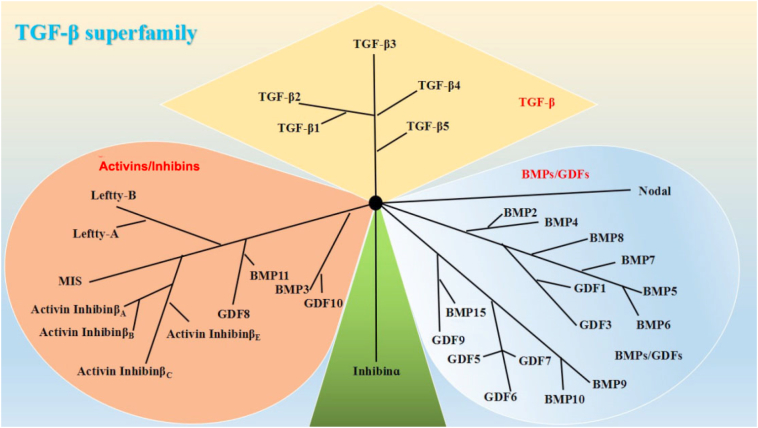
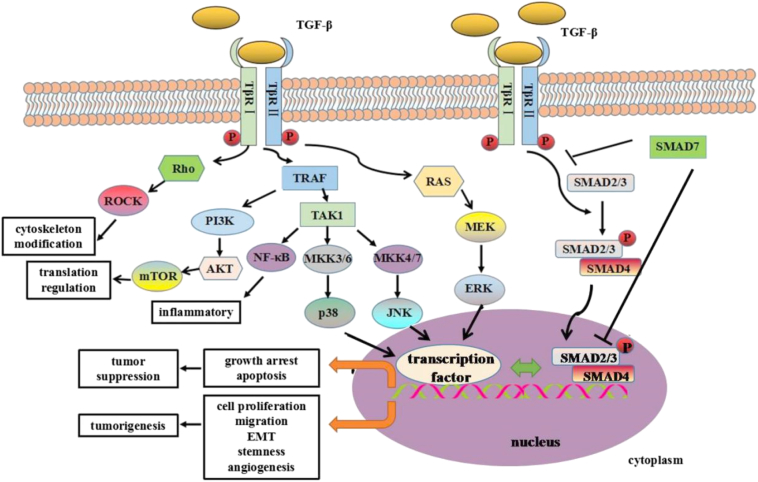
Early detection of gastrointestinal tumors improves patient survival. However, patients with these tumors are typically diagnosed at an advanced stage and have poor prognosis. The incidence and mortality of gastrointestinal cancers, including esophageal, gastric, liver, colorectal, and pancreatic cancers, are increasing worldwide. Novel diagnostic and therapeutic agents are required to improve patient survival and quality of life. The tumor microenvironment, which contains nontumor cells, signaling molecules such as growth factors and cytokines, and extracellular matrix proteins, plays a critical role in cancer cell proliferation, invasion, and metastasis. Transforming growth factor beta (TGF-β) signaling has dual roles in gastrointestinal tumor development and progression as both a tumor suppressor and tumor promoter. Here, we review the dynamic roles of TGF-β and its receptors in gastrointestinal tumors and provide evidence that targeting TGF-β signaling may be an effective therapeutic strategy.
胃肠道肿瘤的早期检测可提高患者生存率。然而,这些肿瘤患者通常在晚期才被诊断出来,预后较差。包括食管癌、胃癌、肝癌、结直肠癌和胰腺癌在内的胃肠道癌症的发病率和死亡率在全球范围内都在上升。需要新型诊断和治疗药物来提高患者生存率和生活质量。肿瘤微环境包含非肿瘤细胞、生长因子和细胞因子等信号分子以及细胞外基质蛋白,在癌细胞增殖、侵袭和转移中起关键作用。转化生长因子β(TGF-β)信号在胃肠道肿瘤的发生和发展中具有双重作用,既是肿瘤抑制因子又是肿瘤促进因子。在此,我们综述了TGF-β及其受体在胃肠道肿瘤中的动态作用,并提供证据表明靶向TGF-β信号可能是一种有效的治疗策略。