Department of Biochemistry, Virginia Tech, Blacksburg, 24061, USA.
BMC Biochem. 2010 May 19;11:19. doi: 10.1186/1471-2091-11-19.
Kynurenine aminotransferase (KAT) catalyzes the transamination of kynunrenine to kynurenic acid (KYNA). KYNA is a neuroactive compound and functions as an antagonist of alpha7-nicotinic acetylcholine receptors and is the only known endogenous antagonist of N-methyl-D-aspartate receptors. Four KAT enzymes, KAT I/glutamine transaminase K/cysteine conjugate beta-lyase 1, KAT II/aminoadipate aminotransferase, KAT III/cysteine conjugate beta-lyase 2, and KAT IV/glutamic-oxaloacetic transaminase 2/mitochondrial aspartate aminotransferase, have been reported in mammalian brains. Because of the substrate overlap of the four KAT enzymes, it is difficult to assay the specific activity of each KAT in animal brains.
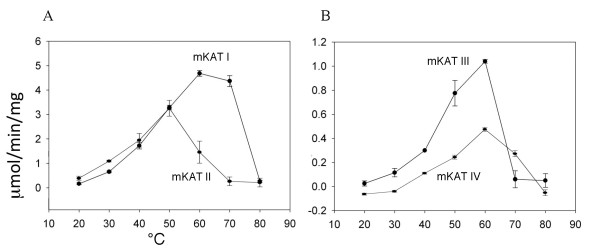
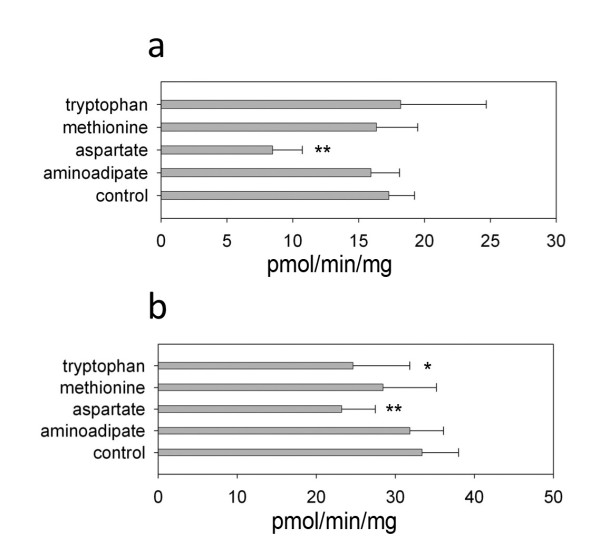
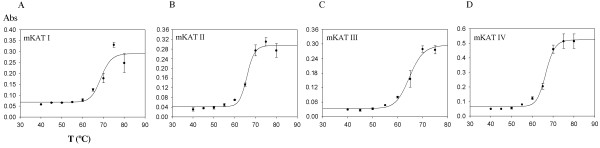
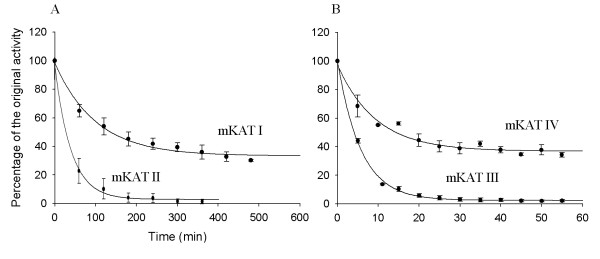
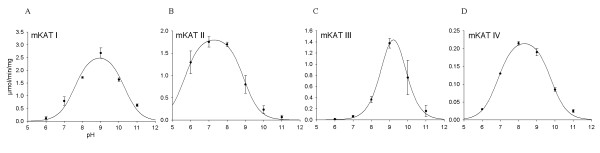
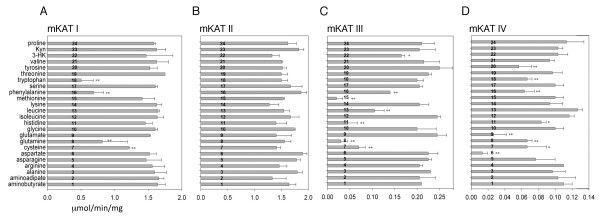
This study concerns the functional expression and comparative characterization of KAT I, II, III, and IV from mice. At the applied test conditions, equimolar tryptophan with kynurenine significantly inhibited only mouse KAT I and IV, equimolar methionine inhibited only mouse KAT III and equimolar aspartate inhibited only mouse KAT IV. The activity of mouse KAT II was not significantly inhibited by any proteinogenic amino acids at equimolar concentrations. pH optima, temperature preferences of four KATs were also tested in this study. Midpoint temperatures of the protein melting, half life values at 65 degrees C, and pKa values of mouse KAT I, II, III, and IV were 69.8, 65.9, 64.8 and 66.5 degrees C; 69.7, 27.4, 3.9 and 6.5 min; pH 7.6, 5.7, 8.7 and 6.9, respectively.
The characteristics reported here could be used to develop specific assay methods for each of the four murine KATs. These specific assays could be used to identify which KAT is affected in mouse models for research and to develop small molecule drugs for prevention and treatment of KAT-involved human diseases.
犬尿氨酸氨基转移酶(KAT)催化犬尿氨酸向犬尿喹啉酸(KYNA)的转氨反应。KYNA 是一种神经活性化合物,作为 α7-烟碱型乙酰胆碱受体的拮抗剂,并作为唯一已知的 N-甲基-D-天冬氨酸受体内源性拮抗剂。哺乳动物大脑中已报道了四种 KAT 酶,即 KAT I/谷氨酰胺转氨酶 K/半胱氨酸结合物β-裂合酶 1、KAT II/氨基己二酸氨基转移酶、KAT III/半胱氨酸结合物β-裂合酶 2 和 KAT IV/谷氨酸-草酰乙酸转氨酶 2/线粒体天冬氨酸氨基转移酶。由于四种 KAT 酶的底物重叠,因此难以在动物大脑中测定每种 KAT 的比活性。
本研究涉及来自小鼠的 KAT I、II、III 和 IV 的功能表达和比较特征。在应用的测试条件下,等摩尔色氨酸与犬尿氨酸仅显著抑制小鼠 KAT I 和 IV,等摩尔蛋氨酸仅抑制小鼠 KAT III,等摩尔天冬氨酸仅抑制小鼠 KAT IV。在等摩尔浓度下,任何蛋白质氨基酸都不会显著抑制小鼠 KAT II 的活性。本研究还测试了四种 KAT 的 pH 最佳值和温度偏好。小鼠 KAT I、II、III 和 IV 的蛋白质熔点中点温度、65°C 时的半衰期值和 pKa 值分别为 69.8°C、65.9°C、64.8°C 和 66.5°C;69.7°C、27.4°C、3.9°C 和 6.5°C;pH 值 7.6、5.7、8.7 和 6.9。
这里报道的特征可用于为四种小鼠 KAT 中的每一种开发特定的测定方法。这些特定的测定方法可用于确定在研究中小鼠模型中受影响的 KAT,并开发用于预防和治疗 KAT 参与的人类疾病的小分子药物。