University of Queensland, Herston, QLD, Australia.
Lancet Infect Dis. 2010 Jun;10(6):395-404. doi: 10.1016/S1473-3099(10)70080-3.
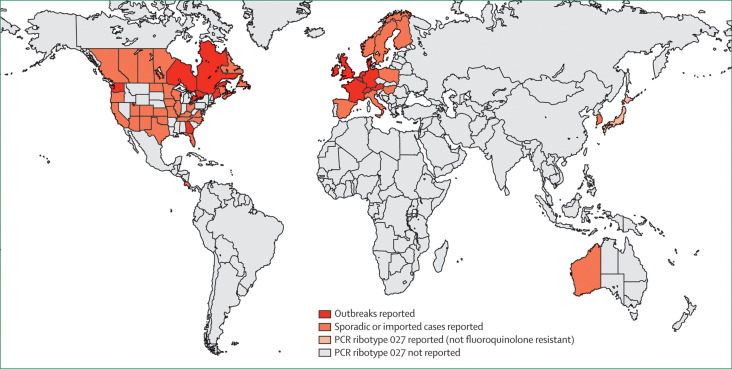
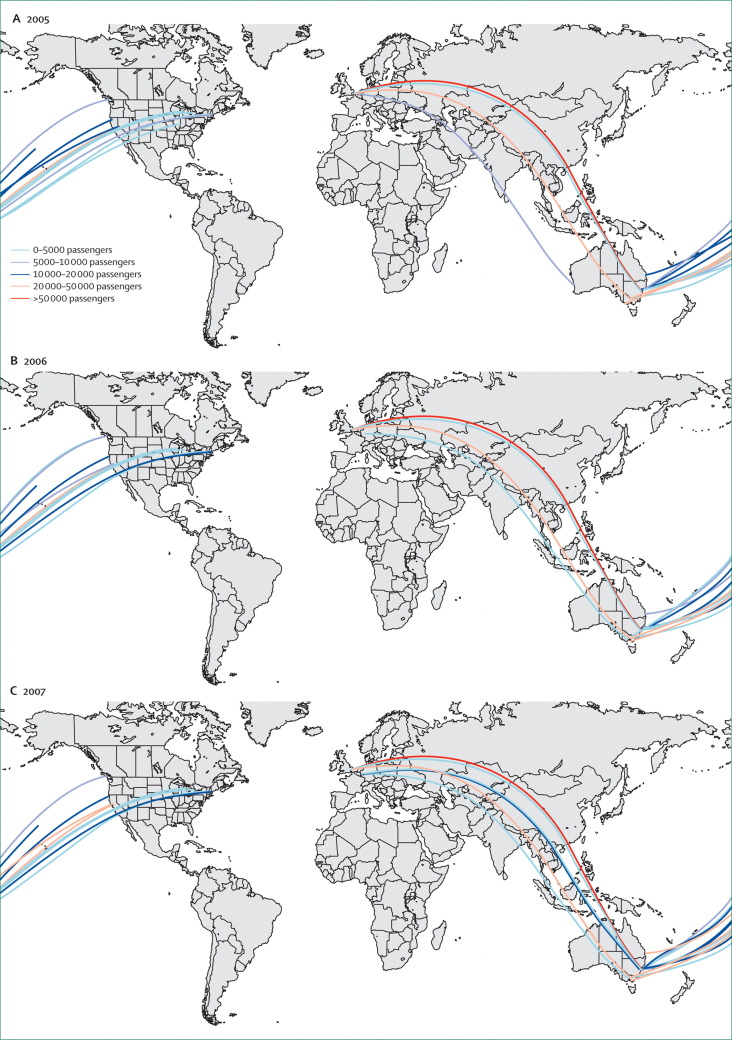
Highly virulent strains of Clostridium difficile have emerged since 2003, causing large outbreaks of severe, often fatal, colitis in North America and Europe. In 2008-10, virulent strains spread between continents, with the first reported cases of fluoroquinolone-resistant C difficile PCR ribotype 027 in three Asia-Pacific countries and Central America. We present a risk assessment framework for assessing risks of further worldwide spread of this pathogen. This framework first requires identification of potential vehicles of introduction, including international transfers of hospital patients, international tourism and migration, and trade in livestock, associated commodities, and foodstuffs. It then calls for assessment of the risks of pathogen release, of exposure of individuals if release happens, and of resulting outbreaks. Health departments in countries unaffected by outbreaks should assess the risk of introduction or reintroduction of C difficile PCR ribotype 027 using a structured risk-assessment approach.
自 2003 年以来,高毒力的艰难梭菌菌株已经出现,在北美和欧洲导致了大量严重的、往往致命的结肠炎爆发。在 2008-2010 年期间,毒力菌株在各大洲之间传播,亚太地区和中美洲首次报告了三种氟喹诺酮耐药艰难梭菌 PCR 核糖体分型 027 的病例。我们提出了一个评估该病原体进一步全球传播风险的风险评估框架。该框架首先需要确定潜在的传入媒介,包括医院患者的国际转移、国际旅游和移民,以及牲畜、相关商品和食品的贸易。然后需要评估病原体释放的风险、如果释放发生个体暴露的风险以及由此产生的爆发的风险。未受爆发影响的国家的卫生部门应使用结构化的风险评估方法,评估艰难梭菌 PCR 核糖体分型 027 的引入或再引入的风险。