Department of Anesthesia and Intensive Care.
Department of Pathology, Universidade de São Paulo, Sao Paulo, Brazil.
Ann Oncol. 2010 Dec;21(12):2333-2341. doi: 10.1093/annonc/mdq254. Epub 2010 May 28.
The natural history and consequences of severe H1N1 influenza infection among cancer patients are not yet fully characterized. We describe eight cases of H1N1 infection in cancer patients admitted to the intensive care unit of a referral cancer center.
Clinical data from all patients admitted with acute respiratory failure due to novel viral H1N1 infection were reviewed. Lung tissue was submitted for viral and bacteriological analyses by real-time RT-PCR, and autopsy was conducted on all patients who died.
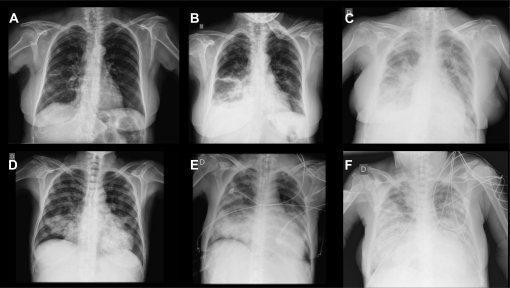
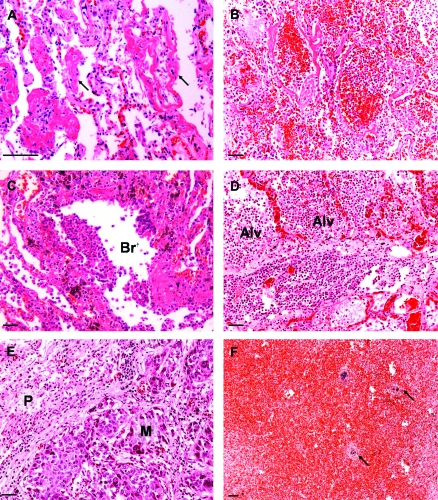
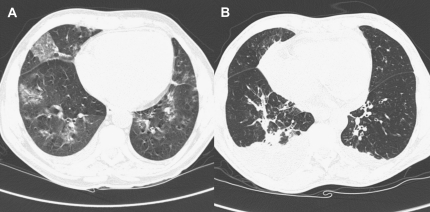
Eight patients were admitted, with ages ranging from 55 to 65 years old. There were five patients with solid organ tumors (62.5%) and three with hematological malignancies (37.5%). Five patients required mechanical ventilation and all died. Four patients had bacterial bronchopneumonia. All deaths occurred due to multiple organ failure. A milder form of lung disease was present in the three cases who survived. Lung tissue analysis was performed in all patients and showed diffuse alveolar damage in most patients. Other lung findings were necrotizing bronchiolitis or extensive hemorrhage.
H1N1 viral infection in patients with cancer can cause severe illness, resulting in acute respiratory distress syndrome and death. More data are needed to identify predictors of unfavorable evolution in these patients.
癌症患者感染严重 H1N1 流感的自然史和后果尚未完全明确。我们描述了 8 例在转诊癌症中心重症监护病房住院的癌症患者的 H1N1 感染病例。
回顾了所有因新型病毒 H1N1 感染导致急性呼吸衰竭而入院的患者的临床数据。通过实时 RT-PCR 对所有患者的肺组织进行病毒和细菌分析,并对所有死亡患者进行尸检。
共收治 8 例患者,年龄 55-65 岁。其中 5 例为实体器官肿瘤(62.5%),3 例为血液系统恶性肿瘤(37.5%)。5 例患者需要机械通气,均死亡。4 例患者合并细菌性支气管肺炎。所有死亡均由于多器官功能衰竭所致。3 例存活患者的肺部疾病较轻。所有患者均进行了肺组织分析,多数患者表现为弥漫性肺泡损伤。其他肺部表现为坏死性细支气管炎或广泛出血。
癌症患者感染 H1N1 病毒可导致严重疾病,引起急性呼吸窘迫综合征和死亡。需要更多数据来确定这些患者不良预后的预测因素。