Tchou J, Kasai H, Shibutani S, Chung M H, Laval J, Grollman A P, Nishimura S
Biology Division, National Cancer Center Research Institute, Tokyo, Japan.
Proc Natl Acad Sci U S A. 1991 Jun 1;88(11):4690-4. doi: 10.1073/pnas.88.11.4690.
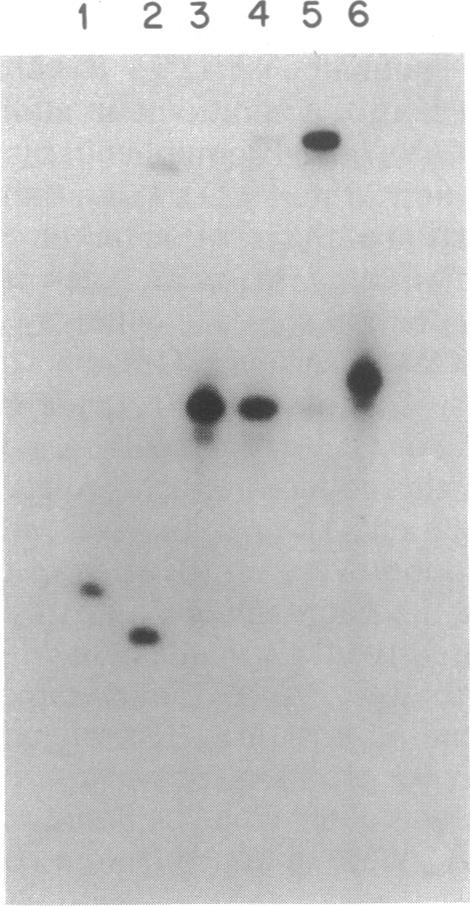
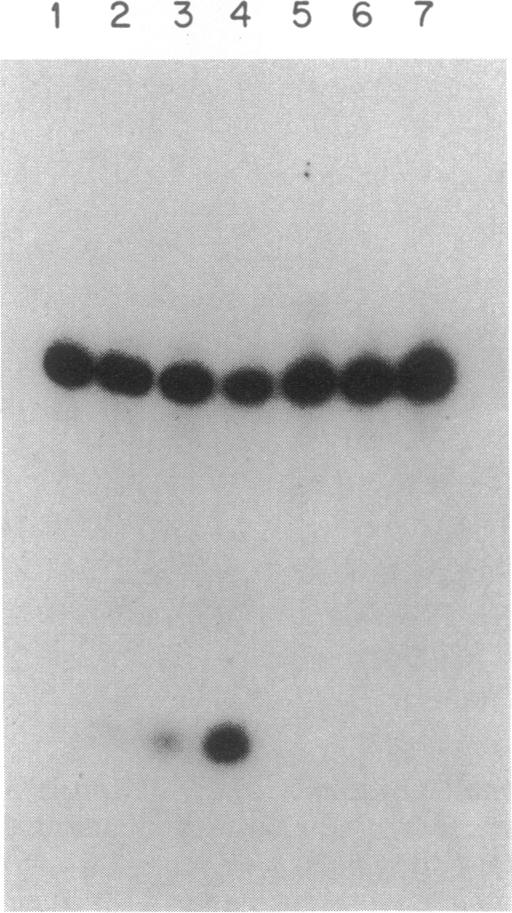
Substrate specificities of FPG protein (also known as formamidopyrimidine DNA glycosylase) and 8-hydroxyguanine endonuclease were compared by using defined duplex oligodeoxynucleotides containing single residues of 8-oxo-7,8-dihydro-2'-deoxyguanosine (8-oxodG), 8-oxo-7,8-dihydro-2'-deoxyadenosine (8-oxodA), and 2,6-diamino-4-hydroxy-5-(N-methyl)formamidopyrimidine (Me-Fapy). Duplexes containing 8-oxodG positioned opposite dC, dG, or dT were cleaved, whereas single-stranded DNA and duplexes containing 8-oxodG.dA or 8-oxodA positioned opposite any of the four DNA bases were relatively resistant. Both enzymes cut duplexes containing 8-oxoG.dC 3' and 5' to the modified base but failed to cleave duplex DNA containing synthetic abasic sites, mismatches containing dG, or unmodified DNA. 8-Oxoguanine, identified by HPLC-electrochemical detection techniques, was released during the enzymatic reaction. Apparent Km values for FPG protein acting on duplex substrates containing a single Me-Fapy or 8-oxodG residue positioned opposite dC were 41 and 8 nM, respectively, and those for 8-hydroxyguanine endonuclease were 30 and 13 nM, respectively. Comparison of the properties of the two enzyme activities suggest that they are identical. In view of the widespread distribution of 8-oxodG in cellular DNA, the demonstrated miscoding and mutagenic properties of this lesion, and the existence of a bacterial gene coding for FPG protein, we propose that 8-oxodG DNA is the primary physiological substrate for a constituent glycosylase found in bacteria and mammalian cells.
通过使用含有单个8-氧代-7,8-二氢-2'-脱氧鸟苷(8-氧代-dG)、8-氧代-7,8-二氢-2'-脱氧腺苷(8-氧代-dA)和2,6-二氨基-4-羟基-5-(N-甲基)甲酰胺基嘧啶(Me-Fapy)残基的特定双链寡脱氧核苷酸,比较了FPG蛋白(也称为甲酰胺基嘧啶DNA糖基化酶)和8-羟基鸟嘌呤内切酶的底物特异性。含有与dC、dG或dT相对的8-氧代-dG的双链体被切割,而单链DNA以及含有8-氧代-dG·dA或与四个DNA碱基中任何一个相对的8-氧代-dA的双链体则相对抗性较强。两种酶都能切割在修饰碱基的3'和5'端含有8-氧代G·dC的双链体,但不能切割含有合成无碱基位点、含有dG的错配或未修饰DNA的双链DNA。通过HPLC-电化学检测技术鉴定,8-氧代鸟嘌呤在酶促反应过程中被释放。FPG蛋白作用于含有与dC相对的单个Me-Fapy或8-氧代-dG残基的双链底物时,表观Km值分别为41和8 nM,而8-羟基鸟嘌呤内切酶的表观Km值分别为30和13 nM。对这两种酶活性特性的比较表明它们是相同的。鉴于8-氧代-dG在细胞DNA中的广泛分布、该损伤已证实的错编码和诱变特性以及编码FPG蛋白的细菌基因的存在,我们提出8-氧代-dG DNA是细菌和哺乳动物细胞中发现的一种组成性糖基化酶的主要生理底物。