• 文献检索
  • 文档翻译
  • 深度研究
  • 学术资讯
  • Suppr Zotero 插件Zotero 插件
  • 邀请有礼
  • 套餐&价格
  • 历史记录
应用&插件
Suppr Zotero 插件Zotero 插件浏览器插件Mac 客户端Windows 客户端微信小程序
定价
高级版会员购买积分包购买API积分包
服务
文献检索文档翻译深度研究API 文档MCP 服务
关于我们
关于 Suppr公司介绍联系我们用户协议隐私条款
关注我们

Suppr 超能文献

核心技术专利:CN118964589B侵权必究
粤ICP备2023148730 号-1Suppr @ 2026

文献检索

告别复杂PubMed语法,用中文像聊天一样搜索,搜遍4000万医学文献。AI智能推荐,让科研检索更轻松。

立即免费搜索

文件翻译

保留排版,准确专业,支持PDF/Word/PPT等文件格式,支持 12+语言互译。

免费翻译文档

深度研究

AI帮你快速写综述,25分钟生成高质量综述,智能提取关键信息,辅助科研写作。

立即免费体验

基质细胞蛋白 CCN1 诱导成纤维细胞衰老并限制皮肤伤口愈合中的纤维化。

The matricellular protein CCN1 induces fibroblast senescence and restricts fibrosis in cutaneous wound healing.

机构信息

Department of Biochemistry and Molecular Genetics, University of Illinois at Chicago College of Medicine, Chicago, IL 60607-7170, USA.

出版信息

Nat Cell Biol. 2010 Jul;12(7):676-85. doi: 10.1038/ncb2070. Epub 2010 Jun 6.

DOI:10.1038/ncb2070
PMID:20526329
原文链接:https://pmc.ncbi.nlm.nih.gov/articles/PMC2919364/
Abstract

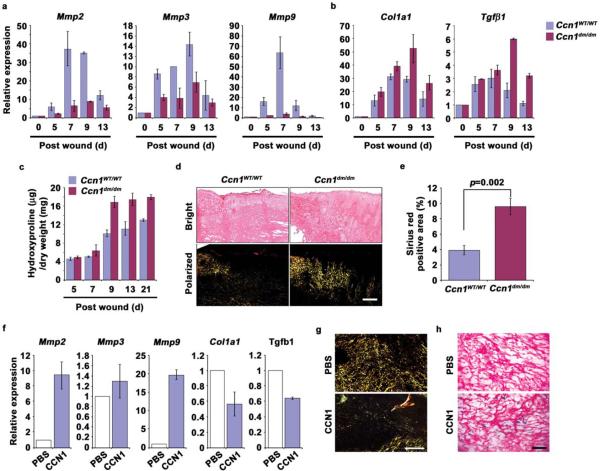
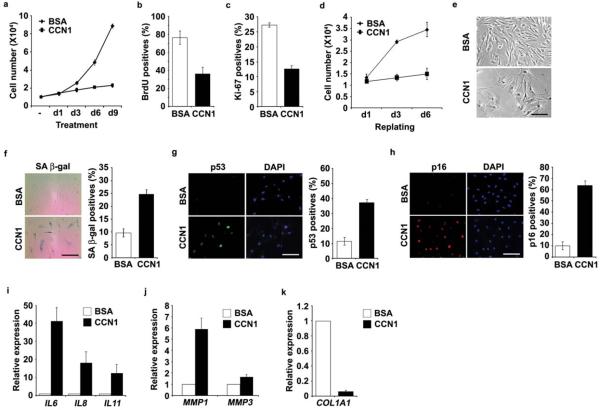
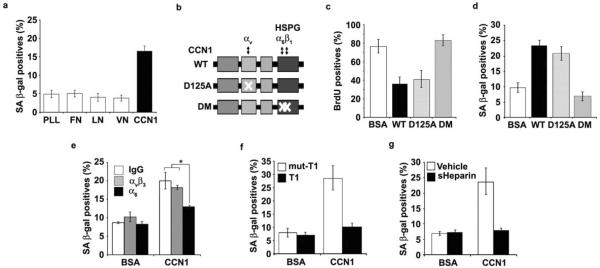
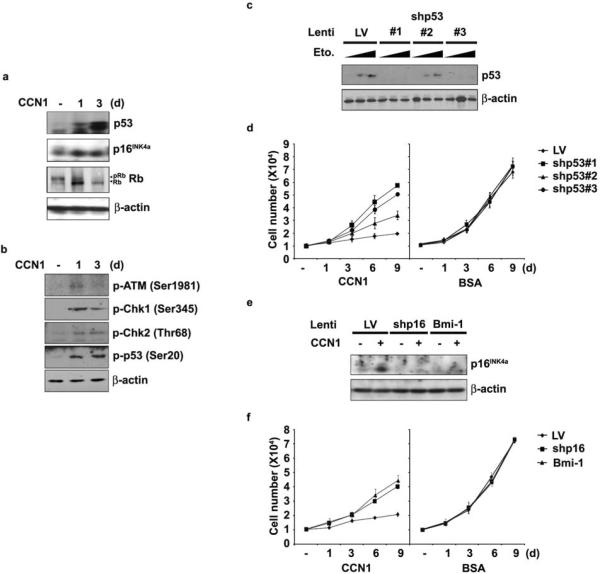
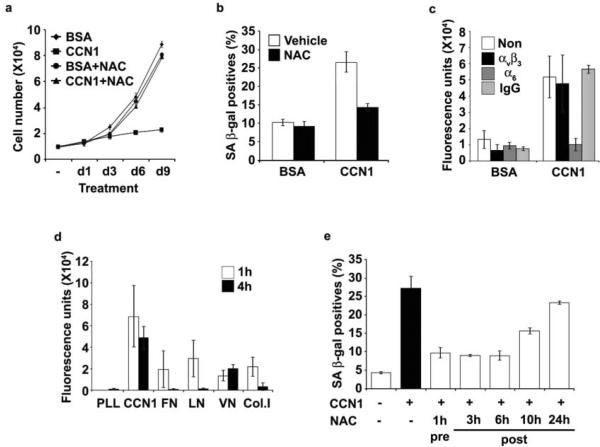
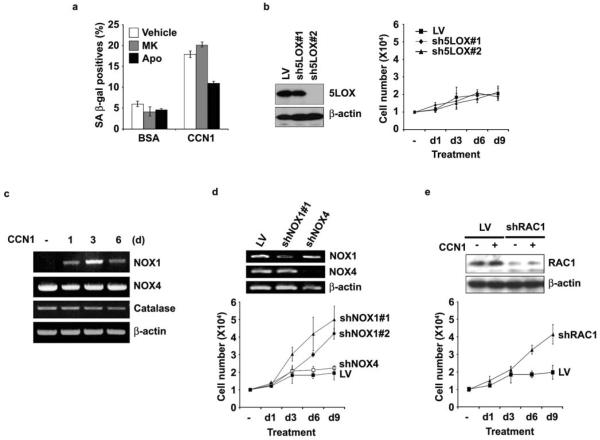
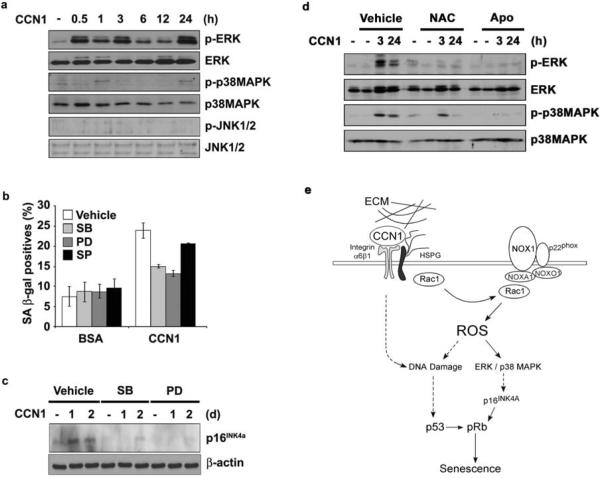
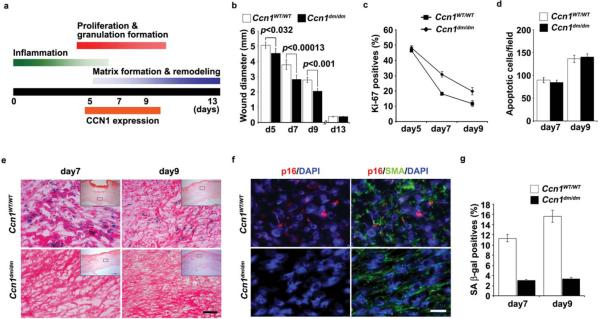
Cellular senescence is a recognized mechanism of tumour suppression; however, its contribution to other pathologies is not well understood. We show that the matricellular protein CCN1 (also known as CYR61; cysteine-rich protein 61), which is dynamically expressed at sites of wound repair, can induce fibroblast senescence by binding to integrin alpha(6)beta(1) and the heparan sulphate proteoglycans (receptors involved in cell adhesion). CCN1 induces DNA damage response pathways and activates p53 and the RAC1-NOX1 complex, which generates reactive oxygen species (ROS). This results in the ROS-dependent activation of the p16(INK4a)/pRb pathway, leading to senescence and concomitant expression of antifibrotic genes. Senescent fibroblasts accumulate in granulation tissues of healing cutaneous wounds and express antifibrotic genes in wild-type mice. These processes are lost in knockin mice that express a senescence-defective Ccn1 mutant, resulting in exacerbated fibrosis. Topical application of CCN1 protein to wounds reverses these defects. Thus, fibroblast senescence is a CCN1-dependent wound healing response in cutaneous injury that functions to curb fibrosis during tissue repair.

摘要

细胞衰老被认为是肿瘤抑制的一种机制,但它对其他病理的贡献还不是很清楚。我们发现,细胞基质蛋白 CCN1(也称为 CYR61;富含半胱氨酸的蛋白 61)在伤口修复部位动态表达,可通过与整合素 α6β1 和硫酸乙酰肝素蛋白聚糖(参与细胞黏附的受体)结合,诱导成纤维细胞衰老。CCN1 可诱导 DNA 损伤反应途径,并激活 p53 和 RAC1-NOX1 复合物,产生活性氧(ROS)。这导致 ROS 依赖性激活 p16(INK4a)/pRb 途径,导致衰老和伴随的抗纤维化基因表达。衰老的成纤维细胞在愈合的皮肤伤口的肉芽组织中积累,并在野生型小鼠中表达抗纤维化基因。这些过程在表达衰老缺陷性 Ccn1 突变体的敲入小鼠中丢失,导致纤维化加剧。CCN1 蛋白的局部应用于伤口可逆转这些缺陷。因此,成纤维细胞衰老可能是皮肤损伤中一种依赖 CCN1 的伤口愈合反应,它可在组织修复过程中抑制纤维化。
https://cdn.ncbi.nlm.nih.gov/pmc/blobs/59ad/2919364/bc7d532a0b98/nihms-201997-f0008.jpg
https://cdn.ncbi.nlm.nih.gov/pmc/blobs/59ad/2919364/98584e1fc2de/nihms-201997-f0001.jpg
https://cdn.ncbi.nlm.nih.gov/pmc/blobs/59ad/2919364/0638146d1b52/nihms-201997-f0002.jpg
https://cdn.ncbi.nlm.nih.gov/pmc/blobs/59ad/2919364/26f7c97a3ee8/nihms-201997-f0003.jpg
https://cdn.ncbi.nlm.nih.gov/pmc/blobs/59ad/2919364/3f4b0f85bb14/nihms-201997-f0004.jpg
https://cdn.ncbi.nlm.nih.gov/pmc/blobs/59ad/2919364/95df5dab6273/nihms-201997-f0005.jpg
https://cdn.ncbi.nlm.nih.gov/pmc/blobs/59ad/2919364/fbb51e623e65/nihms-201997-f0006.jpg
https://cdn.ncbi.nlm.nih.gov/pmc/blobs/59ad/2919364/22927ce86ae6/nihms-201997-f0007.jpg
https://cdn.ncbi.nlm.nih.gov/pmc/blobs/59ad/2919364/bc7d532a0b98/nihms-201997-f0008.jpg
https://cdn.ncbi.nlm.nih.gov/pmc/blobs/59ad/2919364/98584e1fc2de/nihms-201997-f0001.jpg
https://cdn.ncbi.nlm.nih.gov/pmc/blobs/59ad/2919364/0638146d1b52/nihms-201997-f0002.jpg
https://cdn.ncbi.nlm.nih.gov/pmc/blobs/59ad/2919364/26f7c97a3ee8/nihms-201997-f0003.jpg
https://cdn.ncbi.nlm.nih.gov/pmc/blobs/59ad/2919364/3f4b0f85bb14/nihms-201997-f0004.jpg
https://cdn.ncbi.nlm.nih.gov/pmc/blobs/59ad/2919364/95df5dab6273/nihms-201997-f0005.jpg
https://cdn.ncbi.nlm.nih.gov/pmc/blobs/59ad/2919364/fbb51e623e65/nihms-201997-f0006.jpg
https://cdn.ncbi.nlm.nih.gov/pmc/blobs/59ad/2919364/22927ce86ae6/nihms-201997-f0007.jpg
https://cdn.ncbi.nlm.nih.gov/pmc/blobs/59ad/2919364/bc7d532a0b98/nihms-201997-f0008.jpg

相似文献

1
The matricellular protein CCN1 induces fibroblast senescence and restricts fibrosis in cutaneous wound healing.基质细胞蛋白 CCN1 诱导成纤维细胞衰老并限制皮肤伤口愈合中的纤维化。
Nat Cell Biol. 2010 Jul;12(7):676-85. doi: 10.1038/ncb2070. Epub 2010 Jun 6.
2
Matricellular protein CCN1 promotes regression of liver fibrosis through induction of cellular senescence in hepatic myofibroblasts.基质细胞蛋白 CCN1 通过诱导肝星状细胞衰老促进肝纤维化的逆转。
Mol Cell Biol. 2013 May;33(10):2078-90. doi: 10.1128/MCB.00049-13. Epub 2013 Mar 18.
3
The anti-fibrotic effects of CCN1/CYR61 in primary portal myofibroblasts are mediated through induction of reactive oxygen species resulting in cellular senescence, apoptosis and attenuated TGF-β signaling.CCN1/CYR61在原代门静脉肌成纤维细胞中的抗纤维化作用是通过诱导活性氧产生,从而导致细胞衰老、凋亡并减弱转化生长因子-β信号传导来介导的。
Biochim Biophys Acta. 2014 May;1843(5):902-14. doi: 10.1016/j.bbamcr.2014.01.023. Epub 2014 Jan 31.
4
CCN1/CYR61: the very model of a modern matricellular protein.CCN1/CYR61:现代基质细胞蛋白的典范。
Cell Mol Life Sci. 2011 Oct;68(19):3149-63. doi: 10.1007/s00018-011-0778-3. Epub 2011 Jul 31.
5
The matricellular protein CCN1 mediates neutrophil efferocytosis in cutaneous wound healing.基质细胞蛋白CCN1在皮肤伤口愈合过程中介导中性粒细胞的胞葬作用。
Nat Commun. 2015 Jun 16;6:7386. doi: 10.1038/ncomms8386.
6
The matricellular protein CCN1 suppresses lung cancer cell growth by inducing senescence via the p53/p21 pathway.基质细胞蛋白 CCN1 通过 p53/p21 通路诱导衰老来抑制肺癌细胞生长。
J Cell Biochem. 2013 Sep;114(9):2082-93. doi: 10.1002/jcb.24557.
7
The matricellular protein CCN1 promotes mucosal healing in murine colitis through IL-6.基质细胞蛋白CCN1通过白细胞介素-6促进小鼠结肠炎的黏膜愈合。
Mucosal Immunol. 2015 Nov;8(6):1285-96. doi: 10.1038/mi.2015.19. Epub 2015 Mar 25.
8
The matricellular protein CCN1 suppresses hepatocarcinogenesis by inhibiting compensatory proliferation.基质细胞蛋白CCN1通过抑制代偿性增殖来抑制肝癌发生。
Oncogene. 2016 Mar 10;35(10):1314-23. doi: 10.1038/onc.2015.190. Epub 2015 Jun 1.
9
Matricellular protein CCN1 promotes collagen alignment and scar integrity after myocardial infarction.细胞基质蛋白 CCN1 促进心肌梗死后胶原纤维的排列和疤痕的完整性。
Matrix Biol. 2024 Nov;133:14-32. doi: 10.1016/j.matbio.2024.08.001. Epub 2024 Aug 2.
10
CCN2 induces cellular senescence in fibroblasts.CCN2可诱导成纤维细胞发生细胞衰老。
J Cell Commun Signal. 2017 Mar;11(1):15-23. doi: 10.1007/s12079-016-0359-1. Epub 2016 Oct 18.

引用本文的文献

1
The states of senescent cells.衰老细胞的状态。
Biochem Soc Trans. 2025 Aug 29;53(4):935-952. doi: 10.1042/BST20253054.
2
The Reciprocal Relationship Between Cell Adhesion Molecules and Reactive Oxygen Species.细胞黏附分子与活性氧之间的相互关系
Cells. 2025 Jul 17;14(14):1098. doi: 10.3390/cells14141098.
3
C-C chemokine ligand 5 from women subcutaneous adipose tissue has a central role in vascular aging.来自女性皮下脂肪组织的C-C趋化因子配体5在血管衰老中起核心作用。

本文引用的文献

1
Protocols to detect senescence-associated beta-galactosidase (SA-betagal) activity, a biomarker of senescent cells in culture and in vivo.检测衰老相关β-半乳糖苷酶(SA-β-gal)活性的方案,该酶是培养细胞和体内衰老细胞的生物标志物。
Nat Protoc. 2009;4(12):1798-806. doi: 10.1038/nprot.2009.191.
2
Healing and hurting: molecular mechanisms, functions, and pathologies of cellular senescence.愈合与损伤:细胞衰老的分子机制、功能及病理学
Mol Cell. 2009 Oct 9;36(1):2-14. doi: 10.1016/j.molcel.2009.09.021.
3
Connective tissue growth factor (CCN2, CTGF) and organ fibrosis: lessons from transgenic animals.
Cardiovasc Diabetol. 2025 Jul 18;24(1):295. doi: 10.1186/s12933-025-02815-4.
4
Diminished and altered cellular senescence response in delayed wound healing of aging.衰老导致伤口愈合延迟过程中细胞衰老反应减弱及改变。
bioRxiv. 2025 Jun 8:2025.06.08.658533. doi: 10.1101/2025.06.08.658533.
5
Injured tubule derived CCN1 exacerbates renal congestion-mediated acute kidney injury and fibrosis.损伤肾小管来源的CCN1会加重肾淤血介导的急性肾损伤和纤维化。
Sci Rep. 2025 Jul 1;15(1):20840. doi: 10.1038/s41598-025-05723-5.
6
Future Perspectives in Senescence-Based Therapies for Head and Neck Cancer.头颈部癌基于衰老的治疗的未来展望
Cancers (Basel). 2025 Jun 12;17(12):1965. doi: 10.3390/cancers17121965.
7
The context-dependent effect of cellular senescence: From embryogenesis and wound healing to aging.细胞衰老的情境依赖性效应:从胚胎发生、伤口愈合到衰老
Ageing Res Rev. 2025 Jul;109:102760. doi: 10.1016/j.arr.2025.102760. Epub 2025 May 1.
8
Modelling the spatiotemporal dynamics of senescent cells in wound healing, chronic wounds, and fibrosis.模拟衰老细胞在伤口愈合、慢性伤口和纤维化中的时空动态。
PLoS Comput Biol. 2025 Apr 15;21(4):e1012298. doi: 10.1371/journal.pcbi.1012298. eCollection 2025 Apr.
9
Unraveling the metabolic heterogeneity and commonality in senescent cells using systems modeling.利用系统建模揭示衰老细胞中的代谢异质性和共性。
Life Med. 2025 Jan 20;4(2):lnaf003. doi: 10.1093/lifemedi/lnaf003. eCollection 2025 Apr.
10
Injured tubular epithelia-derived CCN1 promotes the mobilization of fibroblasts toward injury sites after kidney injury.受损的肾小管上皮细胞衍生的CCN1促进肾损伤后成纤维细胞向损伤部位的动员。
iScience. 2025 Mar 7;28(4):112176. doi: 10.1016/j.isci.2025.112176. eCollection 2025 Apr 18.
结缔组织生长因子(CCN2,CTGF)与器官纤维化:转基因动物的启示。
J Cell Commun Signal. 2010 Mar;4(1):1-4. doi: 10.1007/s12079-009-0071-5. Epub 2009 Oct 2.
4
Silencing cAMP-response element-binding protein (CREB) identifies CYR61 as a tumor suppressor gene in melanoma.沉默环磷酸腺苷反应元件结合蛋白(CREB)可确定CYR61是黑色素瘤中的一种肿瘤抑制基因。
J Biol Chem. 2009 Sep 18;284(38):26194-206. doi: 10.1074/jbc.M109.019836. Epub 2009 Jul 24.
5
Matrix protein CCN1 is critical for prostate carcinoma cell proliferation and TRAIL-induced apoptosis.基质蛋白CCN1对前列腺癌细胞增殖和TRAIL诱导的凋亡至关重要。
Mol Cancer Res. 2009 Jul;7(7):1045-55. doi: 10.1158/1541-7786.MCR-09-0017. Epub 2009 Jul 7.
6
Mechanical regulation of the proangiogenic factor CCN1/CYR61 gene requires the combined activities of MRTF-A and CREB-binding protein histone acetyltransferase.促血管生成因子CCN1/CYR61基因的机械调节需要MRTF-A和CREB结合蛋白组蛋白乙酰转移酶的联合活性。
J Biol Chem. 2009 Aug 21;284(34):23125-36. doi: 10.1074/jbc.M109.019059. Epub 2009 Jun 20.
7
Fas-mediated apoptosis is regulated by the extracellular matrix protein CCN1 (CYR61) in vitro and in vivo.Fas 介导线粒体凋亡受细胞外基质蛋白 CCN1(CYR61)的体外和体内调节。
Mol Cell Biol. 2009 Jun;29(12):3266-79. doi: 10.1128/MCB.00064-09. Epub 2009 Apr 13.
8
SASP reflects senescence.衰老相关分泌表型反映衰老。
EMBO Rep. 2009 Mar;10(3):228-30. doi: 10.1038/embor.2009.22. Epub 2009 Feb 13.
9
The M-type receptor PLA2R regulates senescence through the p53 pathway.M型受体磷脂酶A2R通过p53途径调节衰老。
EMBO Rep. 2009 Mar;10(3):271-7. doi: 10.1038/embor.2008.255. Epub 2009 Feb 6.
10
Cellular senescence: hot or what?细胞衰老:热门话题还是其他?
Curr Opin Genet Dev. 2009 Feb;19(1):25-31. doi: 10.1016/j.gde.2008.11.009. Epub 2009 Jan 30.