MRC Cognition and Brain Sciences Unit, 15 Chaucer Rd, Cambridge, CB2 7EF, England.
J Assoc Res Otolaryngol. 2010 Dec;11(4):625-40. doi: 10.1007/s10162-010-0222-7. Epub 2010 Jun 5.
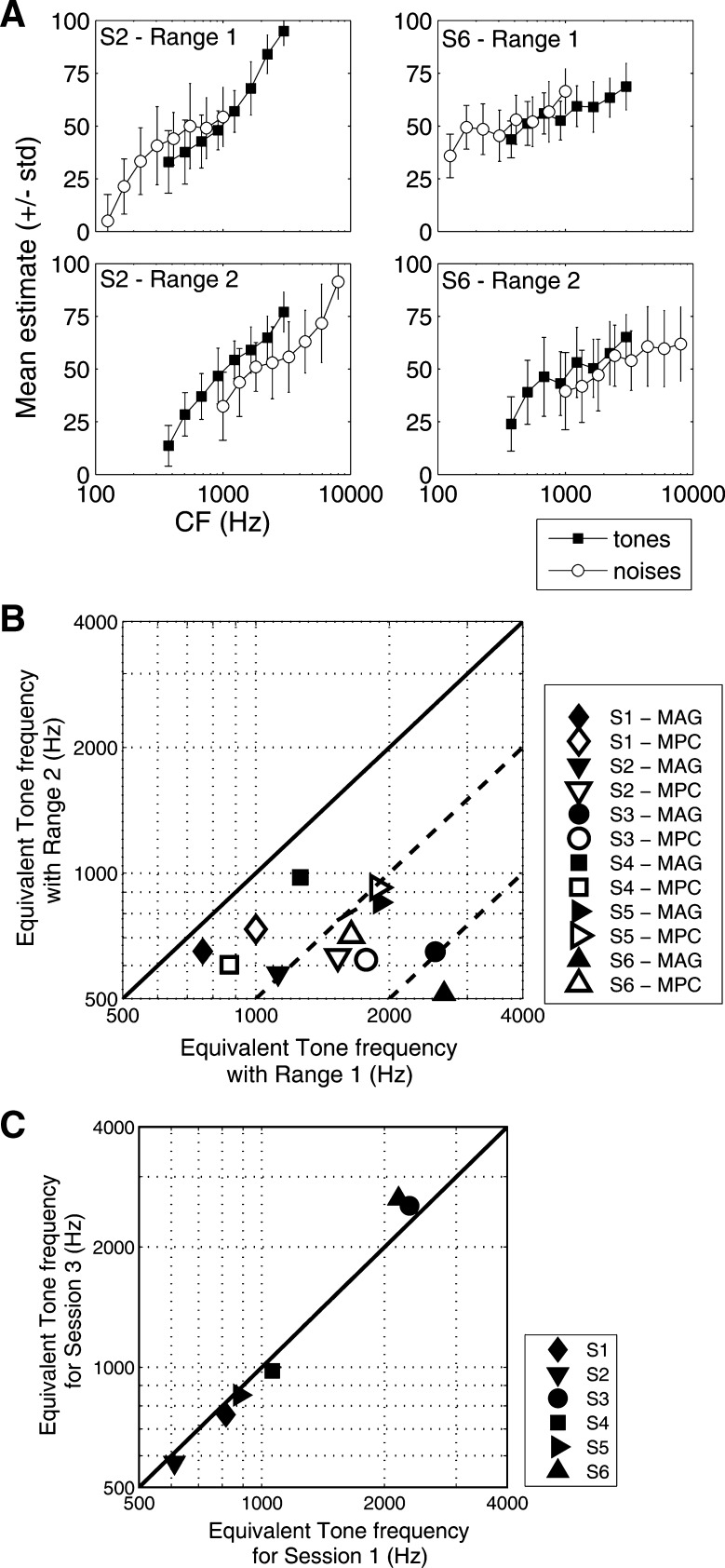
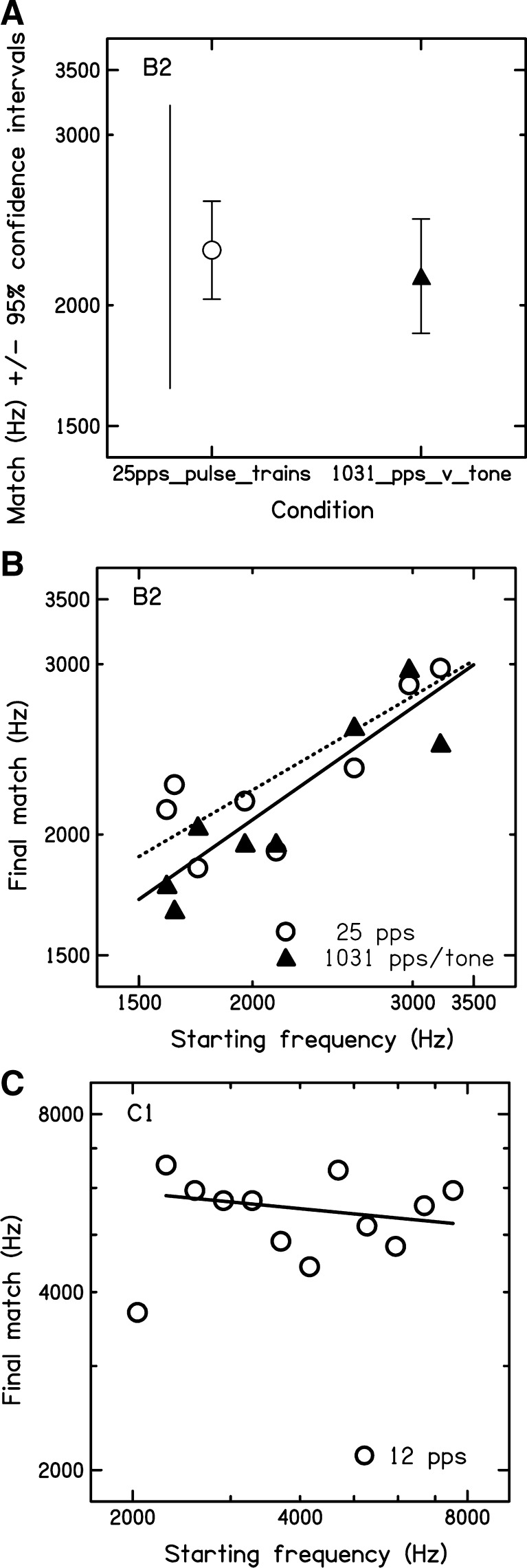
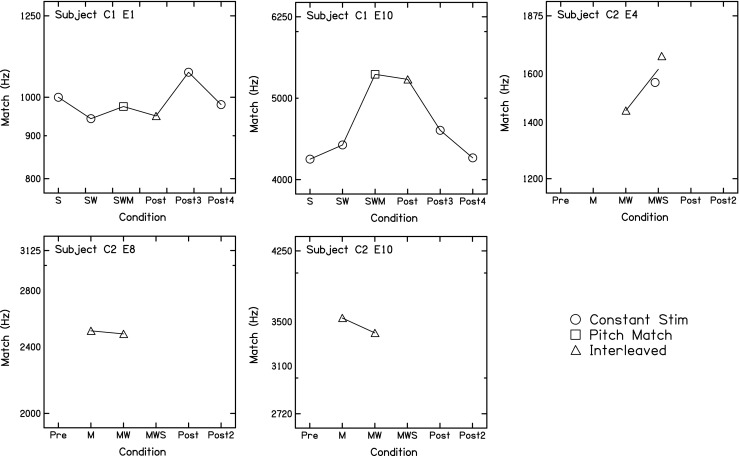
Four cochlear implant users, having normal hearing in the unimplanted ear, compared the pitches of electrical and acoustic stimuli presented to the two ears. Comparisons were between 1,031-pps pulse trains and pure tones or between 12 and 25-pps electric pulse trains and bandpass-filtered acoustic pulse trains of the same rate. Three methods-pitch adjustment, constant stimuli, and interleaved adaptive procedures-were used. For all methods, we showed that the results can be strongly influenced by non-sensory biases arising from the range of acoustic stimuli presented, and proposed a series of checks that should be made to alert the experimenter to those biases. We then showed that the results of comparisons that survived these checks do not deviate consistently from the predictions of a widely-used cochlear frequency-to-place formula or of a computational cochlear model. We also demonstrate that substantial range effects occur with other widely used experimental methods, even for normal-hearing listeners.
四位植入者对侧耳正常听力的人工耳蜗使用者,对双耳分别给予电刺激和声音刺激的音高进行了比较。比较的刺激形式包括 1031pps 的脉冲串和纯音,以及 12-25pps 的电脉冲串和相同频率的带通滤波声脉冲串。使用了三种方法:音高调整、恒定刺激和交错自适应程序。对于所有方法,我们都表明,由于所呈现的声刺激范围,非感觉偏差会强烈影响结果,并提出了一系列检查,以提醒实验者注意这些偏差。然后我们表明,通过这些检查的比较结果与广泛使用的耳蜗频率-位置公式或计算性耳蜗模型的预测并不一致。我们还证明,即使对于正常听力的听众,其他广泛使用的实验方法也会产生很大的范围效应。