Family Health International/Zambia Prevention, Care and Treatment Partnership, Lusaka, Zambia.
J Int AIDS Soc. 2010 Jun 7;13:19. doi: 10.1186/1758-2652-13-19.
Sustainable service delivery is a major challenge in the HIV response that is often not adequately addressed in project implementation. Sustainable strategies must be built into project design and implementation to enable HIV efforts to continue long after donor-supported projects are completed.
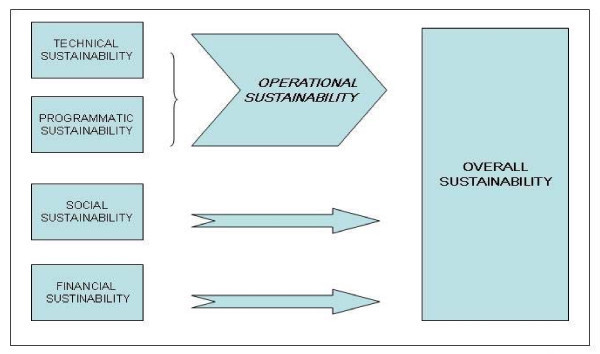
This paper presents the experiences in operational sustainability of Family Health International's Zambia Prevention, Care and Treatment Partnership in Zambia, which is supported by the US President's Emergency Plan for AIDS Relief through United States Agency for International Development (October 2004 to September 2009). The partnership worked with Zambia's Ministry of Health to scale up HIV clinical services in five of the country's nine provinces, reaching 35 districts and 219 facilities. It provided technical and financial support from within the ministry's systems and structures. By completion of the project, 10 of the 35 districts had graduated beyond receiving ongoing technical support.
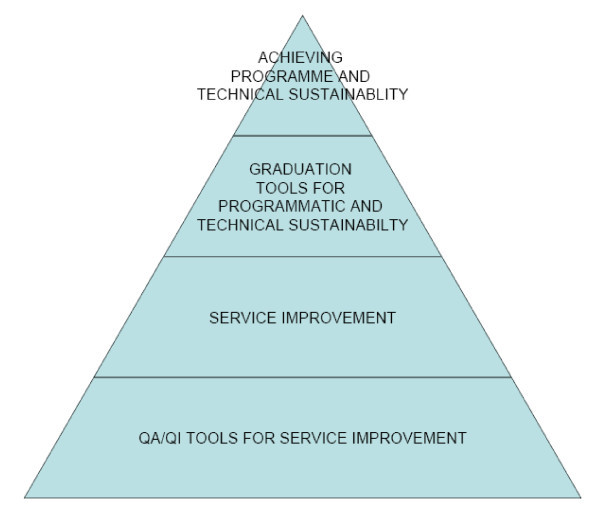
By working within the ministry's policies, structures and systems, the partnership was able to increase the ministry's capacity to add a comprehensive HIV service delivery component to its health services. Ministry structures were improved through renovations of health facilities, training of healthcare workers, procurement of essential equipment, and establishment of a quality assurance plan to ensure continued quality of care. The quality assurance tools were implemented by both the ministry and project staff as the foundation for technical graduation. Facilities that met all the quality criteria for more than six months were graduated from project technical support, as were districts where most supported facilities met the criteria. The district health offices then provided ongoing supervision of services. This predetermined "graduation" exit strategy, with buy in of the provincial and district health offices, set the stage for continued delivery of high-quality HIV services.
Achieving operational sustainability in a resource-limited setting is feasible. Developing and institutionalizing a quality assurance/quality improvement system is the basis on which facilities and districts can move beyond project support and, therefore, sustain services. Quality assurance/quality improvement tools should be based on national standards, and project implementation should use and improve existing health system structures.
可持续的服务提供是艾滋病应对中的一个主要挑战,而这一问题在项目实施中往往没有得到充分解决。在项目设计和实施中必须制定可持续战略,使艾滋病防治工作能够在捐助者支持的项目完成后继续进行。
本文介绍了美援署总统防治艾滋病紧急救援计划(PEPFAR)通过美国国际开发署(USAID)资助的美国家庭健康国际赞比亚预防、护理和治疗伙伴关系(PFPC)在赞比亚的业务可持续性经验,该伙伴关系于 2004 年 10 月至 2009 年 9 月期间在赞比亚开展工作。该伙伴关系与赞比亚卫生部合作,在该国的九个省中的五个省扩大艾滋病毒临床服务,覆盖 35 个区和 219 个设施。它在卫生部的系统和结构内提供技术和财政支持。在项目完成时,35 个区中有 10 个已经毕业,不再需要持续的技术支持。
通过在卫生部的政策、结构和系统内工作,该伙伴关系能够提高卫生部将全面的艾滋病毒服务提供纳入其卫生服务的能力。通过对卫生设施进行翻新、培训医疗保健工作者、采购必要设备以及建立质量保证计划,以确保护理质量的持续改进,改善了卫生部的结构。质量保证工具由卫生部和项目工作人员共同实施,作为技术毕业的基础。在超过六个月达到所有质量标准的设施以及大多数支持设施达到标准的区,都从项目技术支持中毕业。然后,区卫生办公室提供持续的服务监督。这种预先确定的“毕业”退出策略,得到了省级和区卫生办公室的认可,为继续提供高质量的艾滋病毒服务奠定了基础。
在资源有限的环境中实现业务可持续性是可行的。制定和体制化质量保证/质量改进系统是设施和区能够超越项目支持并因此维持服务的基础。质量保证/质量改进工具应基于国家标准,项目实施应利用和改进现有的卫生系统结构。