Experimental Surgery Department, La Paz Hospital, Paseo de la Castellana 261, 28046 Madrid, Spain.
BMC Gastroenterol. 2010 Jun 8;10:58. doi: 10.1186/1471-230X-10-58.
Mannoproteins are yeast cell wall componend, and rich in mannose. The use of foods rich in mannose as carbohydrate, could have a bioprotective effect against entrobacteria intestinal infection. Nothing is known about mannoproteins' activity in inflammatory bowel processes induced by entrobacteria.This study investigates the effects of mannoprotein administration via a liquid diet on inflammatory response and TLR5 expression during intestinal tissue injury in a rat model of infection with Salmonella typhimurium.
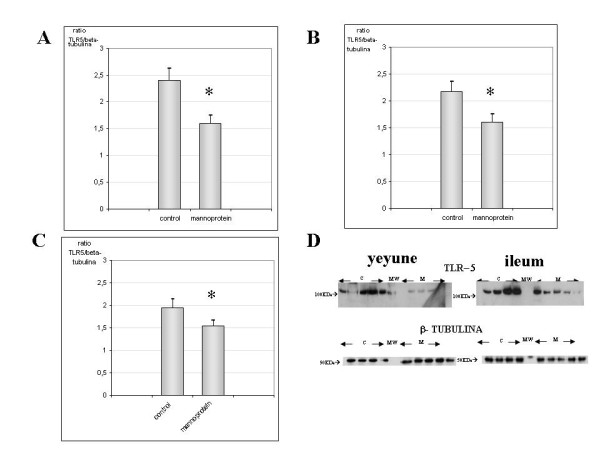
Adult Wistar male rats were divided into three groups: control, and mannoprotein E1 at 10 or 15%. Animals were fed with a liquid diet supplemented or not with mannoprotein E1. Groups were infected by intragastrical administration of S. typhimurium. 24 h post-inoculation samples of spleen, ileum and liver were collected for microbiological studies. Gut samples were processed to determine levels of proinflammatory cytokines (mRNA) and TLR5 (mRNA and protein) by quantitative PCR and Western-blot, and the number of proliferative and apoptotic cells determined by immunohistochemistry.
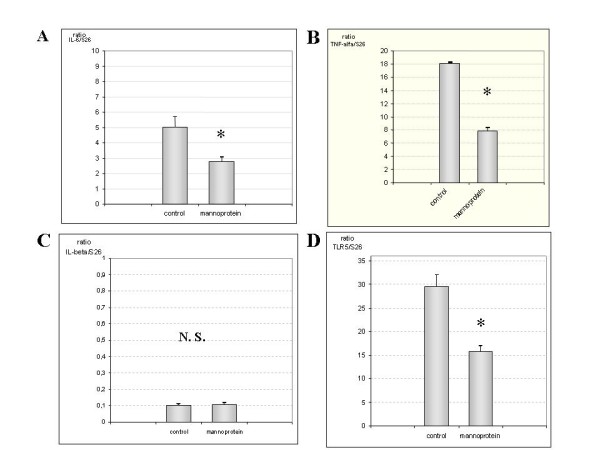
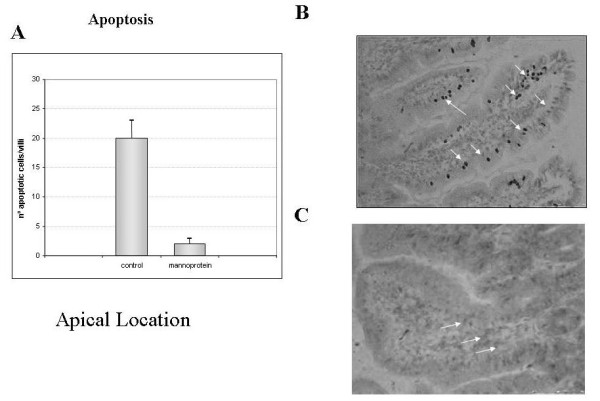
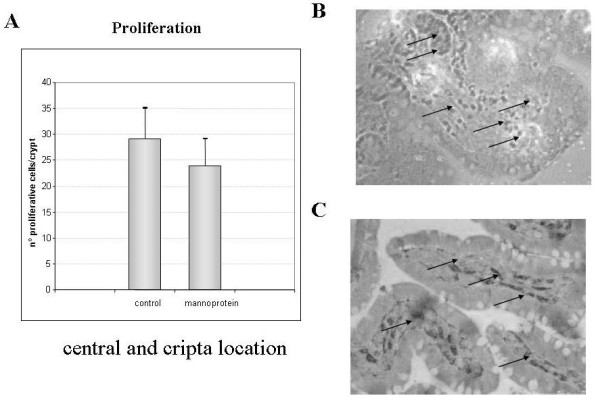
Ininfected levels of proinflammatory cytokines and TLR5 were higher in untreated controls than in the animals receiving mannoprotein. Proliferation was similar in both groups, whereas apoptosis was higher in controls. Curiosly, the mannoprotein effect was dose dependent.
Mannoprotein administration in a liquid diet seems to protect intestinal tissue against S. typhimurium infection. This protection seems to expressed as a lower pro-inflammatory response and TLR5 downregulation in gut epithelium, as well as by an inhibition of apoptosis. Nevertheless, the molecular mechanism by which mannoprotein is able to regulate these responses remain unclear. These results could open up new avenues in the use of mannoproteins as prebiotics in the therapeutic strategy for treatment of inflammatory gut processes induced by microbia.
甘露聚糖是酵母细胞壁的组成部分,富含甘露糖。食用富含甘露糖的食物作为碳水化合物,可能对肠道内细菌感染具有生物保护作用。目前尚不清楚甘露聚糖在肠道细菌感染引起的炎症性肠病中的作用。本研究旨在探讨甘露聚糖通过液体饮食给药对鼠伤寒沙门氏菌感染大鼠模型肠道组织损伤过程中炎症反应和 TLR5 表达的影响。
成年雄性 Wistar 大鼠分为三组:对照组和甘露聚糖 E1 组(10%或 15%)。动物喂食补充或不补充甘露聚糖 E1 的液体饮食。通过胃内给予鼠伤寒沙门氏菌对各组进行感染。感染后 24 小时采集脾、回肠和肝样本进行微生物学研究。处理肠道样本以通过定量 PCR 和 Western blot 确定促炎细胞因子(mRNA)和 TLR5(mRNA 和蛋白)的水平,并通过免疫组织化学确定增殖和凋亡细胞的数量。
未处理对照组感染后促炎细胞因子和 TLR5 水平高于甘露聚糖组。两组的增殖情况相似,而对照组的凋亡率更高。有趣的是,甘露聚糖的作用呈剂量依赖性。
在液体饮食中给予甘露聚糖似乎可以保护肠道组织免受鼠伤寒沙门氏菌感染。这种保护作用可能表现为肠道上皮细胞促炎反应和 TLR5 下调降低,以及凋亡抑制。然而,甘露聚糖调节这些反应的分子机制尚不清楚。这些结果为将甘露聚糖作为治疗微生物诱导的炎症性肠道疾病的益生元的治疗策略开辟了新途径。