Wadsworth Center, New York State Department of Health, Albany, New York, United States of America.
PLoS One. 2010 Jun 7;5(6):e10978. doi: 10.1371/journal.pone.0010978.
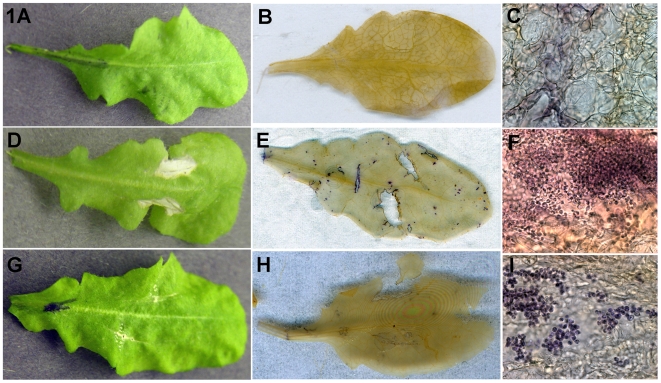
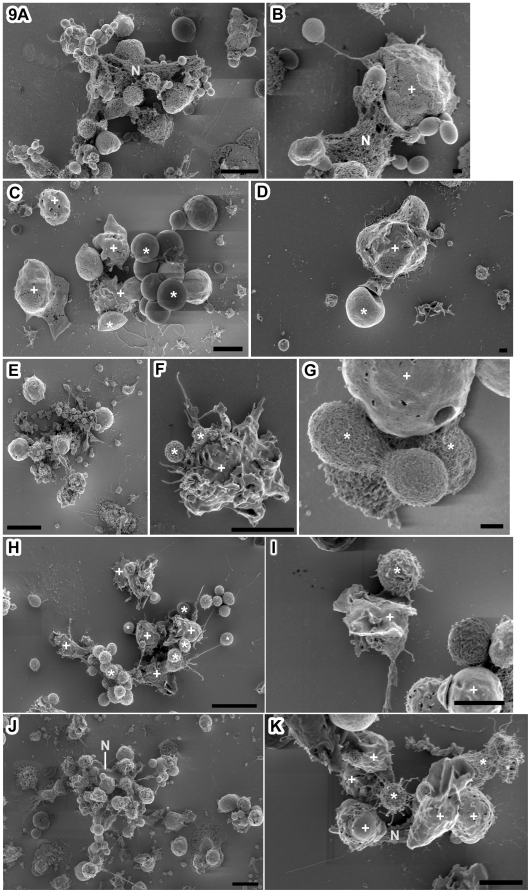
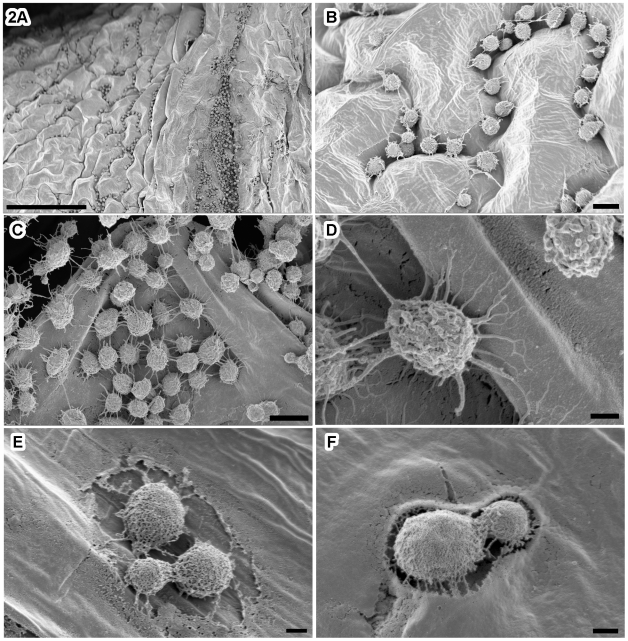
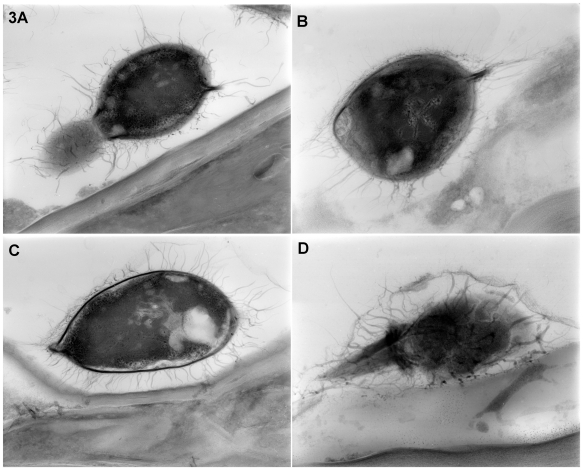
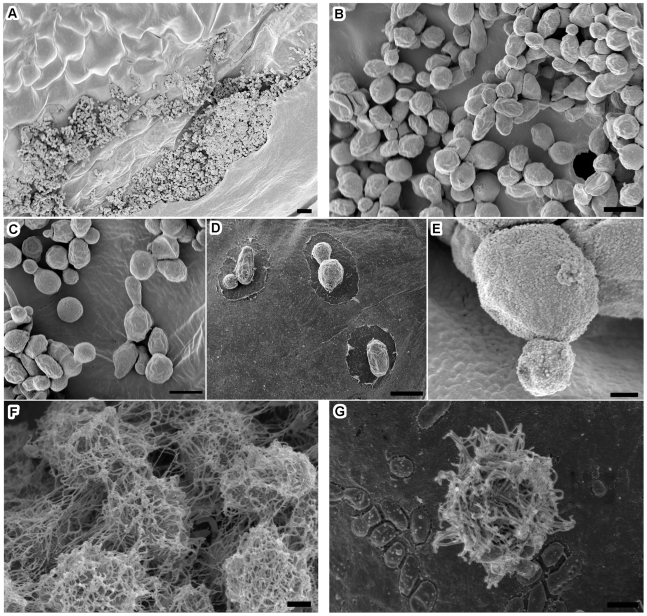
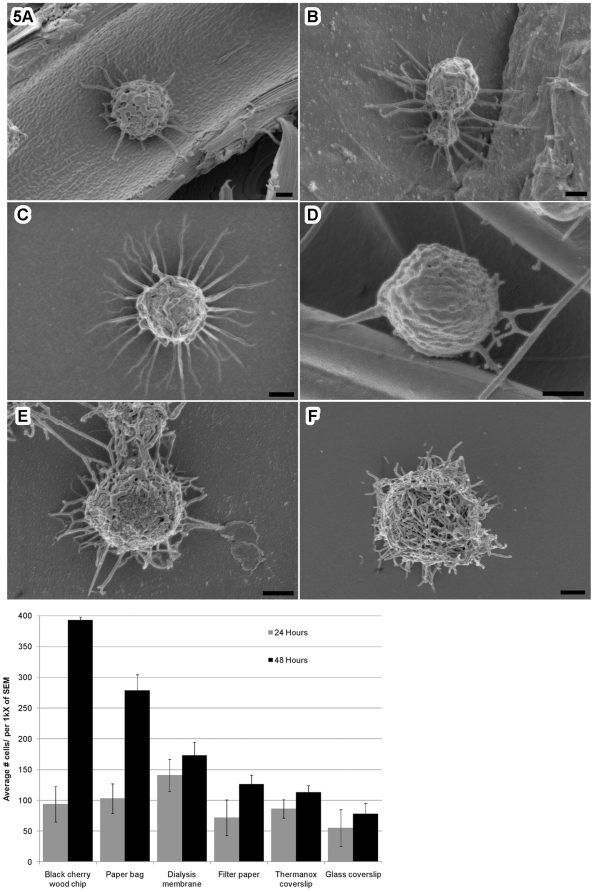
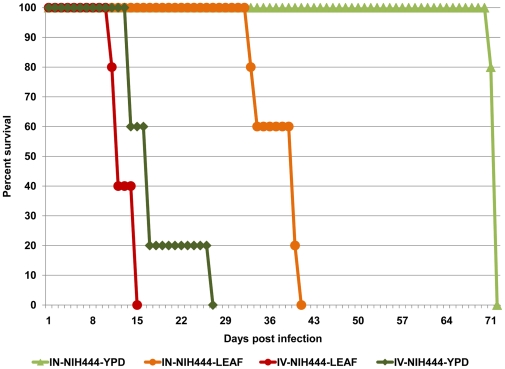
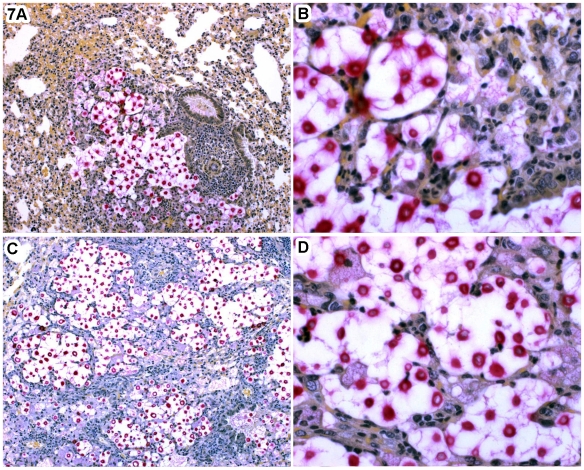
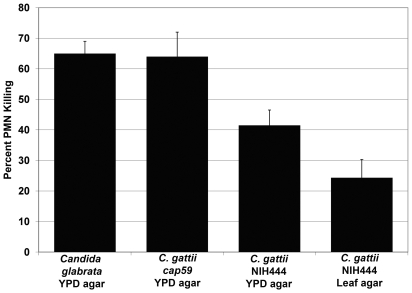
Cryptococcus gattii, an emerging fungal pathogen of humans and animals, is found on a variety of trees in tropical and temperate regions. The ecological niche and virulence of this yeast remain poorly defined. We used Arabidopsis thaliana plants and plant-derived substrates to model C. gattii in its natural habitat. Yeast cells readily colonized scratch-wounded plant leaves and formed distinctive extracellular fibrils (40-100 nm diameter x500-3000 nm length). Extracellular fibrils were observed on live plants and plant-derived substrates by scanning electron microscopy (SEM) and by high voltage- EM (HVEM). Only encapsulated yeast cells formed extracellular fibrils as a capsule-deficient C. gattii mutant completely lacked fibrils. Cells deficient in environmental sensing only formed disorganized extracellular fibrils as apparent from experiments with a C. gattii STE12alpha mutant. C. gattii cells with extracellular fibrils were more virulent in murine model of pulmonary and systemic cryptococcosis than cells lacking fibrils. C. gattii cells with extracellular fibrils were also significantly more resistant to killing by human polymorphonuclear neutrophils (PMN) in vitro even though these PMN produced elaborate neutrophil extracellular traps (NETs). These observations suggest that extracellular fibril formation could be a structural adaptation of C. gattii for cell-to-cell, cell-to-substrate and/or cell-to- phagocyte communications. Such ecological adaptation of C. gattii could play roles in enhanced virulence in mammalian hosts at least initially via inhibition of host PMN- mediated killing.
新生隐球菌是一种对人和动物有影响的真菌病原体,广泛存在于热带和温带地区的各种树木上。这种酵母的生态位和毒力仍未得到明确界定。我们使用拟南芥植物和植物来源的基质来模拟自然栖息地中的新生隐球菌。酵母细胞很容易定植在划痕受伤的植物叶片上,并形成独特的细胞外纤维(直径 40-100nm×长度 500-3000nm)。通过扫描电子显微镜(SEM)和高电压电子显微镜(HVEM)观察到活植物和植物来源的基质上存在细胞外纤维。只有被囊酵母细胞才能形成细胞外纤维,因为囊缺陷型新生隐球菌突变体完全缺乏纤维。只有环境感应缺陷的细胞才能形成紊乱的细胞外纤维,这可以从新生隐球菌 STE12alpha 突变体的实验中看出。与缺乏纤维的细胞相比,具有细胞外纤维的新生隐球菌细胞在肺部和系统性隐球菌病的小鼠模型中具有更高的毒力。具有细胞外纤维的新生隐球菌细胞在体外对人多形核白细胞(PMN)的杀伤也具有更高的抗性,尽管这些 PMN 产生了精细的中性粒细胞细胞外陷阱(NETs)。这些观察结果表明,细胞外纤维的形成可能是新生隐球菌细胞间、细胞与基质间和/或细胞与吞噬细胞间通讯的结构适应。新生隐球菌的这种生态适应至少可以通过抑制宿主 PMN 介导的杀伤作用,在哺乳动物宿主中发挥增强毒力的作用。